
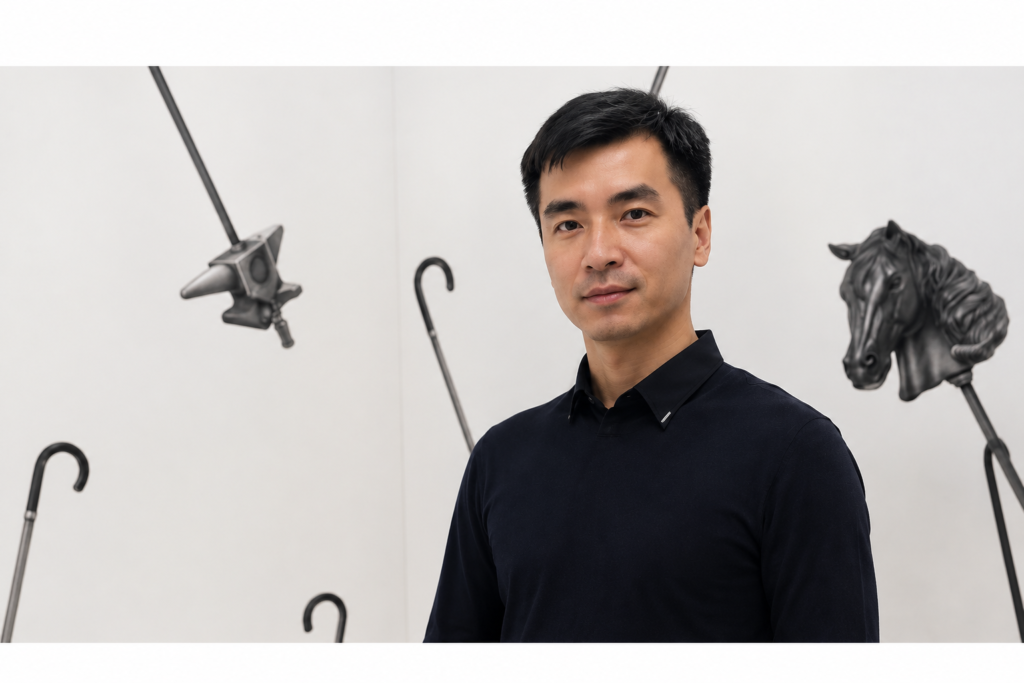
How Shen Xu adapted CATT China as marketing demands changed
Shen Xu is Founder & Business Strategy Director at CATT China, a strategic marketing and business consulting firm that helps international brands enter, establish and grow in China. This conversation looks at how long-standing relationships brought in early clients, why the business changed its model, and how it responds to clients seeking clearer measures of marketing results.
Long-standing relationships helped CATT China win early clients, but sustaining the business also meant adjusting its operating model and client focus as demand shifted. Shen Xu notes that measuring results across China’s closed digital platforms remains an ongoing challenge.
What’s the short story of how your business started, and what makes it genuinely different from the other options your customers have?
I have been working in this industry for over 15 years, during which I have built a strong professional network. Many people know me through my previous work, and they often introduce potential clients to me.
Earlier in my career, I worked at DigitasLBi, part of Publicis Groupe, where I served as Head of Discovery, essentially leading strategic planning for Greater China.
That experience gave me a solid understanding of how international agencies operate and provided me with extensive professional training.
Over time, people in my network began referring friends and business contacts to me for advice on marketing in China. This made it relatively easy for me to start my own business. Some initially approached me for strategic guidance, while others eventually invited me to become their marketing agency.
How did you win your first customers, and where does most of your new business come from today?
Most of my early clients came through word of mouth.
When I started my own business, I already had a network of clients and professional contacts who had known me for years. Many of them were willing to introduce me to their friends and business partners.
At that time, demand for marketing services was strong, but trust was extremely important. Trust is something that takes years to build, and it cannot be established overnight.
Thanks to those long-standing relationships and personal recommendations, I was able to secure my first clients through word of mouth.
What’s one decision that changed the direction of your business, and one mistake that taught you the most?
Between 2010 and the COVID-19 pandemic, China experienced a golden era of business growth. Many of my friends became very successful during that period.
At the time, most of our clients were domestic companies. They had sufficient budgets and were primarily focused on results.
However, as the business environment changed, demand began to decline while operating costs continued to rise. It became increasingly difficult to maintain the traditional agency business model.
That was when I realized we needed to change direction. I decided to reduce the size of our full-time team and rely more on part-time professionals to keep the business flexible and costs under control.
At the same time, we began looking beyond domestic clients. We already had some international clients, but I saw opportunities to expand our services to more overseas businesses, as well as Chinese companies looking to enter international markets.
This shift opened up new opportunities for the business.
What has changed in your industry or in what your customers expect over the last couple of years, and how have you adapted?
In the past, when the Chinese market was expanding rapidly, brand marketing was a mainstream approach. Companies understood the value of building brand awareness, even though its impact was not always easy to measure.
However, after the pandemic, marketing budgets began to shrink, and many clients shifted their focus toward performance marketing. They increasingly expected measurable results and clear attribution for every marketing investment.
This created new challenges. China’s major digital platforms operate largely as closed ecosystems, making it difficult to track customer journeys and accurately attribute results across different channels.
Previously, clients could recognize the value of brand marketing through overall business growth and market visibility. Today, they want to know exactly which platform is driving that growth and where they should allocate their budgets. Unfortunately, it is not always possible to provide definitive answers.
As for how we adapted, I believe this has been a learning process for both agencies and clients.
We have worked to demonstrate results as clearly as possible, learned from industry practices, and gradually adopted new measurement methodologies and metrics that clients can understand and accept.
At the same time, some challenges cannot be solved simply by following existing methods. Sometimes we need to explore new approaches together with our clients.
Ultimately, adapting to these changes is an ongoing process. There is rarely a simple answer about what works and what doesn’t.
If you were advising someone starting out in your industry today, what would you tell them to do first, and what would you tell them to ignore?
If I were advising someone entering marketing today, I would tell them to first understand how the industry is changing.
AI and automation are transforming traditional agency services. Tasks that once required specialized agencies or large teams can increasingly be handled through automated tools. This doesn’t mean the industry is disappearing, but the opportunities are changing.
As for what to ignore, I would say **ignore the noise**, especially claims that AI will replace all marketing professionals.
Marketing is not just about generating proposals or campaign plans. It still requires creativity, genuine consumer insights, and an understanding of the real world.
Technology changes how we work, but understanding people remains essential.
Thank you to Shen Xu and the team at CATT China for sharing what actually worked with Leaders Perception readers.
Want to tell the story behind your business?
Leaders Perception publishes interviews with business owners and leaders every week. Five questions, about ten minutes, no calls. It is free and every completed interview gets published.