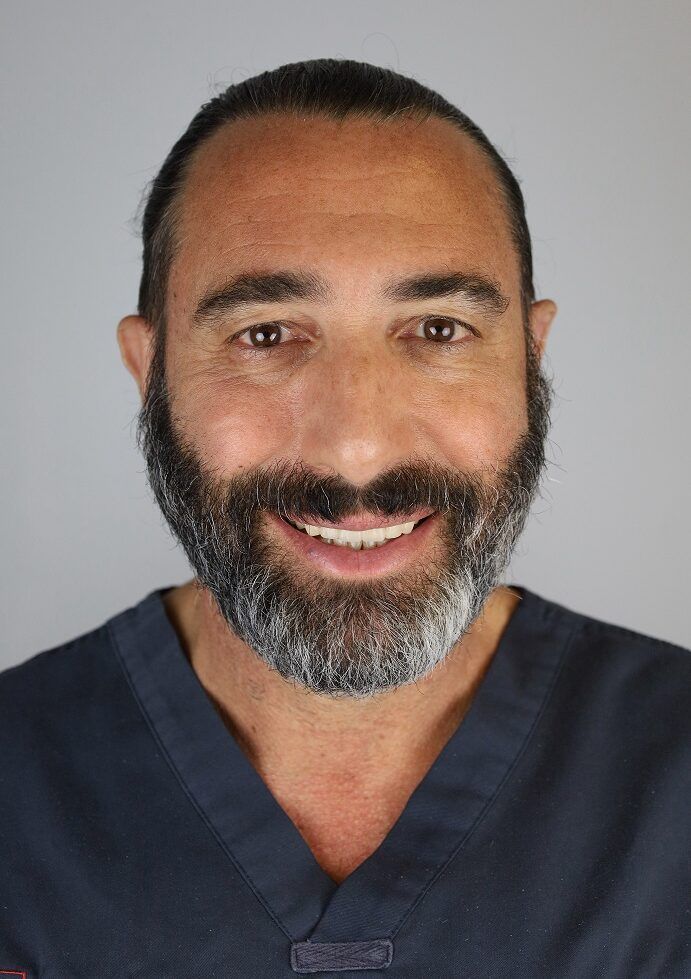
How a New York vein specialist uses AI for patient education
Dr. Adam Y. Goldman is the founder of Metropolitan Vein & Aesthetic Center, a New York practice offering board-certified, minimally invasive treatments for varicose and spider veins and select aesthetic services. He explains how the clinic uses AI to draft patient education and web content while keeping clinical decisions and physician referral work human, which makes this conversation useful for clinicians and practice managers.
Use AI to draft routine patient education and website content, then have a clinician edit for accuracy and local relevance. Keep clinical decision-making and referral letters human, and focus on local SEO and systematic physician relationships to grow the practice.
What’s the quick origin story of your business, and what makes what you do genuinely different from the other options your customers are looking at?
I’m Dr. Adam Y. Goldman. After training at Columbia, Albert Einstein, and Mount Sinai and practicing hospital-based cardiology, I refocused on venous and aesthetic medicine and launched Metropolitan Vein and Aesthetic Center to deliver advanced, minimally invasive care in New York.
What sets us apart is board-certified expertise paired with a convenience-first model: customized, image-guided treatments done in under an hour, with little to no downtime, same-day return to normal activities, and transparent insurance support across multiple local offices.
Where does most of your new business come from today, and where do you wish it came from?
Most of our new patients today come from local word‑of‑mouth referrals and online search, with people in Washington Heights, Corona, and nearby neighborhoods finding us when they search for varicose or spider vein treatment or see our strong reviews.
Ideally, we would like even more of our new business to come from trusted physician referrals (primary care, dermatology, OB/GYN, vascular) and from patients who specifically seek out a board‑certified vein and aesthetic specialist for complex or recurrent cases, so we can focus on higher‑need patients who benefit most from our expertise.
What’s one thing you’ve actually handed over to AI in the last year, and one thing you tried it on and went back to doing the human way?
Over the last year, I’ve handed over routine patient education drafts and first-pass website/blog content to AI, using it to generate clear, plain-language explanations of vein disease, treatment options, and pre/post‑care instructions that I then review and personalize.
I tried using AI for nuanced clinical decision support and for crafting highly personalized physician referral letters, but I went back to doing those the human way because they require careful judgment, specific case details, and a tone that builds professional trust.
Have you noticed a change in how customers find you or what they already know before they reach out? Is anyone arriving through AI assistants like ChatGPT yet?
Yes, I’ve noticed patients are arriving better informed than before. More people come in already understanding the difference between spider and varicose veins, knowing that minimally invasive options exist, and asking specifically about ultrasound-guided treatments, recovery time, and insurance coverage.
As for AI assistants like ChatGPT, we do see some patients mentioning they “read about it online” or “asked an AI,” but most still find us through traditional search and local referrals. AI-driven discovery is emerging, but it hasn’t yet become a primary channel for our practice.
If you were advising someone in your industry on all of this for the next 12 months, what would you tell them to actually do, and what would you tell them to ignore?
Focus on local SEO and reputation: keep your Google Business Profile accurate, encourage detailed patient reviews, and publish clear, condition-focused pages for varicose veins, spider veins, leg swelling, miraDry, and weight loss with before/after photos and FAQs.
Use AI for content and patient education, not diagnosis. Let AI draft website copy, blog posts, newsletters, and pre/post‑care instructions, then have a clinician edit for accuracy, tone, and local relevance.
Build physician relationships systematically with simple referral packets, quick consult access, and concise follow-up letters so PCPs, dermatologists, OB/GYNs, and vascular specialists feel confident sending patients your way.
Make the patient journey frictionless: offer online booking or fast call-backs, transparent insurance guidance, clear self-pay pricing for aesthetic services, and short, jargon-free explanations of what to expect.
Ignore chasing every new AI tool or “magic” marketing platform without a clear use case. Most practices need a few well-used tools, not a dozen half-implemented ones.
Ignore overly technical or sensational content designed to game search engines. Patients and referring doctors respond better to straightforward, trustworthy information.
Ignore the idea that AI will replace clinical judgment or the personal touch in referral relationships. AI is an assistant, not a substitute for expertise and trust.
Thank you to Dr. Adam Y. Goldman and the team at Metropolitan Vein & Aesthetic Center for sharing what actually worked with Leaders Perception readers.
Want to share your playbook?
Leaders Perception publishes founder and operator interviews every week. A few questions, about five minutes, no calls. It is free and everyone we accept gets published.