
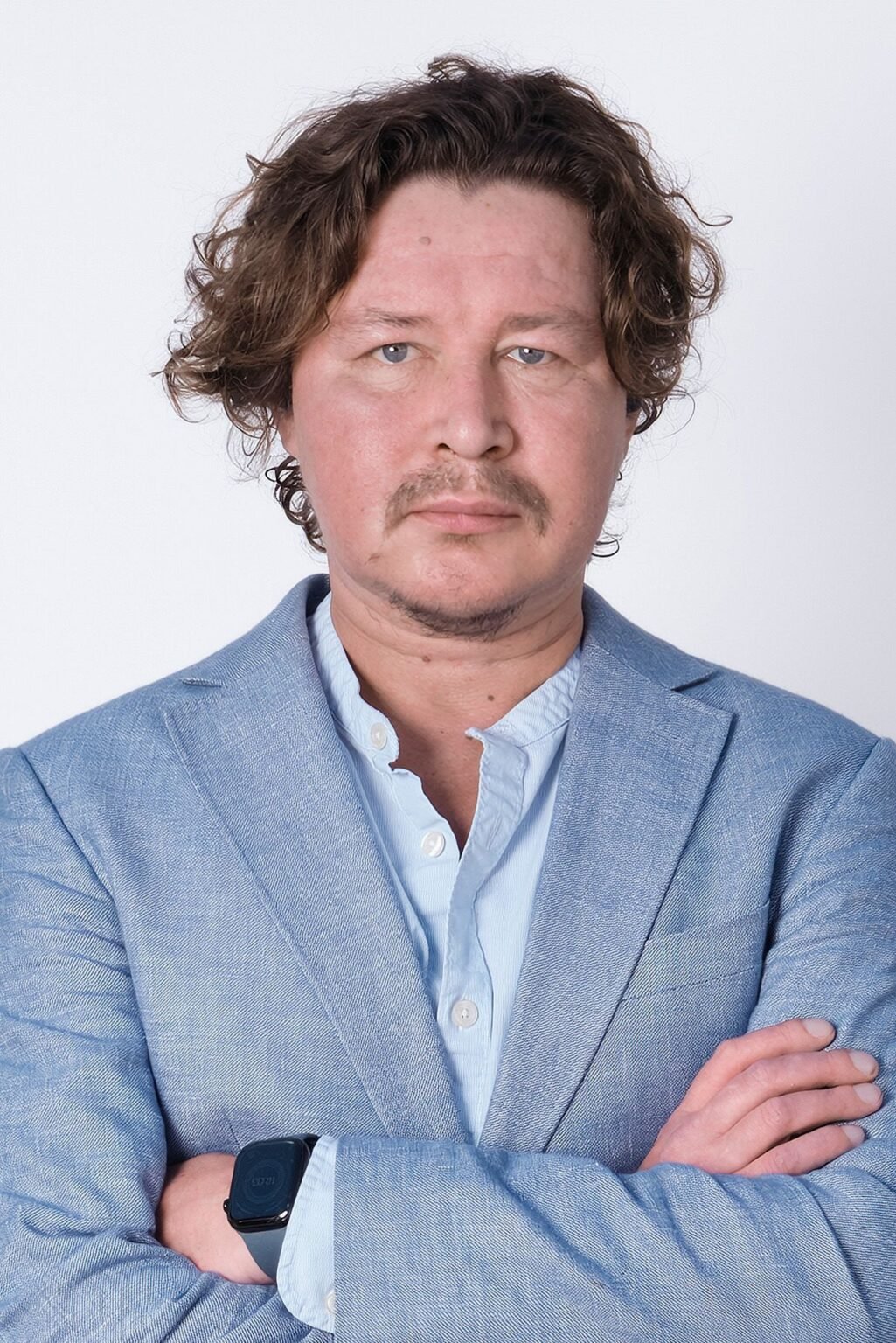
How Denis Alaev turned a market-data problem into EODHD
Denis Alaev, Founder and CEO of EODHD, built the business after struggling to find accessible, reliable financial data for an investment product. The conversation traces EODHD’s pivot to market data, its early customer outreach and the lessons Alaev took from failed AI product experiments.
Put a working solution in front of customers early, then keep listening to them directly. Alaev says customer conversations taught him more than his own assumptions, while a willingness to pivot helped EODHD respond to a problem he had encountered firsthand.
What’s the short story of how your business started, and what makes it genuinely different from the other options your customers have?
I’d been trading stocks since 2010 and reading everything I could about investing. Seeing how difficult it was for people without a financial background to invest well, I came up with an idea of a robo-advisor to help investors diversify their portfolios. I quit my job to build it, freelancing half-days to pay the bills. But in the process I ran into an unexpected problem: the financial data I needed to build it turned out to be hard to access, expensive, or simply wrong. So in 2017, I pivoted to selling the data itself. I built a website over the weekend and by Monday I had my first paying client. Today, EODHD is an international market data provider covering 60+ exchanges and 150,000 tickers, with up to 30 years of history. Many providers are strong in one region or focus on only certain types of data. We aim to cover as many regions and data types as possible, from London to Nairobi and from end-of-day prices to fundamentals and news.
How did you win your first customers, and where does most of your new business come from today?
At first I did everything myself: writing code and documentation, handling support and reaching out to potential customers. Quora was my main channel for finding them. When people asked where to get financial data I’d find those questions and answer them, pointing to our service. The first customers were developers and solo traders building their own tools, and people like them still bring a lot of our revenue. Today, more and more of EODHD’s new business comes from businesses that build products on our data: fintech startups, asset managers and companies making portfolio analytics, stock screeners and personal finance apps. They are the same builders as at the start, only now with a team.
What’s one decision that changed the direction of your business, and one mistake that taught you the most?
The mistake that taught me the most was trying to build AI-powered products around our financial data. We spent months on two attempts, and both were out of date almost as soon as we launched them: free AI assistants were already starting to offer similar capabilities.
So we changed our tactics: we stopped selling AI to customers and started using it internally. It has taken over a huge part of our work, so a small team can do much more with pretty much the same resources.
What has changed in your industry or in what your customers expect over the last couple of years, and how have you adapted?
AI has opened a door that was closed until now. Someone with a strong idea, but no programming skills and no financial background, can build a fintech product, because an AI assistant writes the code. More and more of our customers are people like that. So we no longer assume that everyone will get our data the traditional way, through an API, which needs a programmer. They can also pull it into Excel, or simply tell their AI assistant which data they need, and it fetches it from our servers through a bridge called MCP.
If you were advising someone starting out in your industry today, what would you tell them to do first, and what would you tell them to ignore?
Start with a problem you’ve run into yourself, and put your solution in front of people as soon as it works, even if it’s rough. Then talk to your customers yourself, for as long as you can. For the first year I answered every support question myself, and it taught me more about what our users need than my own assumptions.
And what I would ignore is the belief that you can’t grow without investors. We have never taken outside money, and have had the freedom to develop at our own pace and make our own decisions.
Thank you to Denis Alaev and the team at EODHD for sharing what actually worked with Leaders Perception readers.
Want to tell the story behind your business?
Leaders Perception publishes interviews with business owners and leaders every week. Five questions, about ten minutes, no calls. It is free and every completed interview gets published.