
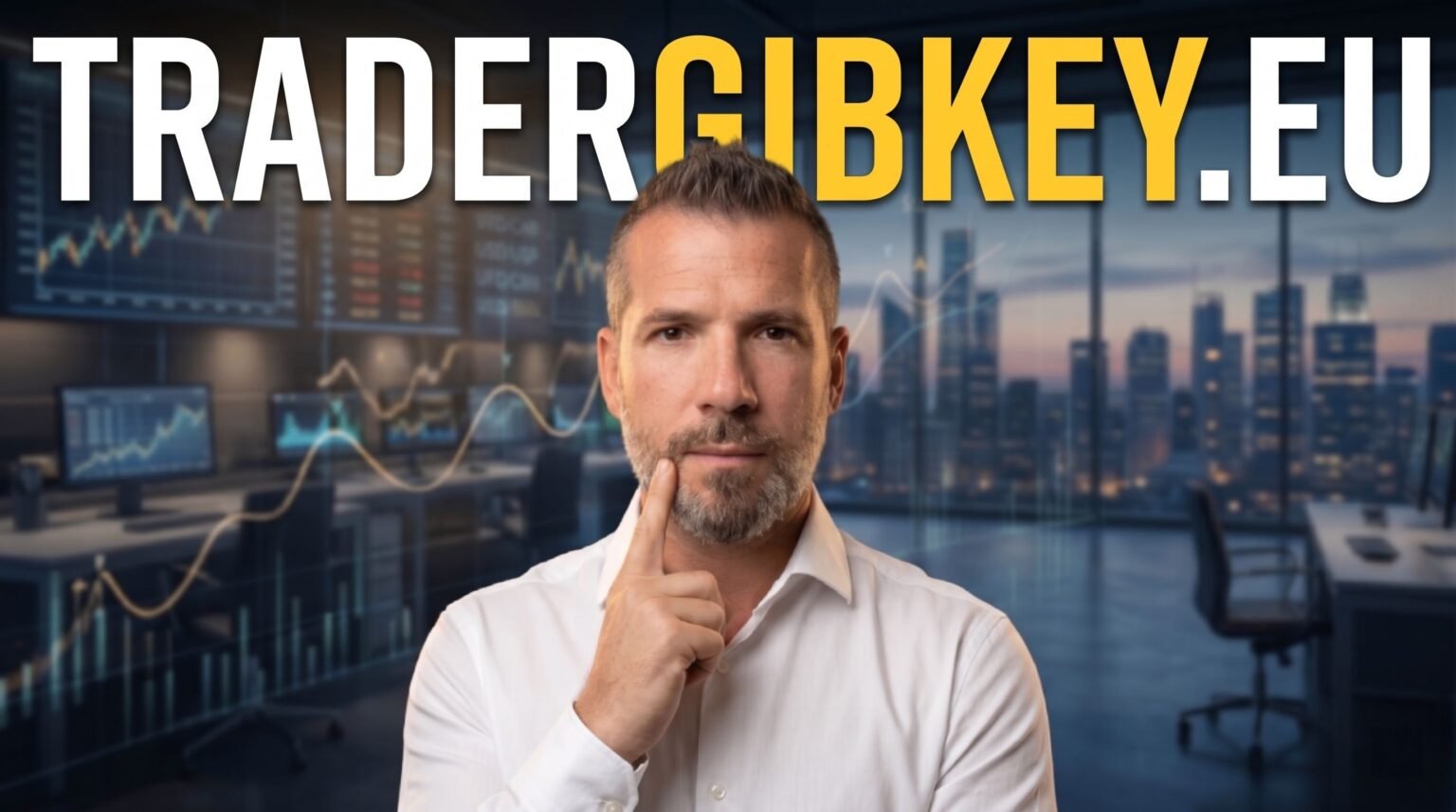
Why Gabriel F. built Trader Gibkey without trading signals
Gabriel F. is the founder of Trader Gibkey, which teaches discretionary liquidity trading on EURUSD, Nasdaq and gold through courses and one-to-one mentorship in English and Hungarian. The conversation explores how public chart analysis brought in early customers, why the business avoids signals, and how risk discipline and written agreements shape Gabriel F.’s advice.
For new traders, the practical starting point is to define risk before entering a trade and keep a written record of every decision. Focusing on one instrument and one framework long enough to assess them matters more than collecting tools or chasing excitement.
What’s the short story of how your business started, and what makes it genuinely different from the other options your customers have?
I spent years in London working and trading on the side, and most of what I bought as “education” back then was either a signal group or a man standing in front of a rented car. Nobody explained why price did what it did. When I finally got somewhere, it was by learning how liquidity works — where orders sit, why price travels to take them, and how to wait for that instead of guessing.
Trader Gibkey came out of that. What makes it different is mostly what I leave out. No signals, no copy-trading, no promise of a percentage per month. One framework, two instruments — EURUSD and gold — and I teach it in Hungarian as well as English, because the Hungarian-speaking side had almost nothing serious available. If somebody finishes my course and still needs me to tell them when to enter, I’ve failed.
How did you win your first customers, and where does most of your new business come from today?
The first ones were people who already followed my charts. I’d been posting EURUSD and gold analysis in Hungarian for a long time, free, and after enough months of being right and wrong in public, a few of them asked whether I’d teach it properly. So the first customers weren’t really sold anything. They’d already watched me work.
Today it’s still largely that, just wider. The daily analysis brings people in, people who finish the course tell others, and I put real effort into the site and search traffic, which I build myself. The pattern I trust most is still the slow one — somebody reads the free analysis for three months before they ever message me.
What’s one decision that changed the direction of your business, and one mistake that taught you the most?
The decision was going into the mortgage business with my partner Agnes. Trading education and regulated mortgage advice are not the same world. Agnes is the licensed adviser — she holds the CeMAP, I don’t; I’m the co-owner and I handle the business and technology side. Sitting next to someone who has to be right because a family’s house depends on it changed how I write and teach on the trading side too. I became much more careful about what I claim.
The mistake was entering an earlier venture with a partner on trust and a handshake, with nothing written down about who owned the brand. It cost me a great deal of time and it still isn’t fully resolved. Everything since has paperwork first, even with people I like. Especially with people I like.
What has changed in your industry or in what your customers expect over the last couple of years, and how have you adapted?
Two things. People are far more sceptical, which I think is healthy. Five years ago you could post a screenshot of a win and gain followers. Now the first comment asks whether the account is even real. And regulators have started paying attention to who’s allowed to talk about money online, which is right.
The other change is that the internet filled with content nobody actually wrote. You can feel it when you read it. For a small brand that’s a problem and an opening at the same time, because the bar for sounding like a person went up.
My adaptation was to show the process instead of the result. I publish my morning analysis before the session, not after, so it’s on record when I’m wrong. I’d rather be publicly wrong twice a week than run one of those accounts that only posts winners.
If you were advising someone starting out in your industry today, what would you tell them to do first, and what would you tell them to ignore?
Do this first: decide how much you’re willing to lose on a single trade before you open a chart, and write every trade down, including the embarrassing ones. Not in your head — in a file. Most people who tell me they’ve traded for two years have no record of what they did, which means they haven’t had two years of practice. They’ve had two years of guessing.
Ignore the gear. Ignore the indicator collection, the eighteenth YouTube channel, the Discord that posts entries, the belief that you need a bigger account. Pick one instrument and one framework and stay with them long enough to learn whether they work. Boredom is part of the job. If you need the market to be exciting every day, you’ll end up paying for that excitement.
Thank you to Gabriel F. and the team at Trader Gibkey for sharing what actually worked with Leaders Perception readers.
Want to tell the story behind your business?
Leaders Perception publishes interviews with business owners and leaders every week. Five questions, about ten minutes, no calls. It is free and every completed interview gets published.