
How Patient Prism turned missed calls into $72m in recoverable revenue
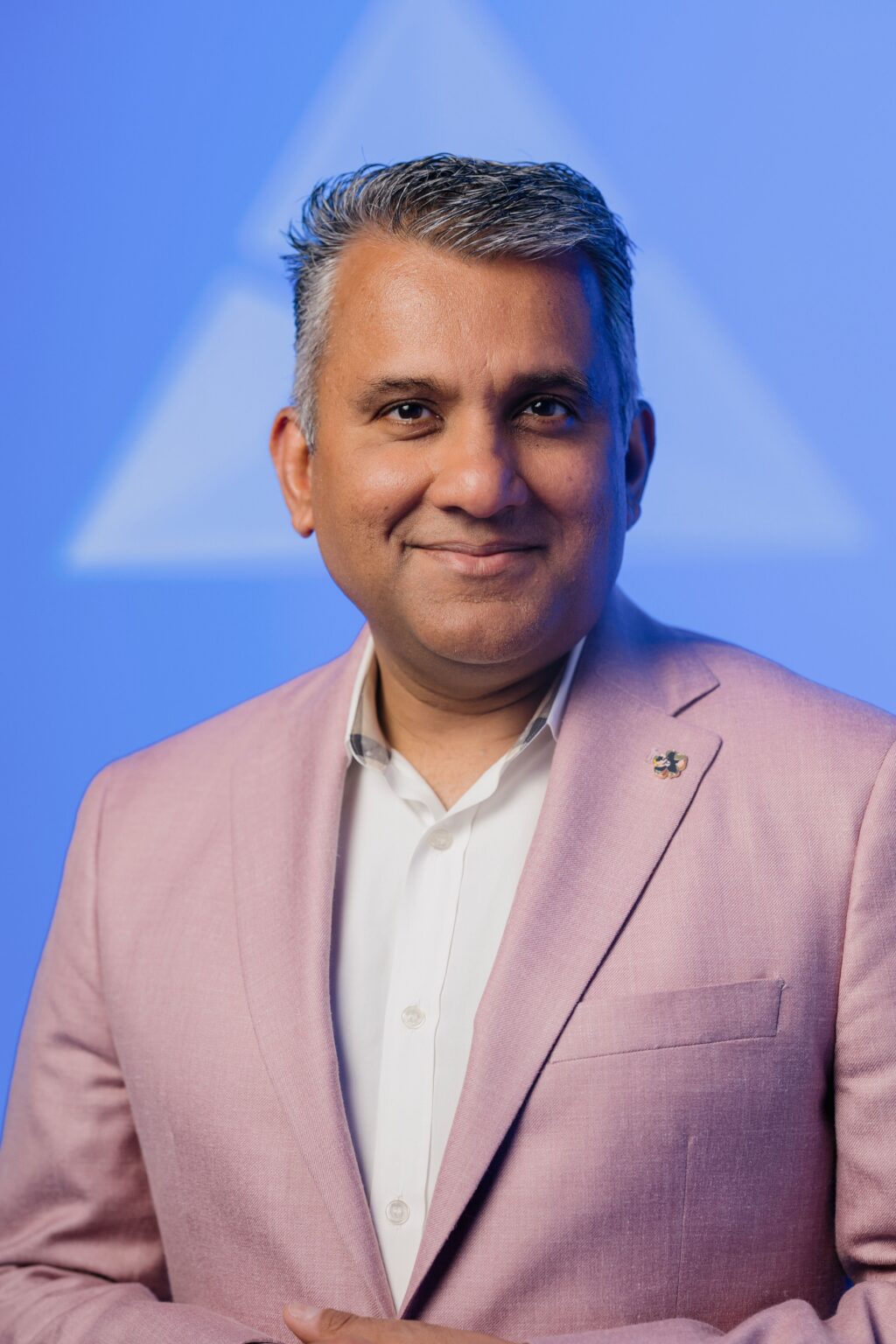
Amol Nirgudkar is Co-Founder & CEO of Patient Prism, a company that listens to every patient interaction – voice, text, chat and web – for thousands of clinics. The company’s claim to difference is practical: within 60 seconds of a call ending it flags intent, dollar value and who needs to be called back, turning analysis into a worklist operators can act on.
Use AI for the work no human can do at scale – real-time listening, scoring and foresight – but plan for humans to own implementation. Fix unanswered calls and speed-to-lead first, and budget two thirds of the project for the people and change management that turn insight into revenue.
What’s the quick origin story of your business, and what makes what you do genuinely different from the other options your customers are looking at?
I was a CPA for 15 years. Then I started a dental marketing company, and we were good at it. We drove a tremendous number of phone calls into practices. The problem was that most of those calls never turned into an appointment. My clients were paying me for phone calls, not patients.
So I started listening to the calls. What I heard was insane. Motivated patients, ready to book, hanging up unbooked because of something that happened in a 90 second conversation. I hired people to listen full time. That worked and it did not scale. Then Alexa and Siri showed up and I asked a simple question: could we teach a machine to understand dentistry the way my listeners did?
That is Patient Prism. Eleven years later, we listen to every patient interaction across voice, text, chat, and web for thousands of clinics, and we tell the operator what to do about it. I ended up in AI completely by accident. I have never written a line of code in my life.
What makes us different is the last mile. Call tracking told you what happened. Dashboards told you what happened, in color. We tell you what to do next Monday. Inside 60 seconds of a call ending, we know the intent, the dollar value, why it did not book, and which specific patient somebody needs to call back this afternoon. Not a report. A worklist.
The other options a customer is weighing are usually a call tracking platform, a standalone AI receptionist, or nothing. Tracking gives you attribution and no action. A receptionist answers the phone and has no idea whether your marketing is working or which of your fifty offices is quietly bleeding. We do the whole loop, and we consolidate five to seven vendors while we are at it.
Where does most of your new business come from today, and where do you wish it came from?
Today it comes from relationships. Six years with the same clients, industry conferences, the podcast, the stage. Somebody I have known for a decade calls somebody they have known for a decade. That is a great problem to have and it is also a ceiling, because it runs through me.
Where I wish it came from is private equity sponsors and the strategy consultants sitting next to them.
Here is why. Nearly every multi site healthcare group we sell to has a sponsor behind it and a value creation plan on a whiteboard somewhere. That plan almost always says “grow same store revenue.” Then a hundred people spend a year arguing about how. Meanwhile roughly a third of the demand those groups already paid for walks away at the front door. Unanswered calls, voicemails nobody returns, follow ups that never happen.
If I am in the room when the value creation plan gets written, that is not a software sale anymore. That is the first lever on the list. One sponsor relationship can put us in front of an entire portfolio instead of one logo at a time. Same with the top tier consulting firms. They are already doing the diagnostic. We are the instrumentation that proves whether the diagnostic worked.
So: less me on a stage, more of us embedded where the growth math actually gets decided.
What’s one thing you’ve actually handed over to AI in the last year, and one thing you tried it on and went back to doing the human way?
Let me push back on the premise a little, because this is the part most people get wrong. I have not handed AI a single thing that belonged in human hands. Not one. What we handed AI is work that no human was ever capable of doing in the first place.
Handed over: listening to every conversation, and turning it into insight and foresight.
Every patient call, every text, every chat, all of it, scored in real time. We analyze millions of calls a month. There is no version of that job that a person can hold. We used to try. I hired people to listen to calls and it was the right instinct and completely unscalable. So this was never a human task we automated away. It was a task that simply was not getting done, by anybody, ever.
And it is not just analysis. Analysis is hindsight, and hindsight is cheap. What AI does now is tell an operator which of their four hundred offices is about to have a problem, which patient is worth calling back this afternoon and why, and what the pattern across a hundred thousand conversations says will happen next quarter if nothing changes. Insight and foresight, not a rear-view mirror with better graphics. That is the work AI should own, and it should own all of it.
Reverted: everything downstream of the insight.
We tried to let AI carry it forward into the recommendation and the behavior change, and we pulled it back to people, hard. Not because the AI was wrong on the facts. Because change management is a human act. Telling a regional director that four of her offices are underperforming and having her actually do something about it on Monday morning is not a data problem. It is a trust problem, a calibration problem, a communication problem, and a coaching problem.
So our client success team is not there to send reports. We think of them as Business Transformation Consultants, not just account managers. Their job is to sit with a client and drive real behavior change across marketing, sales, and operations. AI finds the truth. Our people make somebody act on it.
MIT put out research last year saying roughly 95% of enterprise AI efforts fail, and they do not fail on the model, they fail on implementation. We have watched it firsthand. One large group sat on five months
of our data and took zero action on more than five thousand recoverable patients. The AI was flawless. Nobody changed a behavior, so nothing happened. That is the whole game right there.
Have you noticed a change in how customers find you or what they already know before they reach out? Is anyone arriving through AI assistants like ChatGPT yet?
Yes. What has changed is how they find us, more than what they know when they get here.
The first call is still education. I want to be clear about that, because there is a lot of hype suggesting buyers now show up fully informed and they do not. Healthcare executives are busy running four hundred locations. They are not studying our category.
What is different is the front end of the search. Leaders are increasingly typing their actual problem into an LLM instead of typing a product category into Google. Not “call tracking software.” Something closer to “why do half our qualified patients never book an appointment.” And we are showing up in those answers, more often than we used to. That is a real channel now, and it did not exist for us two years ago.
I think that is the more interesting shift, and it is one I would tell any CEO to pay attention to. The old search economy rewarded whoever bought the category keyword. This one rewards whoever has actually said something true and specific about the problem. All those bylines and talks and podcast episodes we have put out over the years were never a lead gen strategy. They were how I think out loud. They are now the reason a machine can find us when somebody describes a symptom rather than a solution.
So the practical advice is simple. Stop writing brochure copy. Write the honest, specific, useful thing about the problem you solve, because that is what gets surfaced.
If you were advising someone in your industry on all of this for the next 12 months, what would you tell them to actually do, and what would you tell them to ignore?
Do this.
Fix your front door before you buy anything else. Healthcare has poured billions into clinical AI while a phone call still decides whether care happens at all. Go count how many of your inbound patient calls go unanswered this week. In most groups it is somewhere between twenty and forty percent. That number will embarrass you and it is the cheapest revenue you will ever recover.
Measure speed to lead and treat it as the metric, not a metric. A callback inside thirty minutes converts about three times better than one an hour later. Nothing you buy this year will beat that.
Budget for implementation, not licenses. Assume the software is a third of the cost and the behavior change is the other two thirds. Put a named human on every number you expect AI to move.
Pick one number and one quarter. One group we work with recovered 60,000 patient opportunities in a single year, which came to more than $72 million in recovered revenue. That did not come from an AI strategy. It came from one metric, watched relentlessly.
Ignore this.
Ignore pilot theater. If it is not tied to a P&L line, it is a science project with a slide deck.
Ignore feature checklists. Nobody has ever grown same store revenue because a vendor added a nineteenth AI feature. More AI is not the answer. The right AI is.
Ignore anyone promising full autonomy in twelve months. The technology is moving fast and the humans are not moving at the same speed. Design for the handoff, because that is where the money is.
And ignore the model names. Your patients do not care which model you run. They care whether somebody called them back.
Thank you to Amol Nirgudkar and the team at Patient Prism for sharing what actually worked with Leaders Perception readers.
Want to share your playbook?
Leaders Perception publishes founder and operator interviews every week. A few questions, about five minutes, no calls. It is free and everyone we accept gets published.