
The AI Reality Check
Why this shirt shop tells customers no before it prints
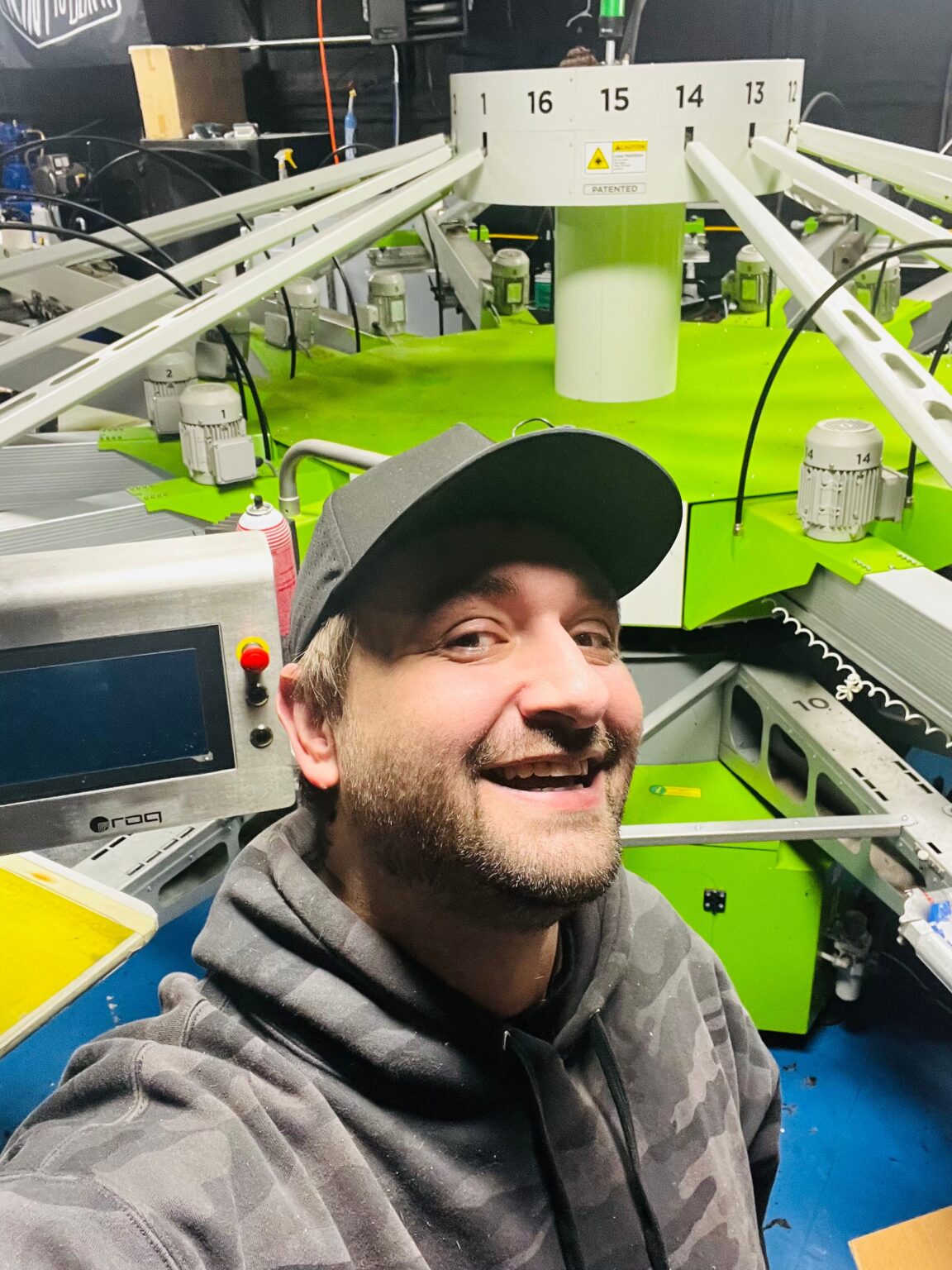
Cohen DeYoung started Pulse Merch in Southern Utah after beginning screen printing in 2012 while touring in a metal band. The business does screen printing, embroidery, and branded merchandise, but its edge is less about taking every order and more about telling customers when an idea will not print well.
AI is useful here for drafts, research, and admin work, but not for judgment. In a trade business, the real advantage still comes from knowing the craft, protecting the quality of the finished product, and building enough trust that customers arrive already half convinced.
What’s the quick origin story of your business, and what makes what you do genuinely different from the other options your customers are looking at?
I started screen printing in 2012 while I was touring in a metal band. It started as a way to make merch, and eventually turned into what I do full time. I moved to Southern Utah in 2020 and have built Pulse Merch here around screen printing, embroidery, and branded merchandise.
What makes us different is probably that I’m willing to tell a customer when something is a bad idea.
There are a lot of companies that will take whatever artwork someone uploads, put it on a shirt or hat, collect the money, and move on. I’d rather explain why something isn’t going to print or embroider well and help fix it before we produce it.
Embroidery is a great example. People send over incredibly detailed logos all the time that look great on a computer screen but will turn into a mess when you shrink them down to two inches on a hat. Instead of just saying yes, we’ll explain what details are going to disappear and simplify it so the finished product actually looks good.
I think customers appreciate having somebody who’s worked on the production side actually care about the outcome instead of just processing the order.
Where does most of your new business come from today, and where do you wish it came from?
A lot of our business still comes from referrals, repeat customers, Google, and people who have seen our work locally. We have over 100 five-star Google reviews now, so that has become a pretty big trust signal for people who have never worked with us before.
Networking has been big for me too. Southern Utah is still very relationship driven, and being involved in the business community has definitely helped.
Where I want more business to come from is organic search and people discovering us outside of our immediate area. We ship nationwide, so I don’t want Pulse Merch to only be thought of as the local screen printer.
I’d much rather invest in building something people find naturally through Google, recommendations, content, or AI search than constantly having to buy the next customer through ads. We have yet to pay for ads.
What’s one thing you’ve actually handed over to AI in the last year, and one thing you tried it on and went back to doing the human way?
I’ve handed a lot of the first draft work over to AI.
Emails, brainstorming, research, organizing information, helping me think through marketing ideas, website content, and even some of the systems I’m building internally. It’s incredibly useful for getting from a blank page to something I can react to.
What I have not handed over is judgment.
I tried using AI more heavily for marketing content and branding, and the problem is that if you’re not careful, everything starts sounding exactly like everyone else using AI. AI is becoming the average for everyone; your business shouldn’t be like everyone else unless that’s what you want to be.
You see the same phrases, the same structure, the same graphics, and the same fake polished tone everywhere.
So now I use AI more like an employee or assistant. It can give me a starting point, but I’m still deciding if the idea is actually good, if it sounds like me, and if it represents the company correctly.
The same thing happens with artwork. AI can create something that looks finished incredibly quickly, but that doesn’t mean it can actually be screen printed or embroidered well. Somebody still has to understand the production process.
Have you noticed a change in how customers find you or what they already know before they reach out? Is anyone arriving through AI assistants like ChatGPT yet?
Absolutely.
Customers are doing a lot more research before they contact you. By the time someone reaches out, they might have already looked at my Google reviews, Instagram, website, competitors, pricing information, and examples of my work.
That changes the sales process because sometimes the customer isn’t really asking, "Can you print shirts?" They’ve already decided I can. They’re trying to figure out if they trust me.
I’m also starting to think a lot more about how companies show up inside AI assistants.
I don’t have enough data yet to say that ChatGPT is sending me a huge amount of business, I am definitely getting some my a measurable amount. I think the way people search is clearly changing. People are going to ask AI things like, "Who is the best screen printer near me?" or "Where should I order embroidered hats for my business?" instead of opening Google and clicking through ten websites.
That means your reputation, reviews, website information, and the consistency of what exists about your business online are going to matter even more.
If you were advising someone in your industry on all of this for the next 12 months, what would you tell them to actually do, and what would you tell them to ignore?
I’d tell them to use AI aggressively behind the scenes, but be really careful about letting it become the voice or brain of the company.
Use it to research, organize ideas, answer questions faster, improve processes, automate repetitive work, and get through the boring stuff.
But learn your actual craft.
If you’re a screen printer, understand ink, garments, artwork, separations, curing, and why something works or doesn’t work. If you’re an embroiderer, understand thread, density, lettering sizes, digitizing, and how different hats sew.
AI makes it easier than ever to sound like an expert without actually being one, and I think customers are eventually going to get very good at spotting the difference.
I’d also tell people to invest heavily in their reputation online. Get real reviews. Show real work. Answer real customer questions on your website. Make it very obvious who you are, where you work, and why somebody should trust you.
What I would ignore is the constant stream of people saying every new AI tool is going to completely change your business overnight.
There will always be another tool.
The companies that win are still going to be the ones that do good work, answer the phone, solve problems, take care of customers, and use technology to make those things easier instead of trying to replace the
Thank you to Cohen DeYoung and the team at Pulse Merch for sharing what actually worked with Leaders Perception readers.
Want to share your playbook?
Leaders Perception publishes founder and operator interviews every week. A few questions, about five minutes, no calls. It is free and everyone we accept gets published.