
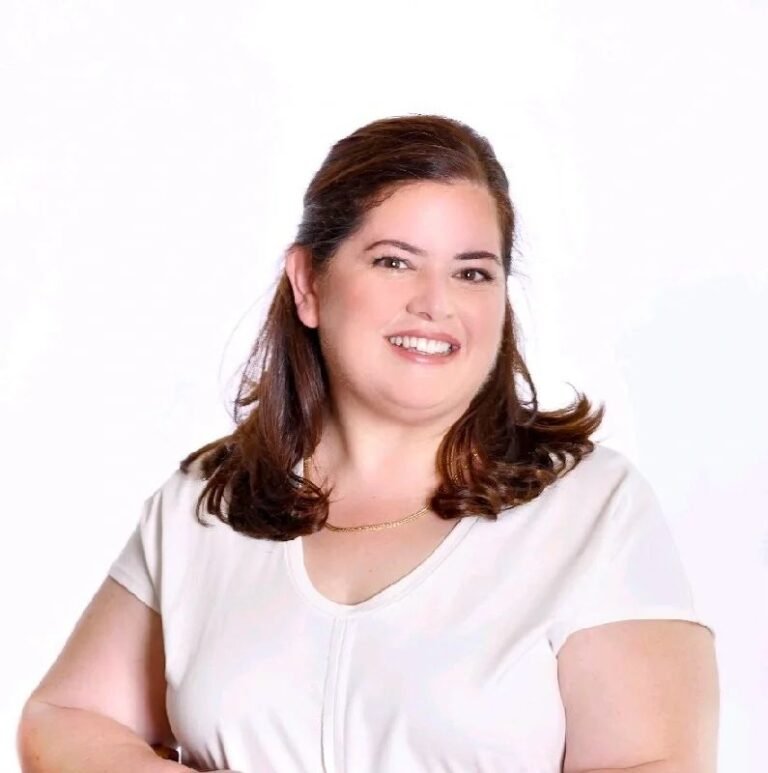
Why Chava Sorani thinks movement can start with less effort
Chava Sorani is a Feldenkrais Practitioner (GCFP) and Founder of Feldy, an online movement program that turns personal goals into short, guided audio lessons for adults. The conversation explores why smaller, slower movements may offer a different route to learning, and why age should not be treated as a limit on that capacity.
Sorani’s central point is that more effort is not always the answer to movement difficulties; slower, smaller movements and attention can help people explore alternatives. Feldy applies that idea through personalised audio lessons, as an additional approach rather than a replacement for strength training, walking or physiotherapy.
What’s one opinion about your industry that most of your peers would disagree with?
One belief I would challenge is that when something in your body isn’t working, you need to try harder. More repetitions, more strength, more effort.
I see it differently. Often, the body doesn’t need more effort. It needs better information.
When you make a movement smaller, slower and easier, you begin to notice what you’re actually doing. You give your brain a chance to explore alternatives and discover possibilities that effort alone might not reveal.
I’d also challenge the idea that ageing means losing the ability to learn new ways of moving. Many people believe that if they haven’t been physically active or involved in sport throughout their lives, it’s simply too late to start. I don’t believe that. The brain retains its ability to change and learn throughout life. We don’t stop being capable of learning just because we get older.
Sometimes, the most meaningful changes begin with the smallest movements.
What convinced you? Tell us about the moment, client or result that changed your mind.
My own back.
A few weeks before my wedding, I developed terrible back pain. Nothing I tried during those weeks helped. Then a childhood friend suggested the Feldenkrais Method®. I was skeptical, but desperate enough to try.
The teacher didn’t ask me to push, stretch or strengthen anything. She guided me through slow, gentle movements, inviting me to pay attention to how I moved. After the first lesson, I felt enormous relief.
I wanted to understand how something so gentle could have such a powerful effect. I continued taking lessons and eventually trained as a Feldenkrais teacher.
Over the years, I’ve seen how this approach can open up possibilities people thought were no longer available to them.
I remember one student in her 70s who told me she could get up from the floor for the first time in years, without fear. What struck me wasn’t just the physical achievement. It was the discovery that she was still capable of learning something new about herself and her body.
That, to me, is one of the most exciting things about the method: our capacity to learn doesn’t have an expiry date.
What’s the usual way people in your field handle this, and what do you do instead?
Traditionally, people are given exercises to repeat, targets to reach and sometimes an ideal posture to aim for. The underlying assumption is often that more effort leads to better results.
At Feldy (feldy.me), we take a different approach. We start by asking what matters to you: perhaps back pain, sleep, stress or simply feeling more comfortable in everyday movement.
Feldy then turns those goals into your own Feldy Path, a personalised sequence of short audio lessons, one at a time.
You do each lesson lying down or sitting in a chair. The movements are smaller and slower than you might expect. You rest often and pay attention to what feels different. There’s no ideal posture to achieve, no performance to measure and no one to keep up with.
You move only as far as feels easy and comfortable.
The idea isn’t to achieve more through effort, but to learn more through attention. Gradually, you can discover new options in movements you may have been doing the same way for years.
Where has this view cost you, or where have you had to admit you were partly wrong?
It’s not always easy to communicate or sell this message. "Do less" doesn’t look particularly impressive in an advertisement. People often expect a workout to leave them sweating or feeling that they’ve worked hard. Some finish their first lesson wondering whether they’ve done anything at all. Some don’t come back. I’ve had to accept that.
I’ve also learned that effort itself isn’t the enemy. Strength training, walking and physiotherapy can do a tremendous amount of good, and many people need them. The Feldenkrais Method isn’t a replacement for these approaches; it offers another dimension of learning and movement awareness.
What I continue to question is the assumption that effort automatically produces better results, or that physical decline is inevitable and irreversible as we age.
I’ve learned that people sometimes need to experience a different way of learning before they can appreciate its value.
What should someone in your field stop doing, and what should they start doing?
Stop telling people to push through discomfort, stop treating movement as a performance, and stop assuming that ageing means it’s too late to change.
We should also stop judging movements simply as right or wrong, or expecting everyone to work towards the same physical ideal. These messages can teach people to ignore what their bodies are telling them.
Instead, give people permission to slow down, rest and explore. Ask what they notice rather than telling them what they should feel. Offer opportunities to learn through movement rather than simply prescribing more exercises.
And perhaps most importantly, stop underestimating the older brain.
The capacity for neuroplasticity, for learning and forming new connections, continues throughout life. Someone who has never been sporty, who has spent years avoiding movement or who believes their body is simply too old to change can still begin discovering new possibilities.
We don’t have to accept that the way we move today is the only way we can move tomorrow.
It’s never too late to learn something new about yourself.
Thank you to Chava Sorani and the team at Feldy for sharing an honest view with Leaders Perception readers.
Have a view your industry needs to hear?
Leaders Perception publishes interviews with business owners and leaders who see their industry differently. Five questions, about ten minutes, no calls. It is free and every completed interview gets published.