
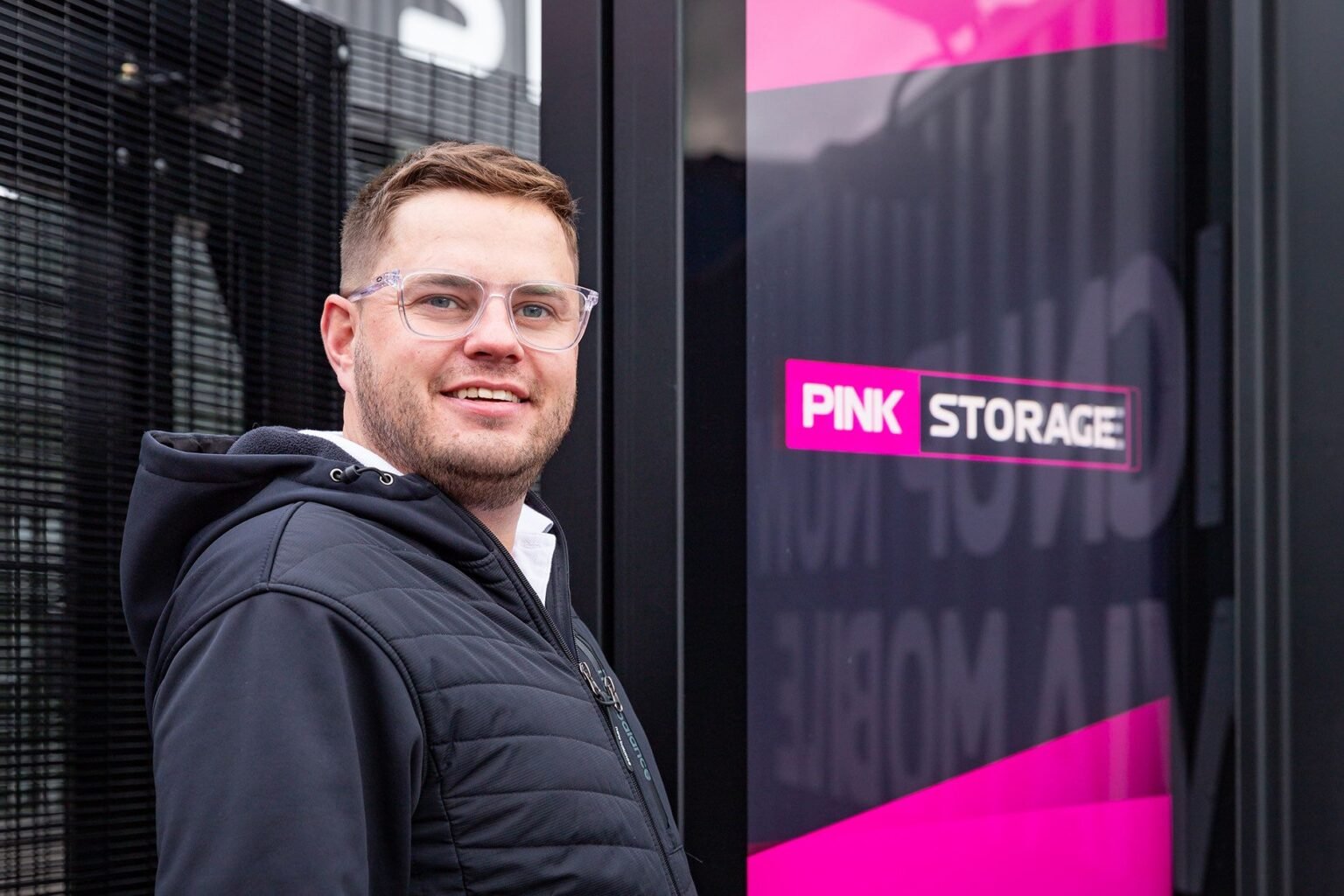
How Scott Evans is rethinking self storage at Pink Storage
Scott Evans is CEO of Pink Storage, a self-storage business for individuals and businesses with 26 locations across Wales and England. The interview explores how the company is using digital booking, PIN access and operational technology, alongside practical lessons on understanding local demand and growing without simply copying competitors.
Understand local demand and competition before committing to a site, and plan for technology early rather than adding it as an afterthought. Growth is more sustainable when it follows customer value and sound site decisions, not the urge to copy competitors.
What’s the short story of how your business started, and what makes it genuinely different from the other options your customers have?
Pink Storage was founded in Wales in 2016 by Scott Evans, who saw an opportunity to do things differently in a self-storage industry that had changed very little. What started as a single site has grown into a business with 26 locations across Wales and England, with further expansion planned.
From the outset, the ambition was to make storage more convenient, accessible and straightforward for customers. That means combining secure, flexible storage with technology that removes unnecessary friction from the experience. Customers can book online, access their units using a PIN and make payments digitally, without having to rely on traditional office-based processes.
We’re also investing in technology to change how our facilities operate. Pink Brain, our own AI-powered operating system, is designed to use real-time data from sensors to help manage sites more intelligently. For us, innovation isn’t about technology for its own sake. It’s about making storage easier for customers, improving efficiency and rethinking what a self-storage business can be.
How did you win your first customers, and where does most of your new business come from today?
In the early days, one of the first things that helped Pink Storage stand out was its branding. With a background in graphic design, I knew the importance of getting the visual identity right. The colours, logo and overall look of the business were deliberately chosen to catch people’s attention and make Pink Storage recognisable in what was a fairly traditional industry.
What’s one decision that changed the direction of your business, and one mistake that taught you the most?
A major turning point was deciding that Pink Storage would challenge the traditional way self-storage facilities operate, rather than simply opening more sites and doing things the way they had always been done. My background in graphic design had already taught me to look at things differently, but I wanted that thinking to extend beyond the brand and into the actual customer experience.
That led us to invest in technology and automation, from digital access and online booking to the development of Pink Brain, our own AI-powered operating system. It’s changed how we think about running our sites and what a self-storage business could look like in the future.
What has changed in your industry or in what your customers expect over the last couple of years, and how have you adapted?
Self-storage has traditionally been quite a conventional industry, but customer expectations have changed. People are increasingly used to managing services online, making payments digitally and having access when it suits them. We’re seeing more customers expect to be able to arrange their storage online and access their units without having to work around office opening hours.
We’ve adapted by investing in technology that makes the process simpler, from online booking and digital payments to PIN access, giving customers greater flexibility and control over their storage.
But we’re looking beyond the customer journey too. With Pink Brain, our own AI-powered operating system, we’re exploring how real-time data and automation can change the way our facilities are run. We believe the future of self-storage will be about combining convenience for customers with smarter, more efficient operations behind the scenes.
Our approach has always been to question how things have traditionally been done and look for ways to improve them. That’s becoming increasingly important as the industry evolves.
If you were advising someone starting out in your industry today, what would you tell them to do first, and what would you tell them to ignore?
I’d tell anyone starting out to understand their customers and the local market before committing to a site. Location is hugely important in self-storage, so you need to know whether there is genuine demand, who your competitors are and what you can offer that gives customers a reason to choose you.
I’d also encourage them to think about technology from the beginning, rather than treating it as something to add later. The way people expect to book, pay for and access services has changed, and self-storage needs to keep pace. Getting the right systems in place early can make a real difference as the business grows.
What I’d tell them to ignore is the temptation to copy everyone else or chase growth for its own sake. Just because another operator is doing something doesn’t mean it’s right for your business. Focus on building a strong, recognisable brand, delivering a service customers value and making sound decisions about where and when to expand. Growth is important, but it needs to be sustainable.
Thank you to Scott Evans and the team at Pink Storage for sharing what actually worked with Leaders Perception readers.
Want to tell the story behind your business?
Leaders Perception publishes interviews with business owners and leaders every week. Five questions, about ten minutes, no calls. It is free and every completed interview gets published.