
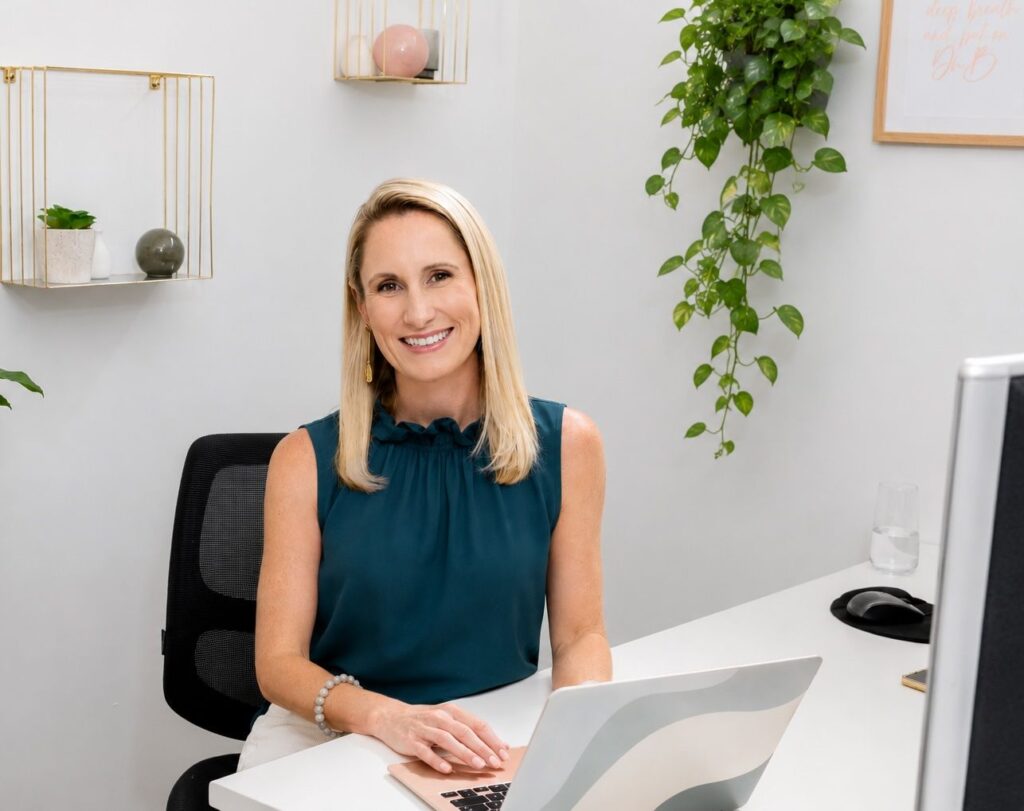
AI for admin, humans for creative at Affinity Marketing
Brianna Vidal is director of Affinity Marketing, a Sydney-based agency that specialises in B2B, professional services and health and medical marketing. The firm has used AI to automate campaign setup, management and reporting while keeping creative strategy and brand voice human – and has restructured client sites to bring real traffic from AI assistants.
Audit your processes before adding tools: automate the manual, time-consuming tasks first and keep strategy and big-picture creative with people. Start small – one system done properly – so you don’t end up with a stack of subscriptions and nothing to show for it.
What’s the quick origin story of your business, and what makes what you do genuinely different from the other options your customers are looking at?
I started Affinity Marketing not long after the GFC, coming out of a marketing management role where I was juggling multiple brands and B2B channels. I started consulting off the back of that network – and being in my mid 20s was meant to be a short-term exercise – but one referral led to another, and I got hooked on the autonomy of working for myself and building my own team and network. Eighteen years later, we’re a Sydney-based agency specialising in B2B, professional services, and health and medical marketing, and we still run on that same belief: good strategy beats big budgets. What sets us apart is that we actually know these sectors, deeply, not in a generic, jack-of-all-trades way. That means our clients aren’t stuck explaining their industry to us, we’re straight into the meaningful work that moves things forward.
Where does most of your new business come from today, and where do you wish it came from?
Referrals are what we’ve built the whole business on, and there’s something about the trust someone hands you when they refer a client that I don’t think any pipeline tool will ever really replicate. It also remains an incredibly human part of business and at the end of the day we like doing business with humans we like and trust. We genuinely love that about the business. We would like to invest more of our time into our own content and search work that we do for clients, to pull in the kind of curious, qualified interest that used to only come through referral and that can see our bredth of experience and AI/automation opportunities relevant to their industry.
What’s one thing you’ve actually handed over to AI in the last year, and one thing you tried it on and went back to doing the human way?
The admin-heavy side of running campaigns has been a huge win with AI – setup, management, reporting – it’s freed up time and given us sharper insights into what’s actually working, faster than we’d get manually. Where we’ve pulled back is creative. We’ve found the tools genuinely aren’t there yet for overarching design and there has been a lot of claims that tools can do more than they actually can. For more templated work, AI can hold its own when you piece a few platforms together, but the bigger creative thinking still stays with our team, and definitely in regards to strategy direction and sequencing of marketing activities.
Have you noticed a change in how customers find you or what they already know before they reach out? Is anyone arriving through AI assistants like ChatGPT yet?
Yes, and it’s becoming much more noticeable – we’re seeing real, meaningful traffic coming through AI assistants like ChatGPT and Claude when we look at the analytics now. One client we’ve worked with a lot on this had a big, content-heavy website that just wasn’t built for AI search – we restructured it, cleaned up the schema and content layout, and it’s now far more readable to AI search. It’s bringing in genuinely targeted traffic in their category, which has been a great result to watch.
If you were advising someone in your industry on all of this for the next 12 months, what would you tell them to actually do, and what would you tell them to ignore?
Audit before you add anything – figure out what’s actually broken before you throw a tool at it, because bolting AI onto a messy process just gives you a messier process.
A good place to start is the manual, time-intensive tasks – look at the process itself and work out where parts of it, or all of it, could be automated. Get the strategy sorted first, then pick tools that serve it. And start small – one process or system, i.e content or CRM, done properly, before you expand. One area we’ve had exciting results in is the crossover between sales and marketing – automating highly personalised outreach and marketing campaigns that blend both, rather than treating them as separate functions. What I’d tell them to skip is trying to overhaul everything at once – that’s how you end up with a stack of subscriptions and nothing to show for it. And don’t lose the human layer. AI can carry the workload, but strategy, relationships, and brand voice still need a person behind them who actually gets it. Someone still needs to oversee much of the output and make sure it’s on brand, aligned to the strategy, and actually sounds like the business it’s supposed to represent.
Thank you to Brianna Vidal and the team at Affinity Marketing for sharing what actually worked with Leaders Perception readers.
Want to share your playbook?
Leaders Perception publishes founder and operator interviews every week. A few questions, about five minutes, no calls. It is free and everyone we accept gets published.