
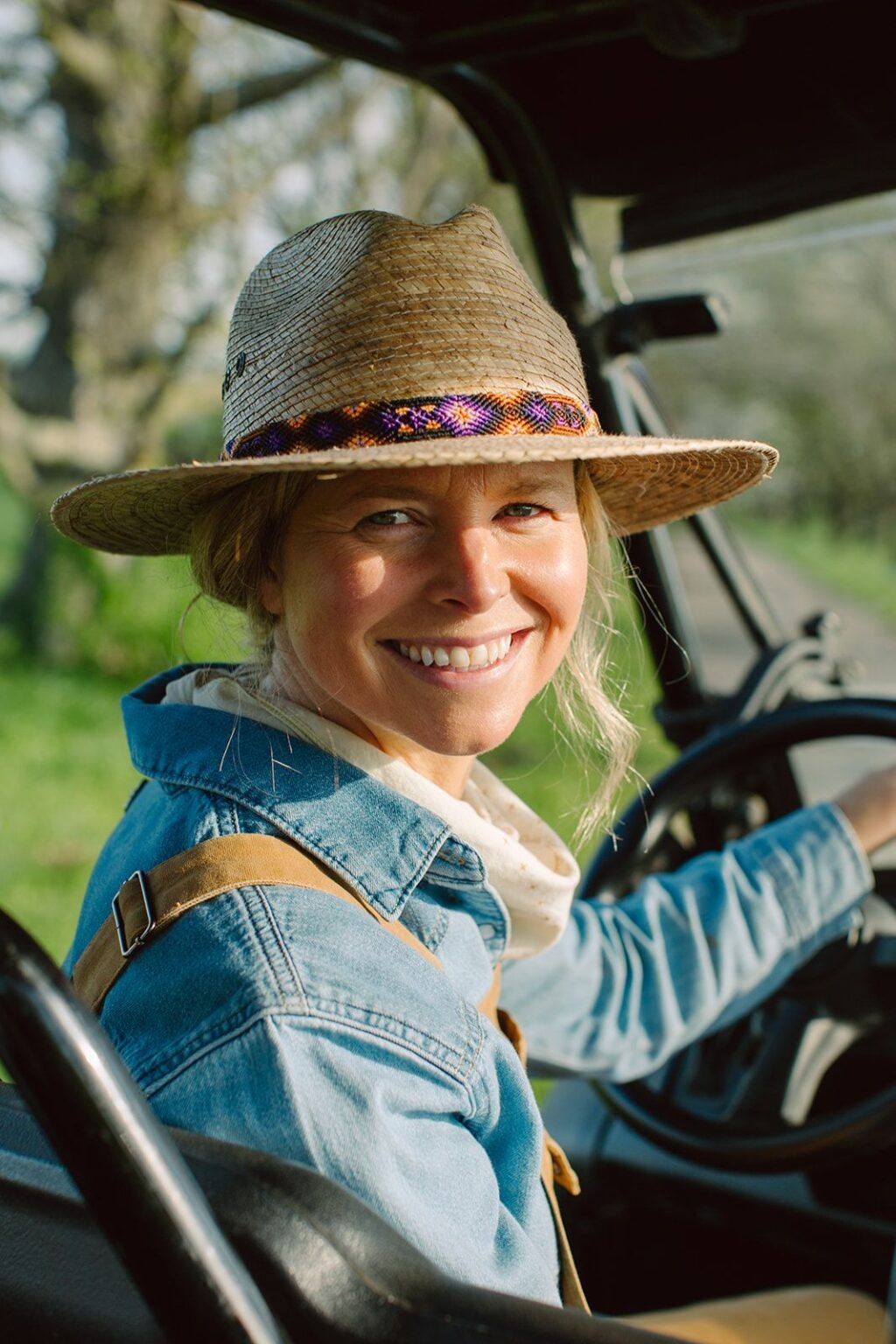
Maggie Keith on rebuilding soil and earning trust at Foxhollow Farm
Maggie Keith is a fourth-generation farmer and entrepreneur at Foxhollow Farm, a 1,300-acre regenerative and Biodynamic farm in Crestwood, Kentucky, offering grass-fed, grass-finished beef. The conversation explores how bringing cattle back to the land shaped the business, how farm visits and verifiable standards help customers understand its practices, and why relying on one way to tell the farm’s story proved risky.
Build trust by showing customers how the work is done and backing claims with standards they can verify. For a farm, that also means protecting the land’s capacity, explaining costs clearly, and reaching customers through more than one channel.
What’s the short story of how your business started, and what makes it genuinely different from the other options your customers have?
Foxhollow has been in my family for four generations, but our beef business began taking shape in 2006, when we brought cattle back to the land. My family wanted to restore depleted soil, and rotational grazing became an important part of that work. As the cattle moved across the pastures, the grass grew deeper and more diverse, and the soil began to recover. Over time, raising cattle became the foundation of the business we’ve built over the past twenty years.
What makes Foxhollow different is that we can tell customers exactly how their beef was raised, and we have certifications to back up our practices. Our beef is 100% grass-fed and grass-finished, and Foxhollow holds Demeter Biodynamic, American Grassfed Association, and Regenified Level 5 certifications. Those standards matter because words like "natural" and "sustainable" are everywhere now, but they don’t always tell customers how an animal was raised.
We’re also a working farm that people can experience for themselves. Customers can visit our on-site Foxhollow Market, join our curated farm experiences, or attend Field n’ Folk, our seasonal concert series. That personal connection has been part of our business since the beginning, when our first customers were neighbors and local families who came out to see the cattle and ask questions. Twenty years later, I still believe knowing where your food comes from, how it was raised, and who raised it makes all the difference.
How did you win your first customers, and where does most of your new business come from today?
Our first customers came from close to home. When we brought cattle back to Foxhollow in 2006, we sold to people who already knew the land: neighbors, friends of the farm, and families in Oldham County and Louisville who wanted to buy beef from someone they could call by name. Most of those early sales happened face to face. People drove out, walked the pasture, saw the cattle on grass, and asked hard questions. I answered every one of them. Those conversations built a kind of trust that has stayed with our customers for years.
Today, most of our new business comes from three places: our direct-to-consumer shop, where we ship regionally; the Foxhollow Market here on the farm; and the people who visit through our curated experiences and events like Field n’ Folk. Someone comes out for a concert or a small gathering, eats a burger from cattle raised a few hundred yards away, and goes home wanting that same connection at their own table. Word of mouth still carries a lot of weight. Our customers tell their friends, and those friends arrive already understanding why it matters to know your farmer.
What’s one decision that changed the direction of your business, and one mistake that taught you the most?
The decision that shaped everything was bringing cattle back to the land in 2006. I saw it at first as a way to rebuild depleted soil. Rotational grazing turned out to be the engine of the whole farm. The cattle moved across the pasture, the grass came back deeper and more diverse, the soil biology came alive, and the beef became the way people could actually taste what we were doing on the land. That one choice set the course for the next 20 years, including our Biodynamic, AGA, and Regenified Level 5 certifications.
The mistake that taught me the most was relying on a single platform to tell our story. For years, the PBS series was the main way people outside Kentucky learned about Foxhollow, and we had no other plan for reaching them. When federal funding cuts ended the show, I saw how much of our visibility depended on one channel. The lesson stuck: the people doing the work have a responsibility to explain it clearly, in many places, especially now that large brands are borrowing the language small farms spent decades giving meaning to. That’s a big part of why I’m stepping into earned media now.
What has changed in your industry or in what your customers expect over the last couple of years, and how have you adapted?
The biggest change is that the language caught up with us faster than the standards did. When we brought cattle back onto this land twenty years ago, “grass-fed” was a niche term that mostly lived at farmers markets. Today it’s on the shelf at Costco and Kroger, and the label covers a lot of ground. An animal can be raised in Australia, fed hay in a feedlot, shipped here, and still carry the same words we use for cattle that spend their whole lives on our pasture.
Customers have noticed. The people who find us now arrive with sharper questions: Where was the animal born? Where was it finished? What did it eat in February? Who can I call if I want to know more? Those are questions we can answer, so this shift has been good for us. We’ve adapted in a few ways.
First, we made our practices verifiable. Foxhollow holds Demeter Biodynamic, Regenified Level 5, and AGA certification at the same time. I pursued all three because customers deserve a standard they can check against something outside our own marketing.
Second, we opened the gate. People want to see where their food comes from, so we invite them in through curated farm experiences for 12 to 24 people, our on-site Foxhollow Market, and Field n’ Folk, our seasonal concert series on the land. Someone who has stood in the pasture and watched the herd move through a rotation understands our beef in a way no label can explain.
Third, we’re thinking about the whole animal. Interest in organ meat, bone broth, and collagen has grown quickly, and it lines up with something we’ve always believed: a responsibly raised animal deserves to be used completely. We’re developing collagen and organ meat products so more of each animal reaches people’s kitchens.
Price sensitivity has also grown. Groceries are expensive, and our beef costs what it takes to raise it this way. So we talk about cost openly: the acreage, the time on pasture, the slower growth of a grass-finished animal. Customers respect being told the truth about what good food requires.
If you were advising someone starting out in your industry today, what would you tell them to do first, and what would you tell them to ignore?
Spend your first year learning your land. Walk it in every season. Test the soil, watch where the water goes after a heavy rain, and notice what grows on its own. Everything on a farm follows from soil health, and the land will tell you a great deal if you give it time.
Then find the people who have farmed your region for generations and listen to them. In my early twenties I drove around Kentucky visiting multi-generational farmers, and those conversations shaped everything I’ve done since. My first real mentor was Mary Berry. A good mentor will save you years of expensive mistakes.
Learn your numbers early, too. Know what it costs to raise one animal from birth to finish on your system. Farmers today also have to be marketers, distributors, and educators, and the farms that last are the ones that plan for that work from day one.
As for what to ignore: start with the pressure to scale fast. Growth that outpaces your land’s capacity will cost you soil, and soil takes decades to rebuild. Set aside the buzzwords as well. Anyone can print “sustainable,” “natural,” or “clean” on a package. Describe exactly how you graze, what your animals eat, and how you care for the land, and the people who value that will find you. Finally, tune out the voices telling you to look a certain way online. A working farm has mud on it, and the customers who stay with you for years want to see the real thing.
Thank you to Maggie Keith and the team at Foxhollow Farm for sharing what actually worked with Leaders Perception readers.
Want to tell the story behind your business?
Leaders Perception publishes interviews with business owners and leaders every week. Five questions, about ten minutes, no calls. It is free and every completed interview gets published.