
Why David Fang asks questions before quoting soap machinery
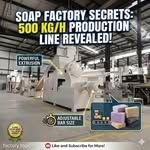
David Fang is Export Manager at KAIFENG JASUN INDUSTRY CO., LTD., which designs and manufactures soap production lines and soap-making machines from 50 to 3,000 kg/h. Fang argues that machinery sellers should understand a buyer’s raw material, soap type and capacity before quoting, and be precise about materials and certificates.
Fang’s approach is to ask about raw material, soap type and capacity before giving a tailored quote, while ensuring material specifications and certificates match the machine. Publishing a realistic price range can give buyers an early guide without replacing those questions.
What’s one opinion about your industry that most of your peers would disagree with?
In B2B machinery sales, the fastest way to lose a deal is to give a price too early — and the fastest way to lose your reputation is to claim a certificate you don’t have. Most sellers do both without thinking. I won’t do either.
What convinced you? Tell us about the moment, client or result that changed your mind.
The proof came from the customers who stayed. A customer in Mali bought the same 500 kg/h laundry soap line from us in 2021 — then ordered the same line again in 2023, and again in 2025. Nobody orders the same machine three times from a supplier who misled them the first time. That repeat business convinced me the slow answer is the right one: ask first, quote second.
What’s the usual way people in your field handle this, and what do you do instead?
The usual way is to quote first and ask later — a low number to win the reply, then the real price, or a machine that doesn’t fit the buyer’s soap. Some sellers will also print any steel grade or certificate a buyer asks for. I do the opposite. Before any price, I ask three questions: are you producing from oil or soap noodles, laundry soap or toilet soap, and what capacity do you need? And our documents state only what is true: the parts that touch soap are stainless steel — grade 201 as standard, and 304, food grade, if the customer asks for it, at a higher cost. Certificates are arranged to the customer’s requirements — for example, the SONCAP certificate our customer in Nigeria needed. What we will not do is print a grade or a certificate on paper that the machine doesn’t actually have.
Where has this view cost you, or where have you had to admit you were partly wrong?
It costs us deals. Some buyers want a number in the first message, and if I ask questions instead, they go to a seller who gives them a number. I accept that. Where I was partly wrong: I used to think no number should come before the questions at all. We now publish honest price ranges on our website, so a buyer can see the ballpark before writing to us. The range doesn’t replace the questions — but it respects the buyer’s time.
What should someone in your field stop doing, and what should they start doing?
Stop quoting before you know what the buyer is making, and stop printing certificates and grades you don’t hold. Start asking the questions that decide the machine — raw material, soap type, capacity — and start publishing what your equipment really is: materials, capacity, limits. Buyers who get true information make better decisions, and the ones who buy from you stay.
Thank you to David Fang and the team at KAIFENG JASUN INDUSTRY CO., LTD. for sharing an honest view with Leaders Perception readers.
Have a view your industry needs to hear?
Leaders Perception publishes interviews with business owners and leaders who see their industry differently. Five questions, about ten minutes, no calls. It is free and every completed interview gets published.