
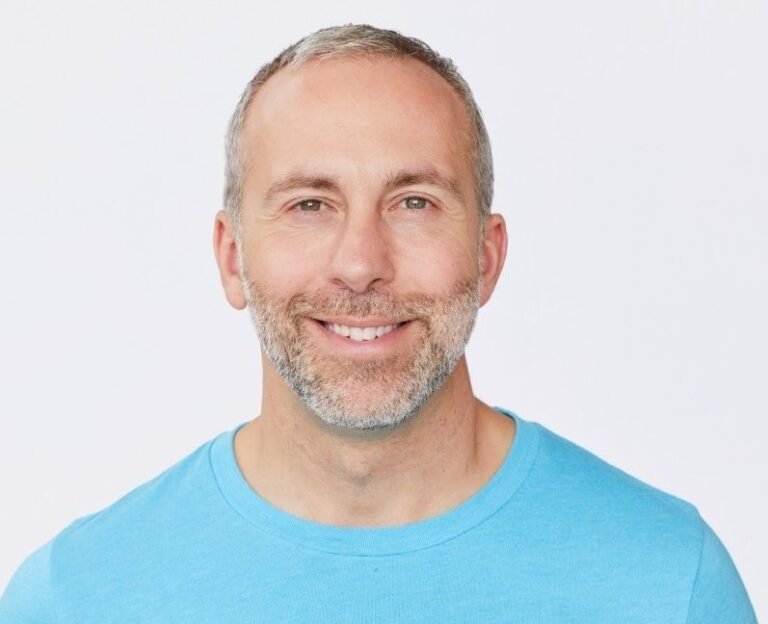
Rob Catalano on making AI agents work as a system
Rob Catalano is CEO of wysdym, which provides an operating layer for revenue teams using agentic go-to-market, giving their AI agents shared company information, rules and feedback loops. In this conversation, Catalano explains why wysdym built infrastructure rather than another agent, where AI has sped up product work, and why customer outreach remains human-reviewed.
Revenue teams should establish a shared source of truth, governance and outcome measurement before adding more agents. AI can support research, drafting and product QA, while customer-facing outreach can retain human approval when relationship-building is the goal.
What’s the quick origin story of your business, and what makes what you do genuinely different from the other options your customers are looking at?
My co-founders and I spent decades building and selling software. As AI became more ingrained in how customers searched and bought software, and how it elevated the go-to-market strategies for companies, we started to see that our old playbooks of sales and marketing, that worked for a long time, weren’t really working anymore.
We thought the problem of sales and marketing efficiency and slowing conversion rates was a problem isolated to us, but as we looked at other companies in our ecosystem, we realized that we weren’t alone. Companies were making the necessary strategy shift from legacy to agentic go-to-market.
When many AI agents arrived, our first reaction was to build impactful GTM AI agents that would automate software demos and deal with inbound traffic autonomously. But, as we spoke to more GTM leaders, we watched the same thing happen at every company we talked to. They would add an agent for prospecting, another for research, another for follow-up, each from a different vendor, each retrieving the same company knowledge separately, none of them learning from the others.
Ten agents closing gaps individually is not a system. So we decided to not build another agent. We built what sits under them.
Most options are agents competing for single tasks, with major vendors pushing single-ecosystem lock-in. We believe relying on one model vendor is a mistake for three key reasons: First, top-performing models change rapidly, and optimal choices vary between research, drafting, and deal scoring. Teams need the flexibility to switch models seamlessly. Second, storing company knowledge within a vendor’s agent forces you to rent your own data back. Core assets like ICP, positioning, pricing, and deal history belong in an owner-controlled layer that all agents access. Third, vendors only govern their proprietary tools. Because teams naturally adopt diverse agents, unified governance and outcome measurement must be applied centrally across all of them. That is what wysdym is. Vendor-agnostic infrastructure that makes whatever agents a team runs compound instead of multiply. Bring Claude, bring OpenAI, bring your own. We hold the truth, enforce the rules and track what actually moved revenue, and the whole system gets smarter together.
Where does most of your new business come from today, and where do you wish it came from?
We are a newer company, so the honest answer is our connections and conversations. We interviewed roughly 100 GTM leaders about what is actually breaking in their stacks, published what they told us (https://gtmstats.wysdym.ai/), and the discussions that follow are our pipeline. Founder-to-founder introductions do the rest.
That being said, much of the other new business comes in organically. We know that GTM leaders and organizations are learning as they go. We’re all writing the new agentic GTM playbook together and we have leaned in heavily on sharing best practices, educating the space on what’s new out there, and on building community.
Where I wish it came from: people arriving already convinced by the research, not by us. We want a revenue leader to ask an AI assistant why their agent projects are stalling, get pointed at something we published, and show up knowing the problem before we say a word. That is the motion we are building toward, and it is slower than paying for leads. We think it compounds the same way the product does.
What’s one thing you’ve actually handed over to AI in the last year, and one thing you tried it on and went back to doing the human way?
We’ve handed over a lot to AI. The game changer has been how we build and QA our product. Co-founders are shipping a product scope that would have needed a team ten times our size at our last companies. Agents draft the specs, write and review code, run QA passes against every change, and keep the documentation and integration wiring current as we go. A human still decides what we build and signs off on what ships, but the distance between an idea and a tested, documented feature has collapsed from months to days.
What we went back to humans for is outreach. We tried automated outreach early on, and it worked in the mechanical sense. It just did not feel human enough for how we are building community. People can tell when a sequence is talking to them, and the relationships we are trying to build with prospects, partners and peers are worth more than the time saved. So AI still does the research and drafts the first version, but a human presses every button. Every message to a prospect, a partner or a founder is sent by one of us, on purpose. What has been great throughout this process, however, is that we were able to “drink our champagne” by leveraging wysdym to make our GTM agents successful and define the level of autonomy and governance that works for us.
What I learned from both is where the line is. Hand AI the work where speed and thoroughness matter most and a human review is enough. Keep the human on anything where the relationship is the point.
Have you noticed a change in how customers find you or what they already know before they reach out? Is anyone arriving through AI assistants like ChatGPT yet?
The biggest change is how much people already know. A year ago the first call was about what an agent is. Now revenue leaders arrive having already tried three of them, and the question is why the results did not stick.
Is anyone arriving through AI assistants? Yes, and it is growing. When we measure month over month, we are seeing a steady increase both in how often wysdym shows up in AI assistant answers and in the traffic that arrives from them. It is still early and the numbers are small, and as a new company we had to start from scratch to get noticed at all. There was no brand history for the assistants to draw on.
What has changed is who we write for. Philosophically, we have always believed in educating the market, and we have seen for years that it works. What is new is that we stopped thinking of “the buyer” as one person. A RevOps leader asking an AI assistant about agentic GTM wants to know how it fits the stack, who governs it and what breaks. A sales leader wants to know whether it moves the pipeline this quarter. A marketer wants to know what it does to the funnel and the brand. An executive wants to know what it costs, what the risk is and why the last three AI projects did not stick.
Those are four different questions, and an assistant will answer each of them with whatever source speaks to that persona most directly. So we now build our narrative for each of those conversations on purpose.
If you were advising someone in your industry on all of this for the next 12 months, what would you tell them to actually do, and what would you tell them to ignore?
Do three things.
First, build one source of company truth before you add another agent. Your positioning, your ideal customer, your pricing, your objection handling, in one place every agent reads from. If each agent has its own version, you are paying for the same retrieval many times and getting different answers.
Second, put a human approval step on anything that touches a customer or changes a record, and make sure those approvals flow back into the knowledge. An approval that disappears is wasted. An approval that teaches the next agent is the whole point.
Third, measure outcomes, not activity. Meetings booked, pipeline created, deals moved. If a vendor can only show you how many emails the agent sent, that is a red flag.
Ignore "add an agent for that." Every GTM problem now comes with a vendor offering an agent to fix it. Gartner has projected that more than 40 percent of agentic AI projects will be cancelled by the end of 2027, mostly on cost and governance, and that matches what the GTM leaders we interviewed told us.
Access to AI is no longer the edge. The edge is whether your agents compound or just multiply. More agents will not grow revenue. Compounding intelligence will.
Thank you to Rob Catalano and the team at wysdym for sharing what actually worked with Leaders Perception readers.
Want to share your playbook?
Leaders Perception publishes founder and operator interviews every week. A few questions, about five minutes, no calls. It is free and everyone we accept gets published.