
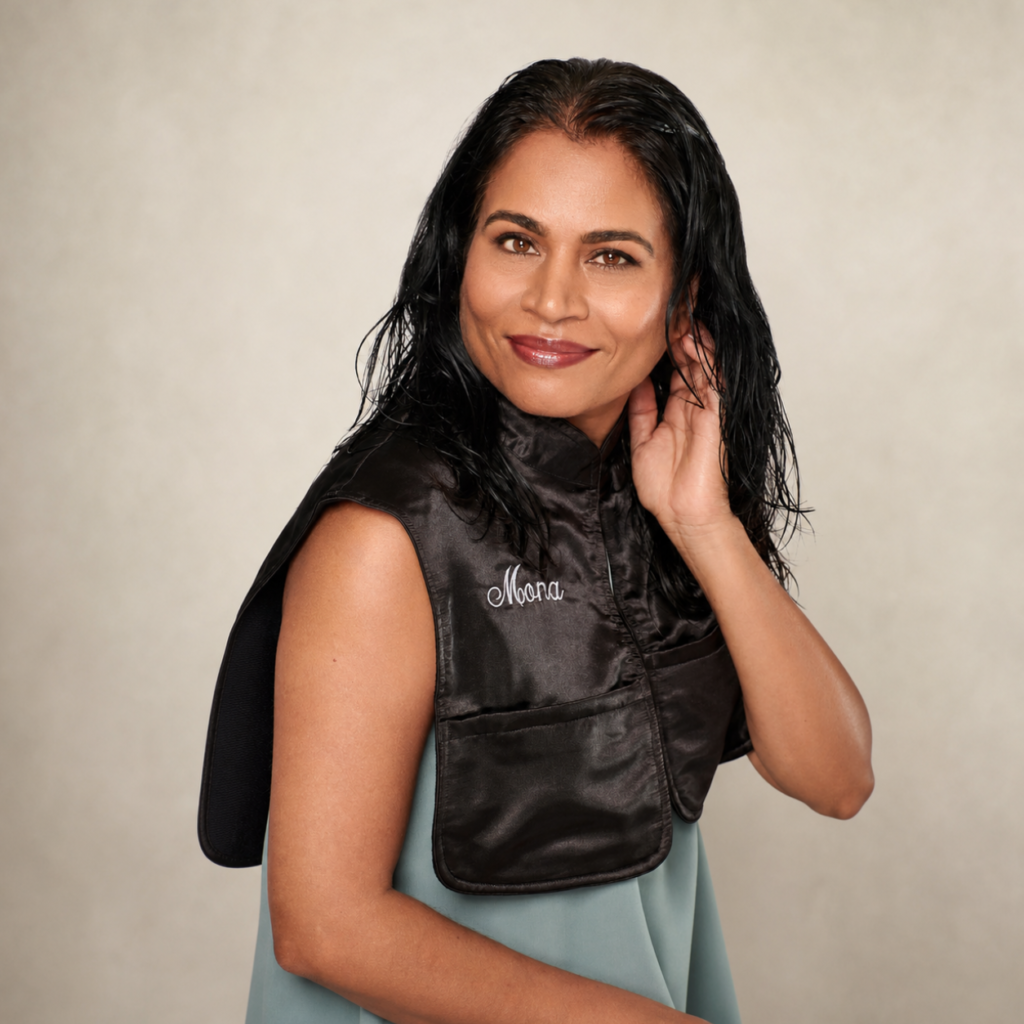
Monii’s getting-ready cover: solving wet-hair drips between shower and outfit
Mona Patel is CEO & Founder of Monii, which makes the Monii Beauty Cover, a wearable getting-ready cover that catches wet-hair drips and leaves arms free for hair and makeup. She runs the business with a practical use of AI: automating the first pass of weekly operations so routine work is sorted, while keeping pricing, outreach and final decisions strictly human.
Use AI to handle repeatable, unglamorous tasks – first drafts, SEO cleanup and routine checks – so the work stops piling up, but never let it act autonomously on outreach, pricing or customer relationships; keep the final call human.
What’s the quick origin story of your business, and what makes what you do genuinely different from the other options your customers are looking at?
Monii started because my own wet hair kept dripping onto my shoulders while I was getting ready. I used towels and robes to stay dry, and none of it was made for that moment. The towel slipped. The robe was too warm and bulky. So either my clothes ended up damp while my hair air-dried, or I rushed to get dressed because I didn’t want to feel wet hair on my back. It was an ordinary problem, but it kept annoying me, and no practical solution existed. So I decided to make one.
What makes the Monii Beauty Cover different is that it isn’t a robe and it isn’t a towel. It’s a getting-ready cover, which is really its own category. It buttons at the neck, drapes over the shoulders, and is open at the sides so your arms move freely, which matters when you’re actually doing your hair and makeup. There are front pockets for clips and brushes and a back pocket made for wet hair drips. Satin on the outside is gentle on wet hair, absorbent cotton inside catches the drips. It feels like part of the routine instead of something you grabbed because you had nothing better.
Where does most of your new business come from today, and where do you wish it came from?
My growth has been organic, and it came from professionals. Stylists, especially curly hair stylists, saw Monii and recognized it as a tool their clients needed. They introduced it to their clients, and the clients related to it instantly, because it named a problem they’d been working around for years. That’s still where most of my new customers come from, and it’s the best kind of referral, because it comes from someone who watches this happen all day long.
Where I want it to come from next is everyone else. This isn’t a specialty problem. Almost every woman has stood there with wet hair trying to keep her clothes dry, or gotten dressed too fast just to avoid the feeling of it. The same goes for makeup. Foundation on your collar, powder down your front, getting fully dressed and then having to fix something you smudged. The professionals proved the product works. Now I want to take Monii mainstream, so women find it on their own instead of only hearing about it in a salon chair.
What’s one thing you’ve actually handed over to AI in the last year, and one thing you tried it on and went back to doing the human way?
What I’ve handed over to AI is the first pass of operations. I run scheduled routines on a weekly rhythm, a different part of the business each day. Inbox and press every morning. Sales channels early in the week. SEO, email, and IP midweek. PR and creator outreach, then social. Each one reports what changed and what needs me. I also use two different tools deliberately, one for drafting copy and one for operations and review, so the second is checking the first. None of it runs the business. It means the pile is sorted before I get to it, and I still read, edit, approve, and decide.
What I tried and pulled back from was letting it act on its own. Early on my routines were drafting replies and outreach emails automatically, and I’d open my inbox to a folder full of drafts I never asked for. Some of them were fine. That wasn’t the point. Now nothing gets written until I’ve read the proposal and said which ones I actually want, by number. The AI recommends, I decide. That one change made me trust it more, not less. The same rule holds for pricing and relationships, where the final call was never going to be math.
Have you noticed a change in how customers find you or what they already know before they reach out? Is anyone arriving through AI assistants like ChatGPT yet?
Honestly, I don’t have enough data yet to answer that properly, and I’d rather say so than guess. I don’t have the tracking in place to know whether someone found us through an AI assistant. What I can see is the language people use to get to us. They search for hair towels, makeup protection, bridal getting-ready covers, wash day products, all kinds of halfway phrases. They understand the problem before they know what the product is called. By the time they reach Monii they know the moment they need help with, they just don’t have a name for the object yet.
What AI has changed for me is how I think about language. If AI is summarizing the web, vague category language costs you. So I stay plain about it: a wearable getting-ready cover, made for wet hair drips and the rest of the routine. We hold design patents on it and the name is a registered trademark, but the category words are what make us findable.
If you were advising someone in your industry on all of this for the next 12 months, what would you tell them to actually do, and what would you tell them to ignore?
I’d tell them to use AI for the routine work that has to happen every day or every week. Not to save time exactly, but so that work stops feeling like something you can never get to. Research. First drafts. The listing and SEO cleanup nobody wants to do. Checking whether someone’s copying you. The unglamorous stuff. That’s where it actually helps, especially if you’re a small team or a solo founder.
I’d also tell them not to outsource their taste. Don’t let AI decide your positioning, your pricing, your customer relationships, or what promise your product makes. And know that AI is a pleaser. It will agree with you, and it usually won’t tell you an idea is weak, so you have to be the one who pushes back. It can make a mediocre idea sound polished very quickly, and that’s the danger, because polished can look like finished. For the next year I’d focus on clean systems and better source material. Good photos, accurate product facts, real customer language, written-down brand rules. Ignore the pressure to use AI everywhere. Use it where it makes you more consistent, then keep the final judgment human.
Thank you to Mona Patel and the team at Monii for sharing what actually worked with Leaders Perception readers.
Want to share your playbook?
Leaders Perception publishes founder and operator interviews every week. A few questions, about five minutes, no calls. It is free and everyone we accept gets published.