
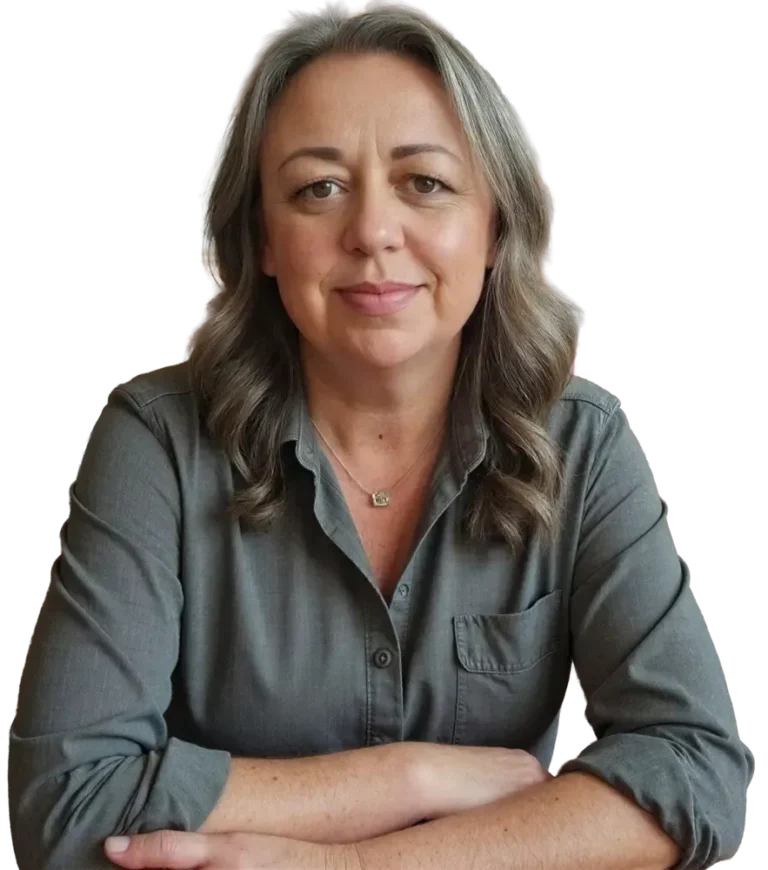
Why Karen King says small businesses should start with what they love
Karen King is founder of The Escapepreneur® & ESC Hub, which helps established small business owners build a business around the freedom and life they want, with systems to support it. King makes the case for choosing work that fits the life an owner wants, while acknowledging that this approach has not made marketing a strength.
King’s approach is to choose customers and work that fit the life an owner wants, then commit to a focused offer and build systems around it. In her experience, that personal fit does not automatically make marketing effective.
What’s one opinion about your industry that most of your peers would disagree with?
Build your business around what you love doing, not around what will earn you the most money. So much business advice starts with the most profitable niche or the biggest income figure. But a business built only around money usually means forcing yourself through work you don’t enjoy, then trying to fix it with "work life balance". When you build around what you love, you get up every day excited to do the work. People can see that passion, and that’s when the money follows.
What convinced you? Tell us about the moment, client or result that changed your mind.
For years I built business after business. Somewhere between six and 12 months in, each one would be earning decent money, but it was a struggle. I’d have to push myself to keep going, and I’d lose interest. Even in the business I enjoyed most, the way I’d set it up had me working long hours, exhausted and missing time with my kids. I’d built myself a trap. I liked parts of the work, but it didn’t give me what I actually wanted: a flexible schedule, time with my family whenever I wanted it, and the freedom to work from anywhere. In 2015 we sold everything, and in 2016 we started travelling the world. I made a decision then that I wouldn’t spend my days forcing myself through work I didn’t enjoy, waiting for a someday when I’d finally have time to live. Life is too short for that. So I built my life, and my business, around what I love.
What’s the usual way people in your field handle this, and what do you do instead?
Most of the industry leads with money. You see it all over social media: "I make $100,000 a month doing this", as if income is the only reason to be in business. We work mainly with established small business owners, and many of them started with a good idea and then tried to work out how to make money from it. One, two, five, even ten years later, the business is draining them. They’re not earning what they want, and they’re stuck doing the parts they don’t love. We help them pause and get clear on their freedom focus. Who do they love working with, and who don’t they? What problem does that person have, what solution can they offer, and how will they find those people? Then we help them build the systems to bring it to life, so everything they do from then on builds the life and freedom they actually want.
Where has this view cost you, or where have you had to admit you were partly wrong?
Because I focus on doing what I love, there are parts of my business that aren’t as strong as I’d love them to be. Marketing has never been my strength or my passion, so for a long time we’ve been the world’s best kept secret. I’m not reaching as many people as I’d like, and I’m not having the impact I know we could have. That’s the honest cost. At the same time, I truly love every customer I work with, and I wouldn’t trade that.
What should someone in your field stop doing, and what should they start doing?
Stop trying to be everything to everyone, and stop trying to solve every problem your customer has. Because money is so often the driving force, small business owners spot a customer with a problem and change direction to solve it. Before long they have a long list of offers and products. When you split your focus like that, nothing gets your best effort. Instead of ten things each getting 10%, give one thing 100%. Pick the solution you offer and do it brilliantly. Stop chasing shiny objects too. It’s so easy to change direction halfway through because someone else made $100,000 doing the latest thing.
Instead, start by going back to your current customers. Notice the ones you truly love working with, and the ones who drain you. Get clear on the problem you solve, the solution you offer and how you’ll find more of the right people. Then commit to that freedom focus for the next 12 months. Most business owners make a plan, get distracted, and a year later they’re no further ahead. Spend the year getting the fundamentals in place, then measure them and refine them as they start working. That doesn’t mean you can never add anything new. But by the end of the year you’ll have a solid system bringing in your core customers, and you can grow from there.
If you’d like a starting point, my free Reality Check at escapepreneur.com/reality-check helps you see where your business stands today.
Thank you to Karen King and the team at The Escapepreneur® & ESC Hub for sharing an honest view with Leaders Perception readers.
Have a view your industry needs to hear?
Leaders Perception publishes interviews with business owners and leaders who see their industry differently. Five questions, about ten minutes, no calls. It is free and every completed interview gets published.