
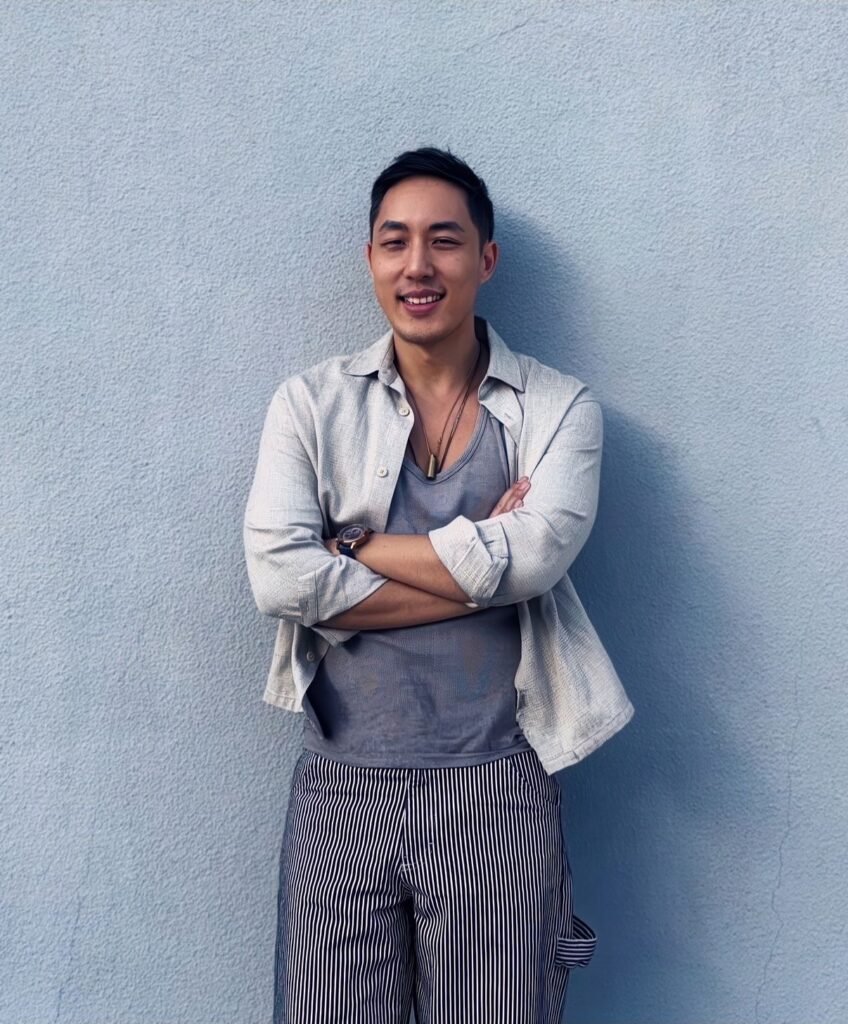
Why David Christopher Lee keeps his creative work solo
David Christopher Lee is a celebrity photographer and editor in chief of David’s Guide, a Los Angeles lifestyle and culture publication covering travel, dining, wellness and entertainment that reaches about 200,000 readers a month. Lee argues that creative businesses can grow without adding staff, using AI for research and drafts while keeping creative decisions with the person behind the work.
Build systems before adding headcount, and use AI to support research and drafting rather than make creative decisions. David Christopher Lee says this approach preserves a distinct point of view, though it can limit how much work one person can take on.
What’s one opinion about your industry that most of your peers would disagree with?
You don’t need a team to grow a creative business, and you shouldn’t let AI make a single creative decision. Most photographers think growth means hiring: assistants, editors, a studio manager. I think headcount is what kills the thing people actually pay for, which is one person’s eye. I run David’s Guide and a 27-year photography career as a one-person operation. AI does my research and first drafts. It never touches a creative call. The camera work and the eye stay mine.
What convinced you? Tell us about the moment, client or result that changed your mind.
November 19, 2026. I shot a 13-second close-up of Jennifer Lopez at her show premiere on my iPhone, 5x zoom, framing on her yellow diamond necklace. She reposted it to 239 million followers that night. No crew, no team, no $10,000 camera. Just my eye and a phone. That clip did more for my career than any staffed shoot ever has. The other half came from watching AI companies train image generators on photographers’ life work. It takes years to develop a style, and a computer rips it off in an instant. That made the line clear: AI can assist me, it can never replace the decisions.
What’s the usual way people in your field handle this, and what do you do instead?
The usual way is to scale by hiring. Build a team, delegate the edit, outsource the writing, and lately, let AI generate the images and the copy. The result looks like everyone else’s work because it is. I do the opposite. I stay solo and build systems instead of headcount: AI researches and drafts, I decide everything creative. I shoot every frame, direct every subject, and make every final call on what publishes. My magazine reaches about 200,000 readers a month, and there’s exactly one person deciding what it looks like.
Where has this view cost you, or where have you had to admit you were partly wrong?
It’s cost me scale I could have had. I can’t shoot two places at once, and there are weeks I turn work down because there’s only one of me. And I was partly wrong about AI itself. I started out seeing it only as theft, and on the training question, I still do. But I had to admit it’s a genuinely good research assistant. I use it every day now for research and drafts. The line I drew turned out to be more useful than the wall I started with.
What should someone in your field stop doing, and what should they start doing?
Stop hiring before you have taste and systems. A team amplifies whatever you already are, and if the eye isn’t there, five people won’t find it for you. Stop letting AI make creative choices; the moment it picks the frame or writes the voice, the work stops being yours. Start building systems that let one person do the work of five, and start treating AI like a research assistant who reports to you. Useful, fast, and never in charge.
Thank you to David Christopher Lee and the team at David’s Guide for sharing an honest view with Leaders Perception readers.
Have a view your industry needs to hear?
Leaders Perception publishes interviews with business owners and leaders who see their industry differently. Five questions, about ten minutes, no calls. It is free and every completed interview gets published.