
Why Barstool Comforts chose customizable seating over more products
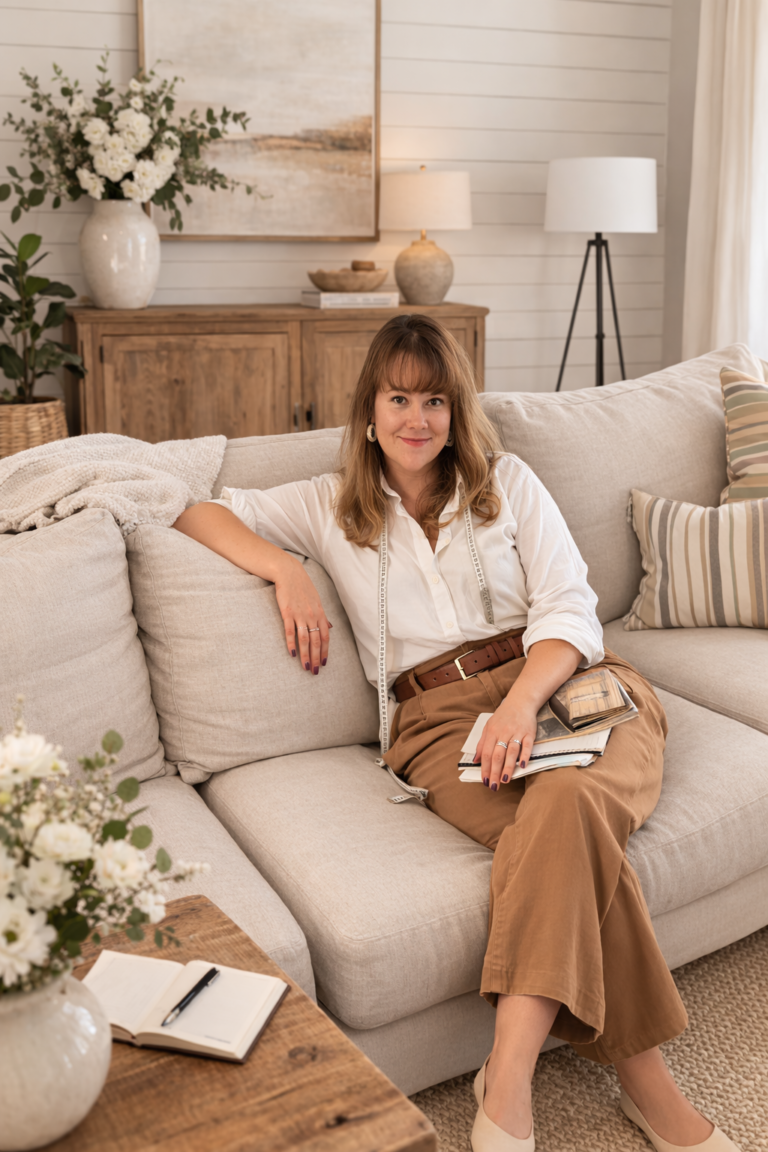
Stephanie Bertha is co-owner of Barstool Comforts, a family-owned furniture company specializing in customizable seating. Bertha explains how focusing on what the business knows best, building trusted manufacturer relationships, and offering practical customer guidance have shaped its approach.
A narrower product focus helped Barstool Comforts build around its expertise in customizable seating. Knowing the products well and choosing reliable manufacturers allows the business to give customers useful, personal guidance.
What’s the short story of how your business started, and what makes it genuinely different from the other options your customers have?
Barstool Comforts started in 1999 with my parents (Joe and Deborah). My dad loved furniture and was always good at selling, and my Mom had a passion for interior design. It worked really well for them!
I joined in 2009, after leaving the web design and development world for 7 years. More than 25 years later, we’re still family-owned and operated.
I think what makes us different is how involved we are with our customers. We spend a lot of time helping people figure out what will actually work for their homes or businesses, from choosing the right seat height to finding materials that will hold up to everyday use.
We also work primarily with manufacturers in the USA and Canada, many of whom we’ve built relationships with for decades. Most of our furniture is made to order, so customers have a lot of flexibility when it comes to finishes, upholstery, and other details.
Being a small family business means we’re personally involved in just about everything. We know our products, we know our manufacturers, and when a customer has a question or a problem, they’re talking to someone who can actually help. That’s something we’ve always taken pride in.
How did you win your first customers, and where does most of your new business come from today?
Getting your first customers is always a challenge because you don’t have reviews or an established reputation that people can rely on. Fortunately, when we started building our online presence, we already had about 10 years of experience in the furniture industry. We knew our products inside and out, and when someone called with a question, we usually had the answer.
I think that made a big difference in earning people’s trust. We were knowledgeable, approachable, and available. Our phone number has always been easy to find on our website because we’ve always wanted customers to feel comfortable picking up the phone and talking to a real person before making a purchase.
Today, a lot of our new customers discover us through social media, particularly Facebook and Pinterest. More recently, we’ve even had customers tell us they found Barstool Comforts through ChatGPT and other AI platforms, which has been interesting to see. The way people search for products and discover businesses is constantly changing, and we’re seeing that firsthand.
Even though the way customers find us has changed quite a bit since 1999, the importance of being knowledgeable, accessible, and helpful hasn’t changed at all.
What’s one decision that changed the direction of your business, and one mistake that taught you the most?
Early on, we thought the best way to grow was to expand into more product categories. At one point, we were selling fireplaces and other home décor that really had nothing to do with our expertise. We figured that offering more products would naturally bring in more customers.
Eventually, we realized we were better off doing the opposite. We started narrowing our focus to customizable seating and moved away from products that didn’t really fit who we were.
That decision helped us figure out what made Barstool Comforts different. Rather than selling the same furniture customers could find anywhere else, we focused on seating that could be personalized with different fabrics, finishes, and other options.
And that’s where my mother’s interior design background really came into play. When customers need help choosing fabrics, coordinating finishes, or figuring out what works in their space, Deborah is exactly the person they want to talk to.
Looking back, focusing on fewer things actually gave us more to offer. We weren’t trying to be another general furniture store anymore. We knew what we were good at, and we built the business around that.
As for mistakes, one of the biggest lessons we’ve learned is the importance of thoroughly vetting manufacturers/suppliers before partnering with them.
Adding a new manufacturer to our website is a lot more work than people might realize. There’s product information to organize, photos to upload, descriptions to write, pricing to calculate, and countless details to get right. We’ve had situations where we invested all that time getting a manufacturer’s products online, only to realize later that they weren’t a good fit for our business.
It’s frustrating because you’ve already put so much work into it, but it’s also a lesson in being more selective. These days, we pay much closer attention to a manufacturer’s quality, communication, reliability, and how they handle problems before committing to a partnership.
At the end of the day, we’re the ones our customers come to if something goes wrong, so the manufacturers we choose are a direct reflection of our business. I’d much rather work with a smaller group of manufacturers we know and trust than carry hundreds of products we can’t confidently stand behind.
What has changed in your industry or in what your customers expect over the last couple of years, and how have you adapted?
One of the biggest changes we’ve seen recently is how AI is starting to help people shop for furniture. We’ve had customers send us pictures of one of our bar stools placed in their kitchen using AI, which gives them a way to visualize the piece in their kitchen before ordering.
We’re also seeing customers discover us through ChatGPT and other AI platforms, which shows how quickly shopping habits are changing.
To adapt, we’ve focused on making sure our website has detailed product information, strong photos, and the kind of guidance customers still need when they’re choosing furniture online. AI is changing how people shop, but they still want real help when it comes to comfort, sizing, materials, and finishes.
If you were advising someone starting out in your industry today, what would you tell them to do first, and what would you tell them to ignore?
My biggest advice would be to really get to know what you’re selling. Get hands-on experience with your products, understand how they’re made, and learn as much as you can about them. You’d be surprised how many customers have called us over the years and told us we were the only company that could actually answer their questions. To me, that should be a given. If you’re selling something, you should know it inside and out.
As for what to ignore, I’d say stop paying so much attention to your competitors. It’s easy to get caught up in what everyone else is doing, but that doesn’t mean it’s the right direction for your business. Trust your own instincts, do things your way, and don’t be afraid to lead rather than follow.
Thank you to Stephanie Bertha and the team at Barstool Comforts for sharing what actually worked with Leaders Perception readers.
Want to tell the story behind your business?
Leaders Perception publishes interviews with business owners and leaders every week. Five questions, about ten minutes, no calls. It is free and every completed interview gets published.