
How Viasion built its business around low-volume electronics
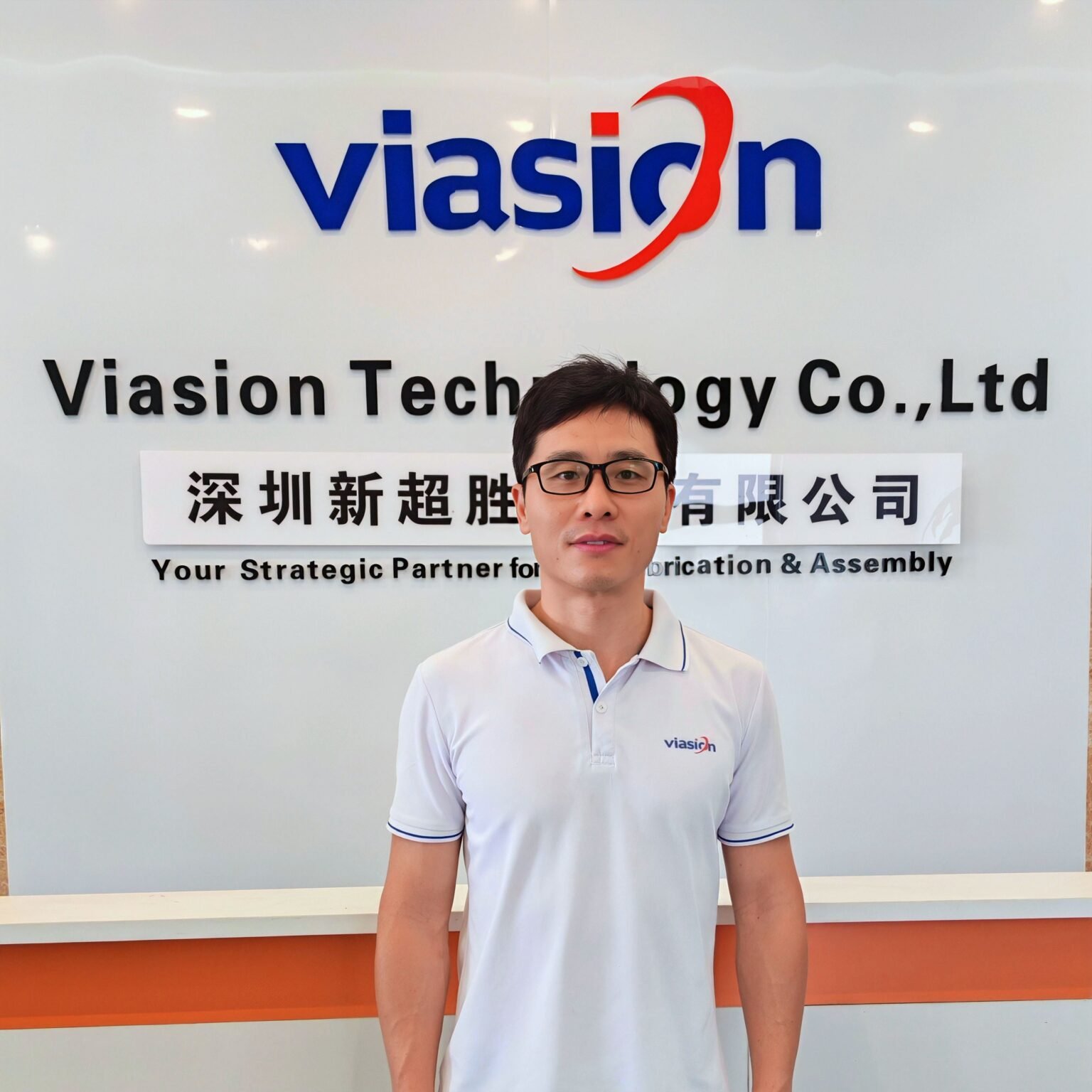
Ross Feng is CEO of Viasion Technology, a China PCB manufacturer and full-service EMS provider. The conversation explains how serving prototype and small-batch work led to a turnkey model, and why protecting customers’ schedules now matters as much as price.
A focused niche and reliable delivery can build customer trust more effectively than competing on price or adding capacity too early. For Viasion, taking responsibility for the whole electronics build also created a way to expand with existing customers.
What’s the short story of how your business started, and what makes it genuinely different from the other options your customers have?
We started in 2007 serving the prototype and small-batch work big factories ignored — no MOQ, one board is fine. Eighteen years later that is still our core: PCB, components, assembly and test under one roof in Shenzhen, 200-plus people, IPC Class 2/3/3A, ISO9001, ISO13485 and UL. The difference is structural: we are built for low and mixed volume, and one team owns the whole chain, so nobody can point at the other supplier when a build goes wrong.
How did you win your first customers, and where does most of your new business come from today?
First customers came from the channels engineers actually use to find a Chinese supplier — search, sourcing directories, direct outreach — and we won them on response time: a quote in a day, boards in three days. What built the business afterwards was referral and repeat: a designer who trusts one build brings us the next company. Today new business is mostly referrals and new customers, plus existing customers moving from bare board into full turnkey — that expansion is our biggest source of new revenue.
What’s one decision that changed the direction of your business, and one mistake that taught you the most?
The decision that changed our direction was going from bare boards to full turnkey. We stopped being a board supplier and became the party accountable for the whole build — PCB, components, assembly, test — and that is what made us an EMS rather than a board house.
What has changed in your industry or in what your customers expect over the last couple of years, and how have you adapted?
Two things. First, customers stopped buying boards and started buying certainty — they want one partner accountable for PCB, components and assembly, faster quotes, and honest lead times, because component and tariff shocks made their own forecasts unreliable. Second, batch sizes keep falling while compliance expectations keep rising.
We adapted by going turnkey, quoting within a day, doing DFM before we cut copper, and locking long-lead parts with authorized channels and buffer stock. It is less about price now and more about who removes risk from their schedule.
If you were advising someone starting out in your industry today, what would you tell them to do first, and what would you tell them to ignore?
Do first: pick one niche and become genuinely good at it, and put the quality system in place before you need it — ISO, IPC discipline, traceability. In this industry trust is built one build at a time, so your first ten customers matter more than your first ten machines.
Ignore: competing on price alone, buying capacity before you have orders, and trying to be everything to everyone. Price is a race to the bottom; the customers who stay are the ones whose schedule you protect.
Thank you to Ross Feng and the team at Ross Feng for sharing what actually worked with Leaders Perception readers.
Want to tell the story behind your business?
Leaders Perception publishes interviews with business owners and leaders every week. Five questions, about ten minutes, no calls. It is free and every completed interview gets published.