
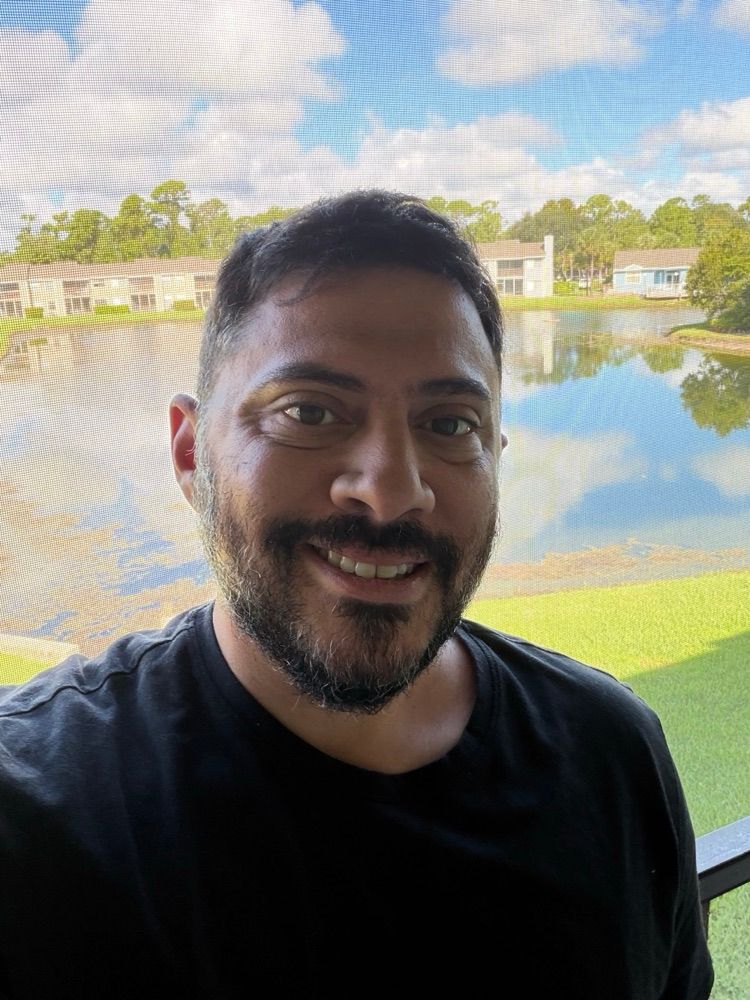
How Matt Goren used customer questions to build RunOctopus
Matt Goren, founder of RunOctopus, helps businesses get picked when people ask ChatGPT or Google who to hire. The conversation traces the company’s roots in an online feeder-insect business and explores how customer questions, operational mistakes and AI recommendations shaped his approach.
Businesses can compete for attention by answering the specific questions customers ask before buying, then checking whether AI tools surface those answers and credible sources. Matt Goren’s experience also shows that demand needs to be matched by reliable operations.
What’s the short story of how your business started, and what makes it genuinely different from the other options your customers have?
I thought a bearded dragon would be a cheap pet. It changed my life.
To keep one, you buy live insects, over and over. As a customer, I noticed that the sellers’ websites weren’t great, and almost nobody was advertising on Facebook. This was not a new business. Companies had been selling feeder insects for decades, and there were big names already online. I asked what would happen if I got into it anyway.
So I started an online business selling insects to reptile owners. I had only ever been a marketer. AI handled the science, the shipping and the logistics. At its peak it reached over $130,000 a month, in under 12 months.
RunOctopus came out of that work. It helps businesses get picked when someone asks ChatGPT or Google who to hire, and it does the work for them. I built it for my own business first.
How did you win your first customers, and where does most of your new business come from today?
With the insect business, I didn’t fight for short, broad Google searches. Against companies that had been online for decades, a newcomer can’t win those.
I went where the long, specific questions were: the comparisons and the "which one should I buy" questions. Someone typing two words is browsing. Someone asking a full question has a problem and is close to spending money. I wrote answers to those. The site went from 915 to 4,089 pages showing on Google in a month.
The lesson for anyone: stop trying to win the biggest search in your industry. Win the question your best customer asks the night before they buy.
With RunOctopus, new business comes from conversations. I send a business owner what ChatGPT actually says about their business, with one observation and no pitch. If it didn’t name them, we talk.
What’s one decision that changed the direction of your business, and one mistake that taught you the most?
The decision was to stop chasing the Google terms I couldn’t win and to study how AI chooses what to recommend.
Nobody had handed me a course on it. I read the platforms’ documentation, and I still do. From that I came up with a theory I call epistemic retrieval: AI goes looking for the source that actually knows the answer, and cites it. Writing for that is what made the insect business take off, and it’s why I started RunOctopus.
The mistake came in the first days. Insects arrived dead or damaged, and orders came in faster than I could ship them. I had never run a warehouse. It taught me to fix the process, not just the problem in front of me.
What has changed in your industry or in what your customers expect over the last couple of years, and how have you adapted?
The biggest change is how people choose. They ask ChatGPT or Google’s AI who to hire, and the answer names two or three businesses and skips the rest. There is no page two to be found on.
I wanted to see who gets named, so I tested it. In a Virginia city, no national chain appeared in the answers for coffee, pizza or AC repair. The big chains showed up only in the ads next to the answers. That was one city on one day, so it’s a signal and not a rule. But it suggests a small business has a real opening.
I adapted by building a system that finds what customers actually ask AI and puts traceable facts on the business’s own site.
If you were advising someone starting out in your industry today, what would you tell them to do first, and what would you tell them to ignore?
Stop guessing and run this check. It takes about an hour.
One: write down ten questions customers ask you before they buy. Use their words, from your calls, texts and emails.
Two: ask ChatGPT and Google’s AI each one. Write down who gets named and which websites are cited. Ask more than once, because answers vary.
Three: open those cited sites. Look for what they say that you don’t: prices, service area, how it works, reviews, who else vouches for them.
Four: answer each question on your own website. Put the direct answer in the first two sentences, then the proof.
Five: get others to vouch for you. Ask happy customers for reviews, join the local groups that list members, and talk to local press. AI leans on what others say about you, not only on what you say.
Then ask the same ten questions again next month and compare.
Stop believing that the biggest company, or the biggest budget, automatically gets the answer. In my tests, size and ad spend got a business the ad slot next to the answer, not the answer.
Thank you to Matt Goren and the team at RunOctopus for sharing what actually worked with Leaders Perception readers.
Want to tell the story behind your business?
Leaders Perception publishes interviews with business owners and leaders every week. Five questions, about ten minutes, no calls. It is free and every completed interview gets published.