
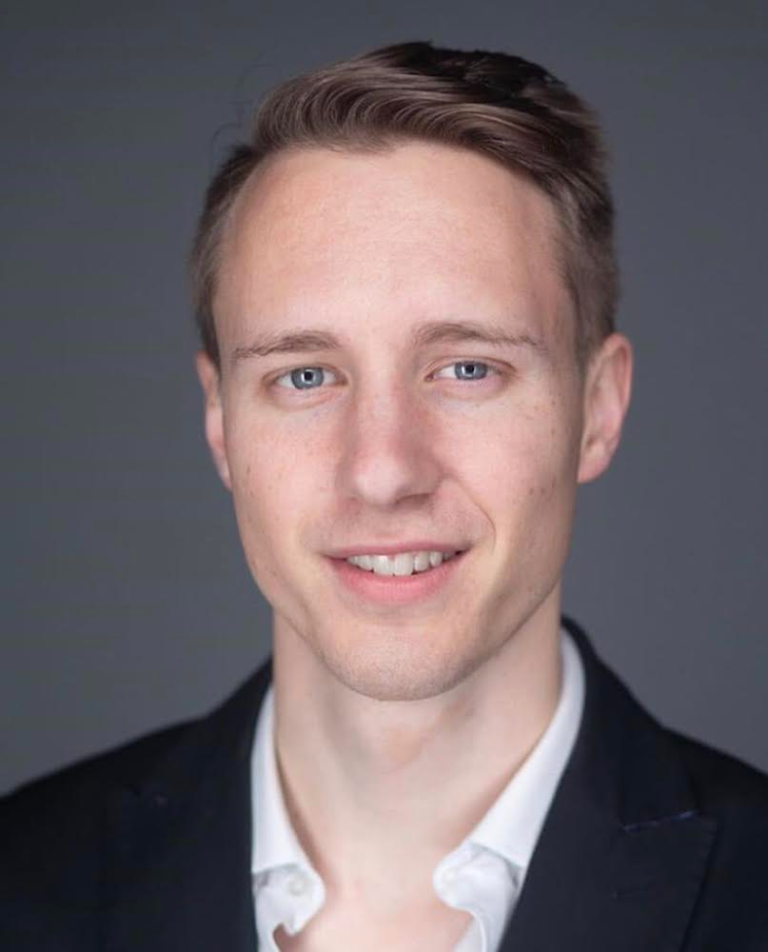
How Caleb Sutherland is bringing lung isolation into the field
Caleb Sutherland is founder and CEO of Simple Solutions Medical, which helps paramedic and EMT departments access medical equipment while managing costs and operational disruptions. Its LIT device is an airway selector designed to enable prehospital lung isolation for patients with severe thoracic injuries. Sutherland discusses why early input from end users, careful preparation and simple solutions matter in developing a medical device.
In medical device development, involve end users early enough to shape the product, and prepare for each stage before it arrives. Sutherland also stresses that building the right relationships can help fill gaps in expertise.
What’s the short story of how your business started, and what makes it genuinely different from the other options your customers have?
Simple Solutions Medical started on the basic principle that I could provide a solution that was necessary and simple. As a business student I was anxious to create a product that would help people, and as a former EMT that product was a medical device. I had no knowledge or experience in creating medical devices and I didn’t understand it was nearly impossible for someone to develop and register a medical device on their own; so I did. The device I created was a simplified airway selector which allowed endobronchial tubes, which were devices strictly used in hospitals, to be used prehospital. This meant that when a patient had a damaged lung in the field, the paramedics could isolate it and stabilize the patient during transport. I’d love to say I smoothly launched this company and soared away but the truth is I did nearly everything backwards, from filing for a patent and beginning work with an engineering firm before securing investors to forgetting to file an annual business report because I thought the notice that arrived in the mail was a scam. What I learned quickly, and was never taught in my business classes, was that as an entrepreneur the biggest responsibility I carried was to look ahead, predict the upcoming challenges, and then prepare to meet them. Once I learned that formula I was able to repeat it for every stage of the regulatory process and finally see my device in the real world. As to what makes my company different from other options, I could say it’s because this is the only device that effectively allows for prehospital lung isolation. It could be my small business identification. More than anything though I believe what sets my company apart is the belief that the most complicated problems shouldn’t be met with complicated solutions. Life and business are complicated enough, as the old adage goes: Keep it simple stupid.
How did you win your first customers, and where does most of your new business come from today?
We recently launched our device, so our first customers were the paramedics and doctors who were giving us feedback throughout the development process. While it was critical to work closely with them in order to create a product that is usable and effective, it had the added benefit that as soon as the device was cleared with the FDA they were willing to adopt the next steps of rework the protocols the paramedics would operate from, refine training modules, and put it through its real world paces. Throughout this entire process the majority of contractors I worked with and now customers were connected with through warm introductions and personal references. Each individual and company that I worked with had recommendations for the next person I should connect with. During development this allowed me to work with people who I knew would deliver quality work. Now it allows me to connect with people who trust me and my product because they trust the person who introduced us. In an age where technology and automation seem to dictate the future, in many ways it is comforting to watch how much of a driver the human factor still is.
What’s one decision that changed the direction of your business, and one mistake that taught you the most?
There have been many pivot points in this journey, most of them small but each with compounding effects. Whether it was multiple design iterations or choosing to focus on the private sector after a brief foray into the world of discovering government contracts. The decision that affected the direction of my company the most though was a more personal one. Nobody told me how emotionally taxing starting a company could be. I had always heard about the freedom and limitless possibilities, all of which were true, but I had never learned what it felt like to shake hands with an investor after just receiving nearly a million dollars feeling the weight of their trust and expectations. I hadn’t been taught in the classroom how to handle waking up in the middle of the night stressing about whatever roadblock I was facing. The decision I made that had the biggest effect on the direction of my company was simply to make it happen. It seems too simple, I know. I’m a fan of simple; I named my company for it. But simple doesn’t mean easy. Choosing to make it happen meant not giving up when it got hard. It meant categorizing the stress and fear in my own head. It meant stepping back from roadblocks and finding the path through. It meant educating myself so I could be effective in my space not just in business but medicine. Without that decision, all the other decisions I made along the way would have been meaningless. The mistake that taught me the most was that one time I thought the notice in the mail to file an annual business report was a scam to gain sensitive details early on. Because of it my business was on the brink of dissolution before we got back on track. It was a very swift wake up call very early on to keep my eyes up and attentive. I was young and naive, but I had failed to do my research and educate myself. I learned to stay aware and continually be learning about what was coming down the pipeline in each stage. More than that though, I learned to hire the right people, in this case a good attorney. Surrounding myself with the right people for each stage of the journey has been critical to get to where we are today. I’d love the confidence that comes with being an expert in every field related to my company but the truth is, most days I’m just an expert at finding the people who actually know what they’re doing.
What has changed in your industry or in what your customers expect over the last couple of years, and how have you adapted?
Healthcare has increased in their innovations in recent years, and customers have become more discerning about what they actually want to utilize. Many large med tech companies have complete R&D departments churning out solutions and the end users are inundated with solutions they didn’t ask for. Having a good product isn’t enough anymore, it’s important to cut through the noise and show precisely why it is so important. To adapt we’ve started focusing more heavily on education, clinical partnerships, and implementation. The goal is not only for providers to utilize my device but also to easily understand the importance of the device and the procedure it allows for.
If you were advising someone starting out in your industry today, what would you tell them to do first, and what would you tell them to ignore?
The first thing I would tell someone starting out to create a medical device on their own would be good luck! In all seriousness though, the most important thing they can do is make sure to develop great relationships with their end users. Make sure they are creating something that is useful and intuitive. It’s easy to want to wait until you have a finished product to begin those conversations, but those conversations have to be had early enough to shape the development process. Ignore the temptation to just go for flashy solutions. Often the simplest, most straightforward solutions are the ones that are needed the most and will return the greatest value. Don’t get caught up in how large an undertaking it can be, focus on finding one solution after another until you can create something that will help those around you. The more complicated the problem, the more simple the solution should be.
Thank you to Caleb Sutherland and the team at Simple Solutions Medical for sharing what actually worked with Leaders Perception readers.
Want to tell the story behind your business?
Leaders Perception publishes interviews with business owners and leaders every week. Five questions, about ten minutes, no calls. It is free and every completed interview gets published.