
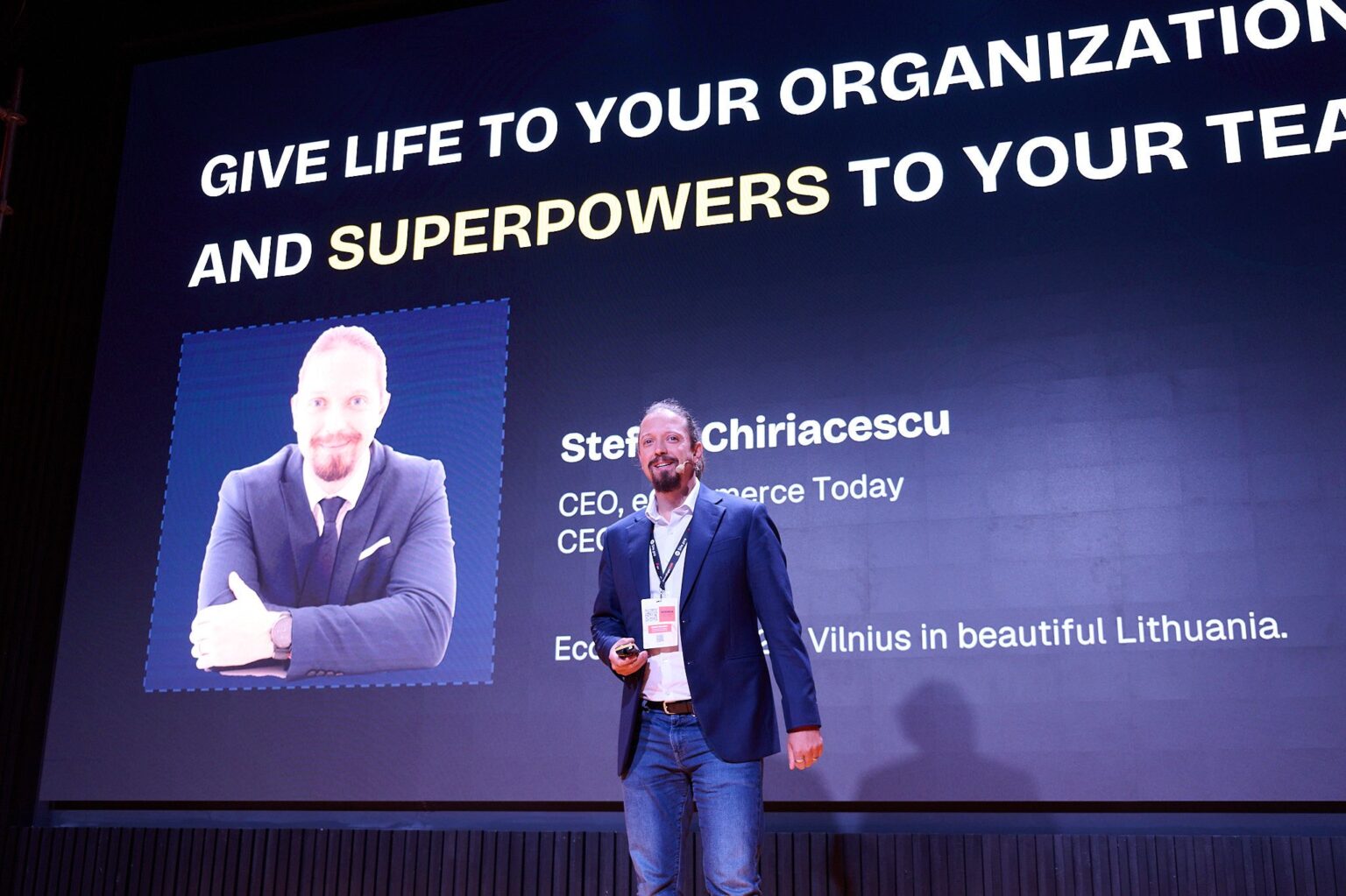
How AI assistants are changing discovery for eCommerce Today
Stefan Chiriacescu, founder and CEO of eCommerce Today Agency, leads a fractional eCommerce department serving more than 200 Shopify and Shopify Plus brands. He explains how AI assistants are becoming a measurable source of leads, what the agency has handed to AI, and why sales outreach remains human-led.
Track how customers discover you, then make your most important pages answer the questions they bring to AI assistants. eCommerce Today’s experience points to a clear boundary: automate monitoring, but keep response decisions and relationship-building outreach with people.
What’s the quick origin story of your business, and what makes what you do genuinely different from the other options your customers are looking at?
I started on the merchant side: I built and exited my own eCommerce businesses in Europe and the US before the agency. eCommerce Today grew from that experience, and today we are the fractional eCommerce department for 200+ Shopify brands. What makes us different is simple: we run our own company on an AI operating system we built ourselves, called ETAOS. Clients get the playbook we tested on ourselves first, and we published the real numbers to prove it, including the 68,000 dollars a year in software we canceled.
Where does most of your new business come from today, and where do you wish it came from?
Most of it still comes from referrals, clients recommending us to other brands. The fastest growing source is AI assistants. We ask every lead how they found us, and last year under 5 percent said AI tools. This year we are past 20 percent, mostly international companies that would never have found a Romanian agency otherwise. So where do I wish it came from? More of exactly that. Those leads arrive already informed and the first call starts much further down the road.
What’s one thing you’ve actually handed over to AI in the last year, and one thing you tried it on and went back to doing the human way?
Fully handed over: brand monitoring. An AI agent watches mentions and sentiment around our brand and our clients around the clock, and no human reads raw feeds anymore. It raises the alarm, a human decides what we say. Tried and took back: sales outreach. Automated outreach creates the illusion of a pipeline, but the meetings that turn into revenue are opened by a human every time. That is staying that way.
Have you noticed a change in how customers find you or what they already know before they reach out? Is anyone arriving through AI assistants like ChatGPT yet?
Yes, and we measure it. Over 20 percent of our leads this year name AI tools as how they found us. Across the Shopify stores we manage, revenue from LLMs went from under 1 percent last year to 8 percent in the first half of this year. And these people know more before the first conversation. They ask how it would work for them, not who we are. The AI did their homework.
If you were advising someone in your industry on all of this for the next 12 months, what would you tell them to actually do, and what would you tell them to ignore?
Do this: rewrite your most important pages into the real questions people ask an AI about your products, and answer them plainly. Publish real numbers from your business, because AI engines quote sources that own data, not opinions. And ask every customer how they found you, then write it down. Ignore the pressure to buy every new AI tool, more subscriptions before your team masters one just fragments the work. And ignore anyone telling you AI replaces the people who own your customer relationships. That part is worth more now, not less.
Thank you to Stefan Chiriacescu and the team at eCommerce Today Agency for sharing what actually worked with Leaders Perception readers.
Want to share your playbook?
Leaders Perception publishes founder and operator interviews every week. A few questions, about five minutes, no calls. It is free and everyone we accept gets published.