
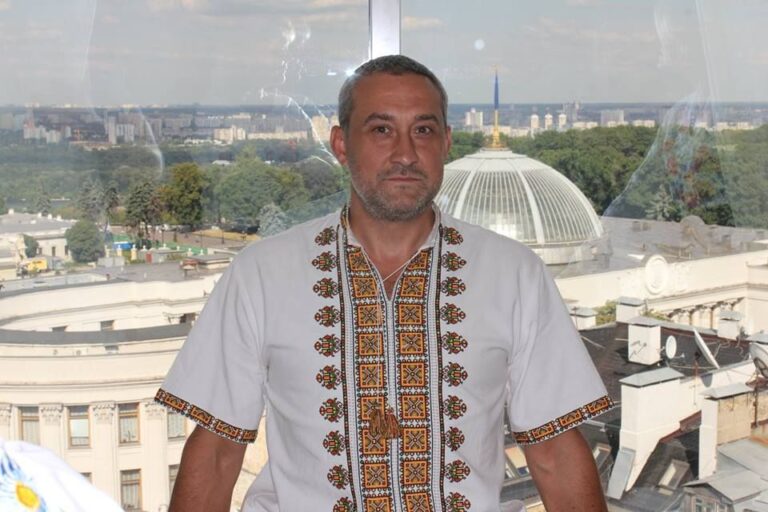
Combat-disabled veteran builds AI journaling app that analyzes emotions in real time
Andriy Rukhlyadko is a combat-disabled veteran who founded Mental Detox, a solo-built app for private free-form journaling that uses AI to analyze emotions, detect triggers and recommend evidence-based techniques. The story is worth reading because he built and runs the whole product alone and deliberately made AI the core feature rather than a marketing add-on.
Put AI where it genuinely enables the product to work – here that means real-time analysis of free-form journal entries – but keep marketing and voice human, because users notice and trust lived experience more than machine-smooth copy.
What’s the quick origin story of your business, and what makes what you do genuinely different from the other options your customers are looking at?
I’m a combat-disabled veteran of the Russian-Ukrainian war who moved to Canada. During my recovery, I realized I was missing a simple, private tool for processing emotions — a place where you could honestly write down what you feel and get a response that actually makes sense. Most mental health apps are either mood trackers with charts or meditation apps with soft voices. Mental Detox is different. You write freely, in your own words, and AI analyzes your emotions, identifies triggers, and suggests a personalized, evidence-based technique tailored to your current state. I build this app entirely on my own — no team, no investors — so every feature exists only because it genuinely helps people.
Where does most of your new business come from today, and where do you wish it came from?
I had a very active life before, so tens of thousands of people know me — almost all of them positively. A large portion of my users are those people themselves or others who came on their recommendation. New users also come from organic search and direct social media posts — short pieces about emotional health where I share my own experience. Microsoft Advertising and press releases contribute as well. I do everything myself, so every channel is manual work: write a post, launch a campaign, respond to a journalist’s email.
I wish more users came through mental health organizations — hospitals, veteran support centers, therapists who recommend Mental Detox to their clients as a daily tool between sessions. That’s the audience that would benefit the most, but they’re hard to reach when you’re a lesser-known solo founder without a big name in the market.
What’s one thing you’ve actually handed over to AI in the last year, and one thing you tried it on and went back to doing the human way?
What I handed over to AI is the analysis of users’ journal entries. When someone writes freely about their feelings, AI identifies emotions, detects triggers, recognizes cognitive distortions, and selects an evidence-based technique. Doing this manually and quickly for every user would be physically impossible — AI allows Mental Detox to deliver personalized support in real time, around the clock.
What I brought back to the human way is marketing copy and social media posts. I tried generating them entirely with AI, but they came out smooth and empty — no real voice, no lived experience behind the words. People feel the difference. Now I write them myself, and only use AI as a tool for editing and translation.
Have you noticed a change in how customers find you or what they already know before they reach out? Is anyone arriving through AI assistants like ChatGPT yet?
Yes, I’ve noticed changes. Previously, people found Mental Detox mainly through Google search or through personal recommendations. Now, more and more new users arrive at Mental Detox already informed — they know the app uses AI for emotion analysis, they know about journaling as a tool. It seems they’ve already "researched" Mental Detox somewhere before visiting the website.
As for ChatGPT — the Mental Detox website is indexed and recognized by all search engines, including AI ones. I work on this deliberately: I publish press releases, articles on Medium and dev.to, and give interviews — all of this creates content that helps Mental Detox appear in AI assistant responses. For a lesser-known solo founder, this could be a game-changer.
If you were advising someone in your industry on all of this for the next 12 months, what would you tell them to actually do, and what would you tell them to ignore?
What to do: build a product that solves a real problem, not one that looks good in a pitch deck. In the mental health space, people come at a moment of pain — they need a tool that works immediately, not another app with 10 signup screens. I’d advise embedding AI deep into the core of the product rather than slapping it on top for the sake of trends. In Mental Detox, AI is the heart — without it, the app doesn’t work. And one more thing — write honestly. Share your own story. Build a brand people will trust.
What to ignore: chasing trends. Every month there’s a new "revolutionary" technology, a new framework, a new platform. If you chase every one of them, you’ll never finish anything. Ignore those who say that without a big team and investors, nothing will work. Mental Detox is proof that one person with the right motivation can build a product used by millions of people.
Thank you to Andriy Rukhlyadko and the team at Mental Detox for sharing what actually worked with Leaders Perception readers.
Want to share your playbook?
Leaders Perception publishes founder and operator interviews every week. A few questions, about five minutes, no calls. It is free and everyone we accept gets published.