
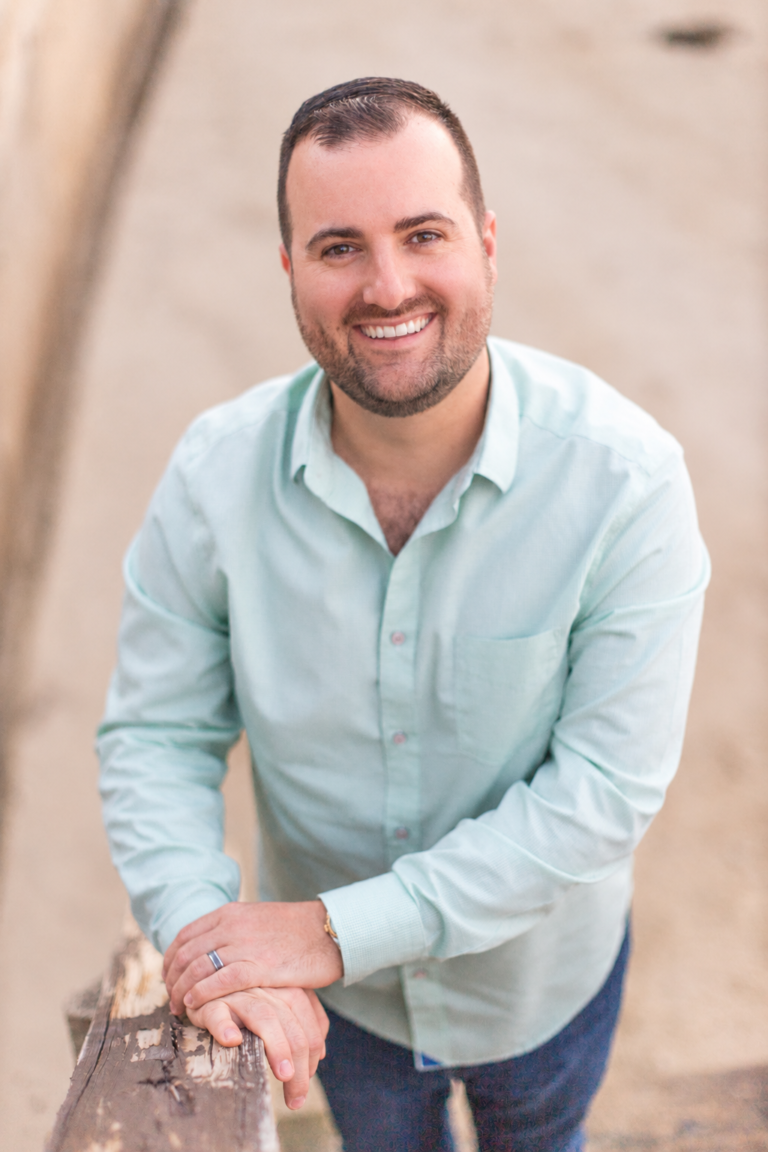
Christopher Souza on building communities beyond amenities
As CEO, Christopher Souza leads work across development, amenity strategy, and community branding and publicity through Souza Development, Oasis Amenities, and Alda Strategic. Souza explains how relationships brought early projects, why the businesses expanded beyond lagoons, and why community identity needs to be considered early in development.
Decide who a community is for and what living there should feel like at the land-plan stage, rather than treating identity and amenities as late-stage marketing choices. Build relationships well before needing them, and choose amenities for their value to residents, not because other communities have them.
What’s the short story of how your business started, and what makes it genuinely different from the other options your customers have?
Oasis existed before I did. It was built to answer a question nobody had really solved: what does a lagoon actually cost to build and to operate, and how do you make sure it works once it is in the ground. A group of experts came together to figure that out, and then it exploded. That growth is what took me from running Oasis as CEO to buying out my partners and owning it.
Alda came next, built to fill the gaps Oasis could not cover for my development clients. Souza Development came last, and it is the one closest to me. Development has always been my passion and I bring that background to everything my other companies do, so eventually I decided to do it on my own, with one rule: I do not compete with my clients in the same submarkets.
That last part is most of the difference. Plenty of groups will sell a developer one piece of this. We cover the whole arc, and we do it without turning into a competitor in their backyard.
How did you win your first customers, and where does most of your new business come from today?
Almost all of it came from relationships I had already built. The developers and operators I worked alongside earlier in my career knew how I worked before they ever hired me, and the first projects came out of those rooms rather than out of any pitch deck. In this business you are asking someone to trust you with a decade of their capital, so the relationship almost always precedes the engagement.
Today it is still mostly referral and reputation. A good bit comes through Urban Land Institute circles and from speaking, and a good bit comes from developers who watched a community we worked on actually perform. Reputation is the real currency in development. The industry is small, timelines are long, and people talk.
What’s one decision that changed the direction of your business, and one mistake that taught you the most?
The decision: Not staying just the lagoon guy. I could have kept being the person developers called when they wanted one feature, and that would have been the easier business to run. Instead I built Souza Development and Alda so we could be a one stop shop, a development group that does a lot more than lagoons. That is the decision that changed the direction of everything else.
The mistake: Trying to make everyone happy. Partners, family, employees, all of it. I spent a lot of energy keeping people comfortable instead of asking what the business actually needed, and the decisions got slower and worse for it. What I had to learn was to focus on highest and best use. What is the right call here, not which answer upsets the fewest people. That one took me a while.
What has changed in your industry or in what your customers expect over the last couple of years, and how have you adapted?
Buyers stopped being satisfied by a list of features. People choose where to live based on how a place makes them feel and who they get to be there, and they can tell the difference between a community designed around an experience and one where the amenities came last. At the same time capital got more expensive and timelines got longer. Anything I touch is usually an eight to twelve year horizon, so you cannot afford to be figuring out the identity of a community in year six.
What changed for us is sequencing. Branding, placemaking and amenity strategy now come in at the land plan stage instead of the marketing stage. We are answering who this community is for and what living there feels like before the first entitlement is filed. That is a different conversation than the one the industry was having a few years ago, and it is exactly the gap I built Alda to fill.
If you were advising someone starting out in your industry today, what would you tell them to do first, and what would you tell them to ignore?
Do the unglamorous part first. Learn the business from the ground up and really understand real estate underwriting. Learn to respect the timeline, learn what disciplines are needed and where each one’s pain points are. Development punishes optimism more than almost any other business.
And build relationships long before you need anything from them. Every meaningful project I have worked on traces back to someone I knew years earlier. Reputation compounds in this industry in a way that marketing never will.
What I would ignore is the amenity arms race. Do not build something because the community down the road built it, and do not chase a feature because it is having a moment. The question is never whether an amenity is impressive. It is whether it gives people a reason to gather and a reason to stay.
Thank you to Christopher Souza and the team at Oasis Amenities, Alda Strategic, And Souza Development for sharing what actually worked with Leaders Perception readers.
Want to tell the story behind your business?
Leaders Perception publishes interviews with business owners and leaders every week. Five questions, about ten minutes, no calls. It is free and every completed interview gets published.