
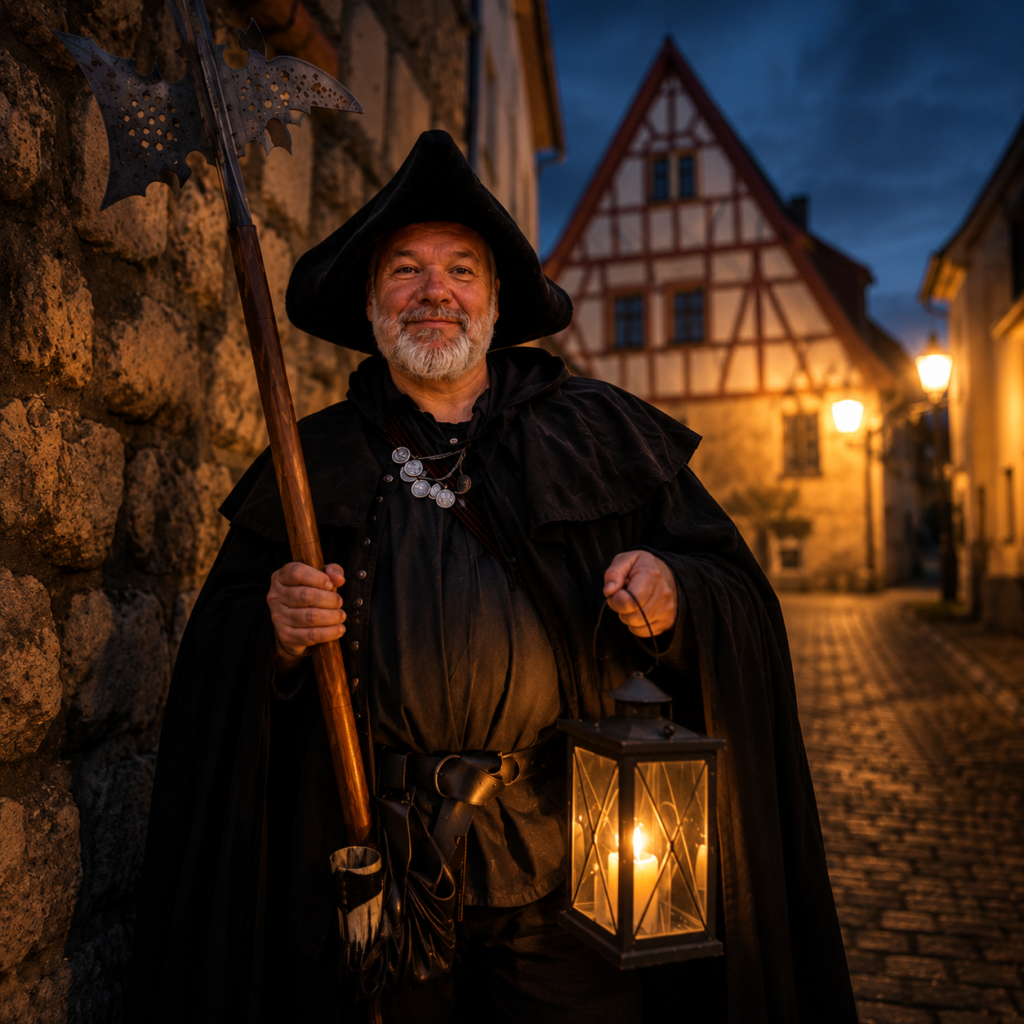
Why Thomas Büttner thinks guided tours should create memories
Thomas Büttner is an Independent Tour Guide & Tourism Experience Designer behind Die Fränkische Schweiz – neu erleben, which creates story-driven tourism experiences in Bavaria’s Franconian Switzerland Nature Park. He argues that guides should judge a tour by the connection and memories they create, not simply by the facts they deliver.
Thomas Büttner believes historical knowledge is the foundation of a good tour, while human connection makes it a personal experience. He adapts stories and interactions to each group so guests can take part, not just listen.
What’s one opinion about your industry that most of your peers would disagree with?
A guided tour should not be judged by how much knowledge a tour guide delivers, but by what the guide inspires in the guests.
Today, anyone can look up historical facts, dates and names within seconds. But emotions, excitement, shared laughter and the feeling of stepping into another era cannot be downloaded.
Historical knowledge is essential. What truly matters, however, is what we do with that knowledge and how we use it to connect with people.
I believe the tour guide of the future is not merely a provider of information, but above all a creator of experiences.
People should return home not only with more knowledge, but with memories they will still enjoy sharing with others years later.
What convinced you? Tell us about the moment, client or result that changed your mind.
One of my major inspirations was Klaus Kobjoll, a German hotelier and expert in customer delight. Inspired by his philosophy, I applied the concept of an emotional bank account to my guided tours. Every small positive interaction makes a deposit into that account.
My experience with thousands of guests has reinforced this belief.
At the beginning of every tour, I ask my guests where they come from. Not simply because I am interested in how far they have travelled, but because I refer back to their origins throughout the tour, making them personally part of the experience.
Another technique I use is deliberate threefold repetition. I revisit historical information, regional characteristics and humorous remarks in different contexts throughout the tour.
One example is my playful reminder that although Franconia is part of Bavaria, we Franconians have our own strong regional identity. This often develops into a humorous conversation with my guests.
During my training as a hiking guide and tour guide, I acquired a great deal of valuable theoretical knowledge. However, practical experience taught me something essential: expertise is the foundation of a good guided tour, but human connection is what transforms it into a personal experience.
People should not just learn something. They should feel something.
What’s the usual way people in your field handle this, and what do you do instead?
Through numerous conversations and exchanges with fellow tour guides, I have become familiar with different approaches within our profession.
Many of my colleagues possess excellent historical knowledge, wear historical costumes and know how to present their subjects in an interesting and entertaining way. Nevertheless, many rely heavily on a predetermined structure and the delivery of historical facts.
My approach is different: I bring history to life through stories.
Although the historical content of my themed tours in Pottenstein and the Franconian Switzerland region of Bavaria remains largely the same, no two tours are ever identical. Every group develops its own dynamics, bringing different personalities, questions and expectations.
For example, when someone asks during one of my night-watchman tours why night watchmen were historically considered members of a dishonourable profession, I do more than simply answer the historical question. I turn it into a humorous conversation and playfully involve the person who asked it in the story.
This creates a spontaneous, shared moment that cannot be rehearsed in advance.
My historical knowledge gives me the confidence to respond flexibly without having to invent facts.
A historical costume, a sword or a halberd can support a story. But none of them can replace the ability to establish a genuine human connection.
To me, a guided tour is not a lecture delivered to an audience. It is an experience created together with the audience.
Where has this view cost you, or where have you had to admit you were partly wrong?
This approach can certainly test my patience. If you want to connect with people emotionally, you cannot hide behind a rehearsed script.
A group of children has different needs from a group of senior citizens. On a corporate outing, the mere presence of a manager can change the entire group dynamic.
In recent years, I have noticed that maintaining children’s attention for extended periods during guided tours has become increasingly challenging. I respond by using shorter storytelling segments, simpler explanations and more frequent interactions.
I have had particularly positive experiences guiding people with disabilities. Accessible language, personal attention and genuine appreciation can create a wonderfully meaningful connection.
I had to learn that a method that works brilliantly with one group will not necessarily succeed with another.
That is why I continuously develop my tours and create new experiences. Standing still, to me, means moving backwards. Experience brings a certain degree of routine, but routine must never replace attentiveness to the individual.
Even saying goodbye is an important emotional moment for me. I like to leave my guests with a humorous message that carries a sincere wish: to enjoy life and hold on to it for as long as possible.
Because when my guests return home not only with new knowledge, but also with a smile and a good feeling, I have achieved my goal.
What should someone in your field stop doing, and what should they start doing?
Tour guides should stop measuring the success of their work solely by the amount of information they deliver. They should think less about what they want to tell people and more about what their guests can experience.
They should start treating their guests as active participants in the tour. This requires attentive listening, personal involvement, spontaneous interaction, humour and genuine appreciation.
When developing a guided tour, we should ask ourselves one essential question: What do I want my guests to still be talking about tomorrow, in a month or in a year?
I am now applying this philosophy to the development of my digital tourism experience platform, “Die Fränkische Schweiz – neu erleben” (Rediscover Franconian Switzerland). Rather than simply presenting people with a list of attractions, I want to help them discover experiences that match their individual interests, needs and expectations.
I believe this mindset extends far beyond tourism. Every business that wants to connect with people should ask not only what product or service it provides, but also what feelings and memories it leaves with its customers.
Information can be forgotten. A moment of genuine delight can be remembered for a lifetime.
Thank you to Thomas Büttner and the team at Die Fränkische Schweiz – neu erleben for sharing an honest view with Leaders Perception readers.
Have a view your industry needs to hear?
Leaders Perception publishes interviews with business owners and leaders who see their industry differently. Five questions, about ten minutes, no calls. It is free and every completed interview gets published.