
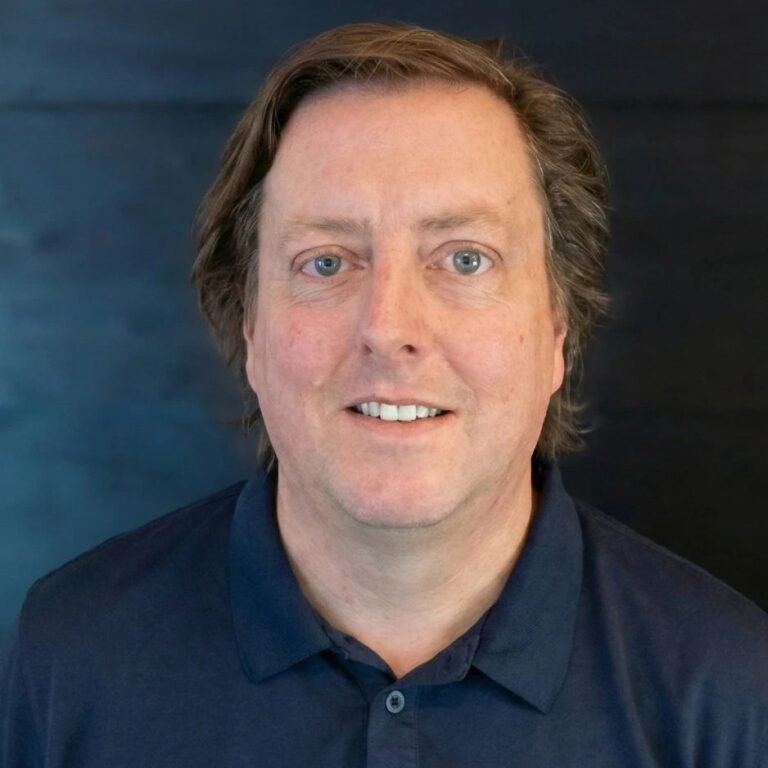
Why Ed Brancheau checks the numbers behind missed-call claims
As founder of Elevyr, Ed Brancheau builds Sloane, an AI admissions agent for senior living communities. Brancheau argues that the industry should verify missed-call statistics instead of repeating vendor-supplied benchmarks, and shares how a published mystery-shop study measured the calls communities answered.
Brancheau argues that businesses should trace statistics to their original sources and measure their own customer experience before using claims in a pitch. Elevyr’s published study of 97 Southern California senior living communities found that the share of calls answered by a live person varied by day and time.
What’s one opinion about your industry that most of your peers would disagree with?
My unpopular opinion is about the numbers in my own industry. I build Sloane, an AI admissions agent. She answers the inquiry calls a community’s team cannot get to, qualifies the family and books the tour on the admissions calendar. When she does not know something, she takes a message and promises a human callback. The most repeated numbers about those missed calls trace back to vendors selling the fix. Most of us find a benchmark in a blog post, put it in the deck and never ask who counted it. I sell a fix too, so I would rather measure it than quote anyone.
What convinced you? Tell us about the moment, client or result that changed your mind.
I had each stat we cited traced back to its original source. The most repeated one says two in three callers who reach voicemail hang up without leaving a message. It is usually credited to a research firm. We downloaded both of that firm’s reports on business phone calls. The number is not in either one.
That was the moment. If the most repeated number in my category had no source, I could not trust any number I had not checked myself.
What’s the usual way people in your field handle this, and what do you do instead?
The usual way is to borrow. Find a scary number, put it on the website and build the pitch around it.
I ran my own mystery-shop study instead, with the method published before I placed a single call. We called the same 97 mid-size senior living communities across Southern California at three different times of the week. On Wednesday mornings, 77.3% of calls reached a live person. On Tuesday evenings, 60.8% did. On Sunday evenings, 53.6% did. The method and the full results are public at https://www.elevyr.com/research/after-hours-results.
Our callers were researchers. In real life, that Sunday night caller could be a family choosing a home for a parent, and the next community on their list is one tap away. What I want is simple: a family calling at 9pm on a Sunday gets the same careful first conversation as one calling at 10am on a Wednesday.
Where has this view cost you, or where have you had to admit you were partly wrong?
It cost me the easy version of the pitch. A borrowed number is scarier and faster to say than a measured one.
And I had to admit I was partly wrong myself. When we traced every stat, one of the popular numbers turned out to be sitting on our own website. It came down.
What should someone in your field stop doing, and what should they start doing?
Stop trusting a vendor’s number until you know who measured it and what they were selling.
Start measuring your own. The cheap version takes one evening. Call your own line after hours this week and hear what a stranger gets. Then call our demo line at (949) 779-6255 and try to stump the AI that answers.
Thank you to Ed Brancheau and the team at Elevyr for sharing an honest view with Leaders Perception readers.
Have a view your industry needs to hear?
Leaders Perception publishes interviews with business owners and leaders who see their industry differently. Five questions, about ten minutes, no calls. It is free and every completed interview gets published.