
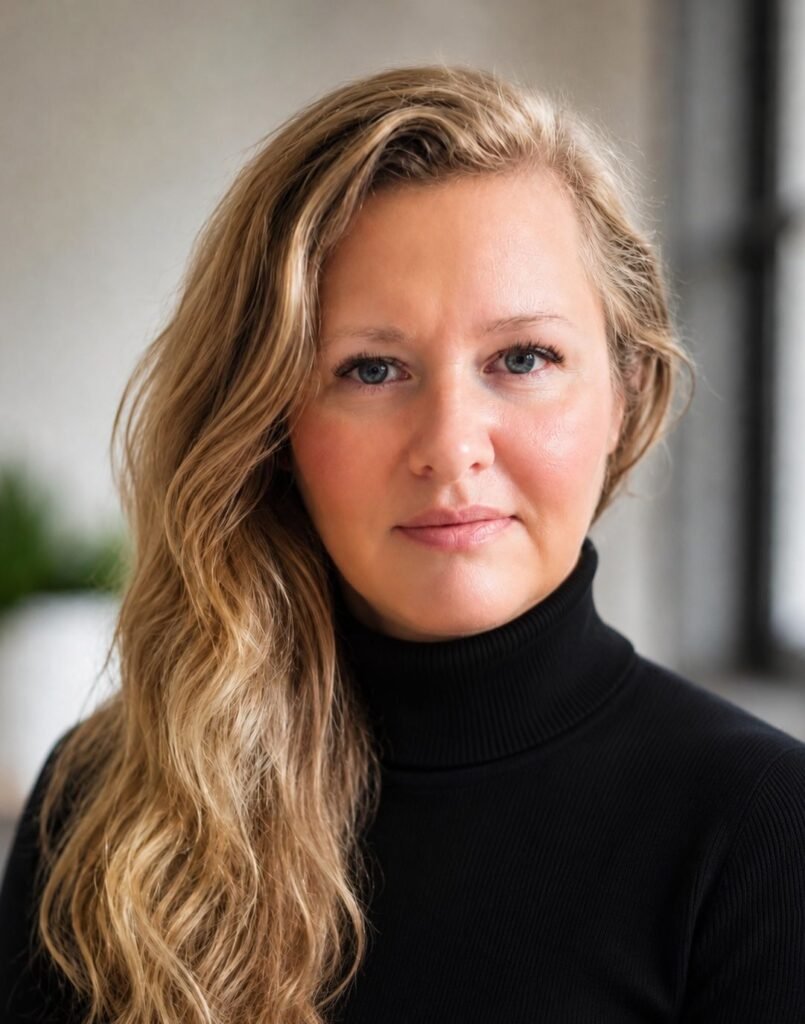
Maria Dykstra on why AI recognition is not recommendation
Maria Dykstra launched an AI visibility practice in February 2026 to diagnose why B2B companies are left off AI-generated buyer shortlists. Drawing on more than 25 years in digital, Dykstra explains how referrals brought in early clients, why treating AI visibility like SEO was a mistake, and what businesses should measure beyond tool scores.
Being recognizable to an AI system does not mean a business will be recommended. Dykstra argues that companies should make their offer easy to describe, build credible third-party mentions, and track whether AI-driven enquiries lead to revenue instead of relying on a single visibility score.
What’s the short story of how your business started, and what makes it genuinely different from the other options your customers have?
I launched my practice in February 2026. Before that I spent 25+ years in digital, starting at Microsoft back when putting an ad online meant loading a GIF onto a server and rebooting it twice a day. (An animated GIF felt very sophisticated.) I spent 13 years there building ad systems for global markets, then another 13 running my own agency.
Fast forward to 2025. Buyers started asking ChatGPT and Perplexity who to hire. And most B2B companies had no idea what those answers said about them… or why they weren’t in them.
Most of the options out there either give you a score or sell you more content. I diagnose first: why AI leaves you off the shortlist, and what to fix before you spend another dollar. That comes from my own research, the Algorithmic Authority Index, which covers 420 assessments across 20 companies, 5 industries and 3 AI platforms.
How did you win your first customers, and where does most of your new business come from today?
Honestly? Through people who already trusted me. A PR firm I’ve known for more than ten years started sending clients my way. Then fractional CMOs started bringing me in when their clients asked why they never came up in AI answers.
My favorite one came out of nowhere, though. A marketing director bought my AI Visibility Snapshot without ever talking to me. I never pitched him. He found it on his own and bought it.
Today a lot of new work comes through partners and referrals, often PR firms and fractional marketing leaders who own the client relationship and bring me in for the diagnosis. My book does a lot of the warming up. By the time we talk, people usually know what they want fixed.
What’s one decision that changed the direction of your business, and one mistake that taught you the most?
The decision was using my own business as the guinea pig. Within a few months, AI went from never having heard of me to recognizing my name when someone asked about me directly. Great, right? Wrong. When someone asked for an expert without using my name, I showed up in about 1% of answers.
AI knew who I was. It just didn’t recommend me.
So I stopped churning out more content and went after what AI actually trusts, which is other people talking about you: podcasts, trade publications, partners willing to vouch for you. That finding ended up at the center of my book, The Invisible Audience.
The mistake? For about five months I treated AI visibility like SEO. Wrong problem. Some of those SEO habits even worked against me. Every engagement I run is built around that lesson now, so my clients don’t lose those months too.
What has changed in your industry or in what your customers expect over the last couple of years, and how have you adapted?
A couple of years ago a buyer Googled, clicked through ten links and built their own shortlist. Now more and more of them just ask ChatGPT, Perplexity or Google’s Gemini, and the shortlist shows up already made. Your website still matters. It’s just not where the first decision happens anymore.
The tools multiplied too. I ran my own company through nine AI visibility tools and got scores anywhere from 0% to 88.7%. Same company. So clients don’t trust a single number anymore, and frankly they shouldn’t.
What they want now is proof the work brings in revenue, not just mentions. So I follow it all the way through, from the AI answer to the enquiry to the revenue, and I retest every two weeks. Right now I’m doing exactly that with a US dental practice, town by town, so they can see which lever actually brings patients in the door.
If you were advising someone starting out in your industry today, what would you tell them to do first, and what would you tell them to ignore?
Start with the boring part. Make sure AI can describe what you do in one sentence, and that it’s the same sentence on your website, your LinkedIn, your listings and anywhere else people write about you. If AI can’t put you in the right category, nothing else you do will matter much.
Ignore the hacks. And anyone promising you’ll rank in ChatGPT in 30 days. Ask AI the same question 100 times and you’ll get 99 different answers, so any single score from a tool that won’t show you its math is a guess.
And learn to say no. No is a complete sentence. The companies AI recommends are the ones that are easy to describe, and nobody can describe you if you say yes to everything.
Thank you to Maria Dykstra and the team at Maria Dykstra for sharing what actually worked with Leaders Perception readers.
Want to tell the story behind your business?
Leaders Perception publishes interviews with business owners and leaders every week. Five questions, about ten minutes, no calls. It is free and every completed interview gets published.