
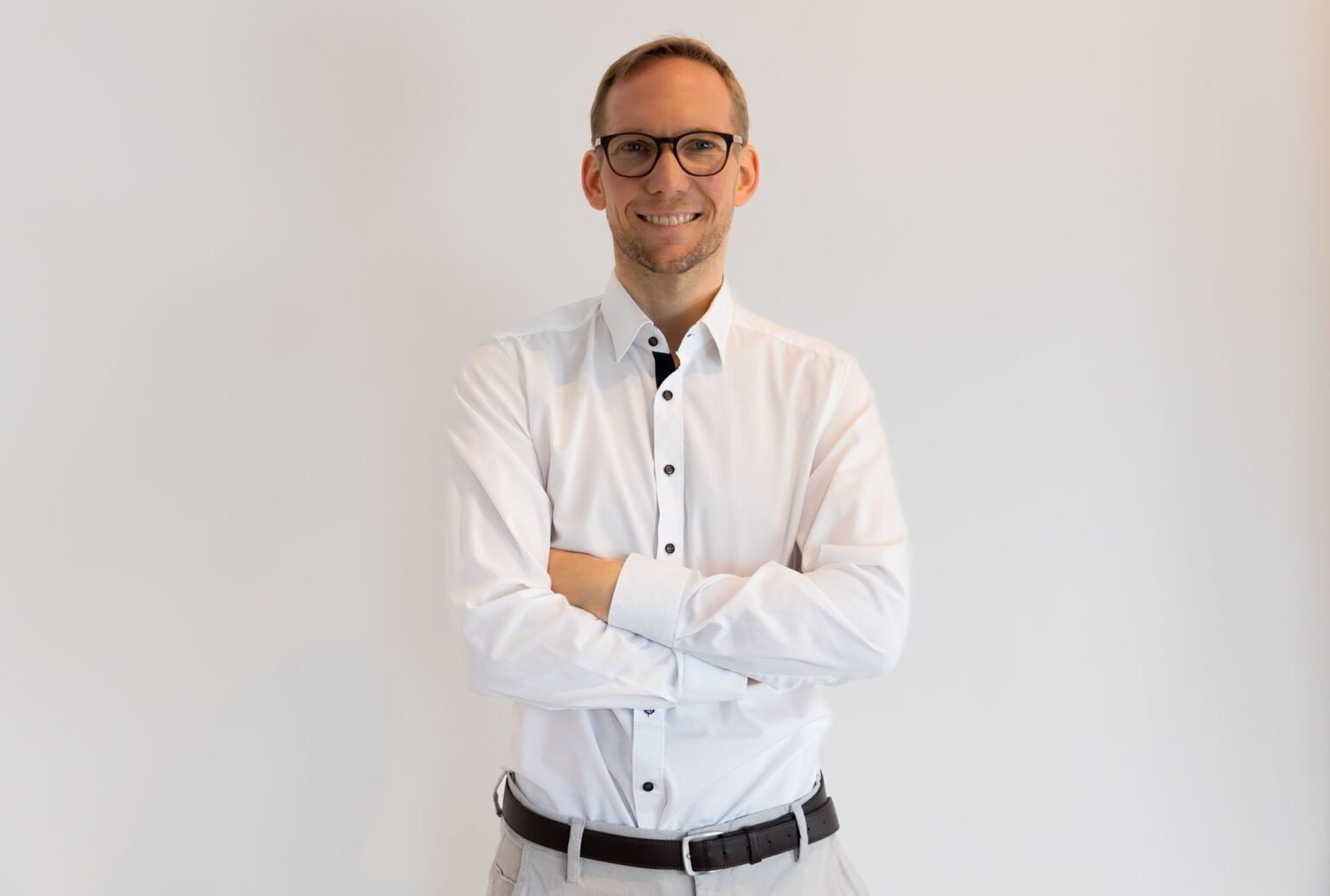
How Dr. Jens Hermes built a business around breakup recovery
Dr. Jens Hermes is CEO of Dr. Hermes Institut AG, which provides relationship coaching for people recovering from heartbreak and couples seeking to save their relationship. This conversation traces the move from free self-help groups to a full-time business, and explains why specialization, visible trust and a mix of marketing channels matter.
A clear specialty helped the institute stand out, but relying on one acquisition platform proved fragile. Hermes’s advice is to build references early, use clients’ own language, invest in SEO and avoid trying to be everywhere at once.
What’s the short story of how your business started, and what makes it genuinely different from the other options your customers have?
I’m Dr. Jens Hermes, founder of the Dr. Hermes Institut (doktorhermes.de) and host of the Dr. Hermes Podcast, today one of the leading providers of relationship coaching (Beziehungscoaching) in the German-speaking world. My doctorate is in chemistry, not psychology, and my path into coaching started with my own breakdown. In 2009 I had moved from Germany to Switzerland for my PhD when everything hit at once: my partner left me, the pressure on my thesis kept growing, I was alone in a new country, and my parents’ marriage fell apart. I went to therapy, and it didn’t help me at all. So I started searching on my own and eventually found coaching: concrete tools that actually moved something. I went deeper, completed numerous trainings and certifications, and for almost ten years I led self-help groups and intensive weekends for free, alongside my career in the Swiss pharma and chemical industry. I stayed in Switzerland and married a Swiss woman, and in 2022 I left that well-paid career to work as a coach full-time. The Dr. Hermes Institut AG followed a little later.
What makes us different is the intensity and breadth of our support. Relationship problems are complex, and every school of coaching or therapy only takes people up to a certain point. So instead of committing to one method, the Dr. Hermes Method combines tools from many schools, and a whole team of coaches works with each client, one-on-one and in small groups. Even classic 1:1 coaching is rarely this close. That’s why most of our clients come to us after years of therapy or other coaching, and finally get the breakthrough they had been hoping for for 10, 15 or even 20 years. It’s also why we now train our own coaches in a dedicated coaching certification: graduates of other programs simply lack the breadth this work requires.
How did you win your first customers, and where does most of your new business come from today?
For almost ten years, my first clients didn’t pay at all. I ran self-help groups and intensive weekends simply because I loved the work and kept seeing results. When I went full-time in 2022, I started on Instagram and grew to 100,000 followers within about six months. That attention brought in our first wave of paying clients.
Since then we have supported more than 1,000 clients, and we have grown to a team of nine. Today roughly 70 to 80 percent of new clients come through paid channels, mainly Meta and Google Search ads. The other 20 to 30 percent come organically, above all through the Dr. Hermes Podcast, which has passed one million downloads on Spotify alone and more than one million views on YouTube. On Instagram we regularly reach more than one million views per month, and our work has been featured in German media such as BRIGITTE and Wir Eltern. Many referrals come from professionals: therapists, psychiatrists and psychologists send us their patients because we specialize in breakup recovery and emotional dependency. On ProvenExpert, 99 percent of our clients recommend us, with an average rating of 4.92 out of 5 stars.
What’s one decision that changed the direction of your business, and one mistake that taught you the most?
The decision that changed everything was focusing our marketing on breakup recovery (Trennungsverarbeitung) and emotional dependency. The insight came from an Instagram chat automation. We asked people whether they were single or in a relationship, and many ignored both options and wrote back: "I’m separated." Technically they were single, but they didn’t see themselves that way. Being separated was a status of its own, and usually a low point. At the same time I noticed that many of the people reaching out to us were in exactly that phase. Once we built everything around this topic, we became the go-to specialists for it in the German-speaking market, to the point where therapists now refer their own patients to us. We still work with other relationship issues, but specializing is what made our name.
The mistake that taught me the most: riding one horse for too long. We relied on Instagram too long and started paid ads too late. Then we relied on paid ads too long, until Meta’s Andromeda update and new advertising restrictions for sensitive topics hit us hard. Depending on a single platform nearly broke us more than once. Today we are deliberately diversified across SEO, podcast, YouTube, Instagram, TikTok and paid search, which gives us far more stability.
What has changed in your industry or in what your customers expect over the last couple of years, and how have you adapted?
The coaching market has exploded. There are far more coaches now, and frankly a lot of bad ones, some of them selling people things that simply don’t work. As a result, clients have become much more skeptical, which is healthy. But it also means many come to us after already losing money elsewhere. Just recently someone told us she had invested in another program that did nothing for her, and now she couldn’t afford to start with us. That’s painful to hear.
We’ve adapted by making trust visible before anyone pays. We publish client videos in which real people share very personal stories, unscripted. I host regular free live events where I coach participants live, without a script, so people can experience how I work and who I am. And our podcast gives away genuinely practical advice. In a recent live show, one woman said that a week earlier she had been in a very dark place, then found the podcast, and was already doing so much better.
A second shift: narcissism has become a mass topic on social media. One of our biggest learnings is that a trending topic doesn’t automatically bring the right clients. So we stay focused on what lies underneath: emotional dependency, attachment patterns and self-worth.
If you were advising someone starting out in your industry today, what would you tell them to do first, and what would you tell them to ignore?
First, build references. In our own coaching certification, participants work with practice clients, and those sessions are also part of their final exam. That gives them real experience and their first testimonials right away. In today’s skeptical market, you won’t get far without testimonials.
Second, learn your clients’ language of pain. It helps enormously if you have been at that low point yourself. Therapists and psychiatrists often know these issues from theory. If you’ve lived through them, you speak the language of people in crisis, and that builds trust much faster.
Third, start with SEO early, as soon as you know how your audience describes their problem. On social media, pick one platform and focus on it, or recycle your content across platforms.
What to ignore: the urge to look polished and be everywhere at once. What works best today is authenticity, being seen and found for who you actually are.
Thank you to Dr. Jens Hermes and the team at Dr. Hermes Institut AG for sharing what actually worked with Leaders Perception readers.
Want to tell the story behind your business?
Leaders Perception publishes interviews with business owners and leaders every week. Five questions, about ten minutes, no calls. It is free and every completed interview gets published.