
David Vélez launched a digital revolution in 2013 to transform the complicated financial systems in Brazil. This company started as a small startup but quickly became a giant in the regional market. By focusing on a fee-free model, it changed how people view banking forever.
The nubank growth strategy latin america centers on removing friction for millions of users. Between 2021 and 2025, the user base jumped from 54 million to 131 million. This massive growth shows how much residents in latin america value simple digital tools.
Financial success followed this rapid expansion with a 75% compound annual revenue increase. The company turned profitable in 2023 while improving its activity rates significantly. Today, this leader in banking proves that innovation can thrive in latin america despite high hurdles.
Key Takeaways
- David Vélez founded the digital bank in 2013 to fight Brazilian bureaucracy.
- The customer base exploded from 54 million to 131 million in just four years.
- Revenue increased at a 75% compound annual growth rate through 2025.
- A fee-free credit card model helped the brand gain unprecedented trust.
- The business achieved profitability in 2023 while doubling its earnings per share.
- High activity rates show that users rely on these digital services daily.
The Birth of Latin America’s Digital Banking Revolution
The financial landscape in latin america underwent a radical shift when a single startup decided to take on the giants. This movement prioritized the needs of the individual over the profits of the old institution. It transformed how millions interact with their money every day.
David Vélez’s Vision: Challenging Brazil’s Banking Bureaucracy
David Vélez saw a system that worked against the people. High fees and long lines defined the daily experience for anyone trying to manage their money. He recognized that the existing infrastructure was broken and needed a digital cure.
“We wanted to create a company that treated people like human beings, not just numbers in a database.”
The 2013 Launch Against Complex Financial Systems
In 2013, David Vélez established Nubank in a country where five banks controlled the majority of the market. He launched the firm to simplify banking and remove the red tape that frustrated the population. He sought to empower the common person through accessible technology.
Building Reputation Through Fair, Transparent Services
The brand focused on human-centric communication and honest services. By eliminating hidden costs, they won the trust of every single customer who felt cheated by traditional banks. This transparency became their greatest competitive advantage in a crowded market.
From Startup to Latin America’s Largest Digital Bank
What started as a small project in São Paulo quickly expanded across borders. It became a symbol of financial freedom for those ignored by legacy firms. The company evolved from a simple challenger into a dominant regional powerhouse.
90 Million People Gaining Financial Control
Today, the company serves more than 90 million customers. This massive growth highlights how much customers value having direct control over their own financial lives within the modern banking sector of latin america.
| Service Pillar | Traditional Institution | Nubank Digital Model |
|---|---|---|
| Fee Structure | Hidden and excessive charges | Transparent and zero fees |
| Accessibility | Physical branch visits | 100% Mobile app access |
| Communication | Complex and bureaucratic | Simple and human-centric |
| Wait Times | Days for simple requests | Instant digital processing |
Nubank Growth Strategy Latin America: The Core Pillars of Expansion
The architecture of Nubank’s success is built upon several key pillars that fundamentally changed how Latin Americans interact with money. These core elements allowed the company to scale rapidly while maintaining a lean operation. By focusing on accessibility and transparency, the brand redefined the standard for modern services.
Fee-Free Credit Cards as the Gateway Product
The journey began with simple, purple credit cards that lacked annual fees. This entry point was crucial for building trust in a region where people were used to hidden costs. By simplifying financial products, Nubank created a loyal customer base that was ready for more complex offerings.
Disrupting Brazil’s High-Fee Banking Model
Traditional banks in Brazil often charged exorbitant interest rates and maintenance fees. Nubank’s transparent model proved that honesty could be a powerful marketing tool. This approach completely upended the status quo, forcing competitors to rethink their own pricing structures.
Digital-Only Infrastructure: The Cost Advantage
Operating without physical locations provided a massive edge in unit economics. This digital banking setup meant the company didn’t have to pay for expensive real estate or security for vaults. Consequently, the cost per customer remained low even as they scaled to millions of users.
NuBank stands as Latin America’s largest digital-only bank, a position built on a simple but powerful proposition.
No Branches, No Legacy Systems, No Overhead
Traditional institutions struggle with slow, outdated software and expensive physical networks. Nubank avoided these traps by building its own tech stack from the ground up. Without heavy overhead, they redirected funds into better customer support and product development.
Targeting the Underbanked Population
A significant portion of the Latin American population lacked access to basic accounts. Nubank saw this gap not as a risk, but as an opportunity for growth. By providing digital services to those ignored by big banks, they captured a massive, untapped market.
Financial Inclusion as Competitive Advantage
Inclusion became an engine for profit rather than just a social goal. Providing credit cards to first-time users helped Nubank grow faster than any brick-and-mortar rival. This strategy effectively widened the addressable market and created a sustainable cycle of expansion.
- Efficiency: Lower operational costs allow for better rates.
- Accessibility: Entirely mobile onboarding removes physical barriers.
- Transparency: No hidden fees build long-term consumer trust.
| Feature | Nubank Strategy | Traditional Banks |
|---|---|---|
| Physical Branches | Zero | High Overhead |
| Annual Fees | $0 | Variable/High |
| System Age | Cloud-Native | Legacy Mainframes |
Explosive Growth Metrics That Rewrote the Playbook
Numbers often tell the most compelling story, and for this digital bank, the statistics are nothing short of breathtaking. The growth seen over the last few years sets a new global benchmark for financial institutions. This performance proves that a digital-first approach can scale at a pace previously thought impossible.
Customer Acquisition Velocity: 54 Million to 131 Million
From 2021 to 2025, the user base surged from 54 million to a staggering 131 million. This trajectory represents a massive shift in how people in Latin America manage their finances.
77 Million New Customers in Four Years
Adding 77 million new customers is like onboarding the population of a medium-sized country every single year. This rapid expansion shows the brand’s ability to capture diverse market segments quickly and efficiently.
Activity Rate Climbing From 76% to 83%
The activity rate also saw a significant boost during this period. It climbed from 76% to 83%, proving that customers did not just sign up but stayed active on the platform.
| Key Performance Metric | 2021 Data | 2025 Data |
|---|---|---|
| Total User Base | 54 Million | 131 Million |
| Activity Percentage | 76% | 83% |
| Average Revenue (ARPAC) | $4.50 | $15.00 |
ARPAC Tripling: From $4.50 to $15
The Average Revenue Per Active customer (ARPAC) tripled, moving from $4.50 to $15. This shift indicates that the company successfully turned user volume into sustainable financial gain.
Successful Cross-Sell of Loans and E-Commerce Services
By offering personal loans, e-commerce services, and even crypto tools, the company deepened its relationship with users. Integrating credit products into the daily lives of users helped maximize the value of every customer account.
“We are a technology entity that happens to have a banking license, and that makes all the difference in how we scale our impact.”
75% Revenue CAGR and Path to Profitability
Revenue expanded at a 75% compound annual growth rate from 2021 to 2025. This financial strength allowed the platform to move far beyond its early startup phase into a mature powerhouse.
EPS Nearly Doubling in 2024, Up 45% in 2025
The platform turned profitable in 2023, with earnings per share (EPS) nearly doubling in 2024. In 2025, EPS climbed another 45%, showing that the high growth phase was also very lucrative.
Analysts expect a 36% EPS CAGR through 2028 as the platform refines its credit models further. This continued success validates the long-term vision of a borderless digital bank.
Geographic Expansion: Conquering Mexico and Colombia
Moving past the Brazilian borders, Nubank implemented a strategic roadmap to capture the broader latin american market. This expansion proved that its digital-first model could scale effectively across different borders. Today, international growth is a vital pillar of the company’s long-term strategy.
Mexico: Surpassing 10 Million Customers
Achieving a milestone of over 10 million customers in Mexico highlighted the success of the recent expansion mexico project. The firm focused on building deep trust with a population that often felt neglected by large, traditional banks. These new customers have quickly embraced the platform’s user-friendly interface and transparent pricing.
Credit Cards, Digital Accounts, and Personal Loans
The company offered a versatile product suite including a popular credit card, digital accounts, and personal loans. These offerings simplified daily finances for the local market by removing complex paperwork. By providing essential credit tools, the bank has become a primary financial partner for many Mexican households.
From Sofipo to Full Banking License Application
The company first used a Sofipo status to enter the country and test its operations. It has now applied for a full banking license with the CNBV to offer a wider range of financial services. This regulatory step is a core part of the ongoing expansion mexico plan to deepen its local presence.
Colombia: 2.5 Million Customers and Nu Cuenta Launch
Colombia became a vital part of the expansion mexico and LatAm journey when it reached 2.5 million users. The launch of Nu Cuenta acted as a catalyst for this rapid expansion in a highly active region. Local users have shown a strong preference for digital tools that eliminate the need for physical branches.
| Region | Customer Base | Key Milestone |
|---|---|---|
| Mexico | 10 Million | License Application |
| Colombia | 2.5 Million | Nu Cuenta Launch |
| Brazil | 100 Million | Ecosystem Dominance |
Large Unbanked Population Creates Opportunity
A large unbanked population in Colombia provides a massive expansion opportunity for digital challengers. Nubank brings more people into the formal financial system by removing hidden fees and high barriers. This focus on financial inclusion is a major driver of their rapid user acquisition in the region.
Competitive Landscape Requiring Differentiation
The landscape is crowded with traditional players, but Nubank stays ahead through constant innovation. Its low-cost banking model provides a much better experience than legacy competitors. Strong customer loyalty ensures that the brand remains the top choice for mobile-savvy users in the region.
The Digital-Only Business Model Advantage
The digital-only model provides a structural edge that fuels rapid expansion while keeping costs low. By removing the need for physical branches, the company maintains a flexible structure that adapts to market shifts. This lean approach allows for a level of efficiency that traditional institutions simply cannot match.
Unit Economics That Scale Without Proportional Costs
The bank’s financial health demonstrates how technology drives efficiency at every level of operation. While traditional firms struggle with rising maintenance expenses, Nubank achieves higher margins through automated processes. This foundation allows the bank to serve millions without ballooning its operational budget.
Average Cost Per Active Customer Remains Steady
Remarkably, the average cost per active customer remained steady even as the bank added 77 million users. This stability proves that the platform handles massive volume without losing its lean edge. It reflects an operational discipline that is essential for long-term profitability.

Infrastructure Scales While Traditional Banks Carry Overhead
Traditional banks carry massive overhead, including expensive branches, legacy systems, and thick layers of staff. Nu’s infrastructure scales without these proportional cost increases, creating a widening gap against incumbents. This lack of physical baggage fuels faster growth and creates a sustainable competitive moat.
Customer Acquisition Cost Under $5 Per User
The company relies on word-of-mouth and high brand trust rather than expensive legacy advertising campaigns. This strategy keeps marketing spend under control while rapidly expanding the user base. Low acquisition costs remain a primary driver of their overall market dominance.
Organic Channels Driving Blended CAC Efficiency
Nubank achieved a blended customer acquisition cost of less than $5 USD per user. These organic channels create a sustainable business flywheel where satisfied users naturally invite their peers. Low acquisition costs mean the bank recovers its investment significantly faster than its competitors.
| Metric | Nubank Performance | Traditional Bank Impact |
|---|---|---|
| Acquisition Cost | Under $5 USD | High Marketing Spend |
| Infrastructure | Cloud-Based/Digital | Physical Branches/Legacy |
| Activity Rate | 83% Engagement | Higher Dormancy Rates |
83% Activity Rate: Engagement That Drives Revenue
Acquiring users is only the first step; keeping them active is what builds long-term value. Nubank boasts an incredible 83% activity rate, showing that users find the platform essential for their daily lives. This high engagement level validates the strength of their digital model.
Multiple Products Generating Year-Over-Year Revenue
Users typically adopt multiple products, such as credit cards and personal loans, which generates revenue year over year. As users integrate more services into their routines, the lifetime value of each customer continues to climb. This deep engagement ensures consistent revenue growth and protects the bank against market volatility.
“Nu’s infrastructure scales without proportional cost increases, giving it a structural advantage in customer acquisition and margin expansion.”
Investor Confidence: Buffett, Wood, and Wall Street’s Validation
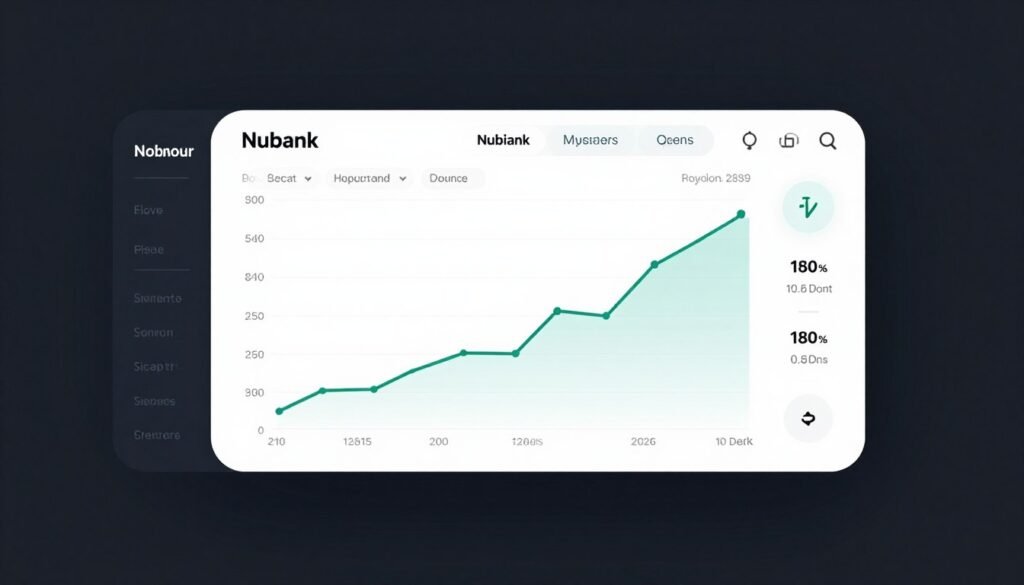
Significant endorsements from top-tier global investors have provided a layer of credibility that few digital banks ever achieve. This validation proves that the bank’s unique business model is a serious contender in the competitive financial market.
The support from diverse financial icons highlights a rare bridge between tech-focused venture capital and traditional value investing. These high-profile backers believe the bank has redefined the rules of regional banking.
Cathie Wood’s Disruptive Innovation Thesis
Cathie Wood, a famous proponent of disruptive innovation, views the firm as a premier leader in the global fintech space. She believes the company is fundamentally changing how people access financial services through modern technology.
Focus on Fintech Leadership and Underbanked Opportunity
Her thesis highlights the ability of the platform to reach millions of previously unbanked citizens. This specific focus unlocks massive potential for long-term growth in segments that traditional banks often ignore.
By providing essential financial tools to these users, the bank creates a loyal customer base. Wood sees this growth as a key driver of future value for the entire ecosystem.
Scaling Operations Rapidly in Latin America
Wood also points to the rapid pace of scaling across different national borders. The digital-first approach allows for swift entry into new regions without the high costs of physical branches.
Warren Buffett’s Value Perspective on Nubank
Warren Buffett provides a different but equally powerful validation through his long-term investment lens. His support signals that the fintech giant is more than just a speculative startup.
Strong Financial Performance and Growing Market Share
Buffett values the firm’s robust financial results and its expanding market share. He recognizes the potential for sustainable profits as the core user base continues to mature.
His investment strategy focuses on businesses that demonstrate clear competitive advantages. The bank’s efficient cost structure is a perfect example of what he looks for in a winner.
Confidence in Management and Business Model
This investment also shows deep confidence in the management team and their clear strategy. Having a value-oriented legend as a backer adds immense stability and trust to the brand.
Analyst Price Targets: $18.34 Average with 25% Upside
Wall Street analysts share this optimism, projecting significant gains for the company. Many experts see the current price as an attractive entry point for an investment looking at future returns.
Range From $16 to $22 Per Share
Target estimates for each share currently range from $16 to $22. With an average price of $18.34, analysts suggest a 25% upside for current share holders.
Navigating the Competitive Landscape and Traditional Banking Response
Traditional banks are fighting back by embracing technology and launching their own digital-first initiatives. The rapid rise of new competitors has forever changed the landscape in latin america.
Established institutions are now ramping up their digital transformation efforts to stay relevant. They are investing billions into innovation and launching partnerships to keep their customers from leaving.
Traditional Banks Responding With Digital Transformation
Legacy traditional banks are no longer sitting idly by while newcomers win over the public. They are modernizing their internal systems to offer a smoother digital banking experience.
Competitive Interest Rates and Fee Waivers
Many traditional banks now offer higher interest rates on savings accounts to match their rivals. They have also started waiving fees for online transactions to keep their products attractive to the mass market.
Investment Platforms Rivaling Neobank Offerings
Major banks are rolling out new apps that allow users to buy stocks and bonds easily. These tools aim to offer the same convenience that users expect from modern mobile apps.
Fintech Competition and Market Differentiation
The success of fintech leaders has triggered a massive shift across the entire financial market. This shift has forced every player to rethink how they interact with their users.
Digital Transformation Wave Across Latin America
The wave of change across latin america has led regional banks to adopt more agile ways of working. They are focusing on speed and better mobile features to remain competitive.
Proliferation of Similar Business Models
The market is now seeing many new startups trying to replicate the successful banking models of the early pioneers. This has created a more crowded environment where only the strongest survive.
Complementary Customer Segments, Not Pure Competition
Even with new fintech growth, traditional banks still maintain a very strong hold on certain groups. The relationship between these players is often more helpful than it is harmful.
Younger Demographics vs. Affluent Multi-Generational Relationships
Traditional banks still focus on a more affluent customer base that needs complex wealth management. Meanwhile, newer apps appeal to a younger demographic that values transparency and fast customer service.
Expanding the Financial Services Pie
The competition between traditional banks and new players is driving innovation for everyone. By serving people who were once ignored, these companies are growing the total number of people using financial tools.
| Feature | Traditional Banks | Fintech Players |
|---|---|---|
| Core Focus | Relationship banking | Speed and transparency |
| Key Strength | Wealth management | Excellent customer service |
| Target Client | Affluent households | Digitally-savvy youth |
Regulatory Strategy Across Brazil, Mexico, and Colombia
Regulatory mastery remains a silent engine behind Nubank’s ability to scale across the latin american market. Sophisticated management has shown great skill in navigating different legal rules to keep growth steady and compliant.
Brazil’s Central Bank and Regulatory Support
In Brazil, the government played a huge role in helping the fintech sector thrive. The national bank actively shaped the landscape to encourage more competition.
Banco Central do Brasil Fostering Innovation
The central bank focused on driving innovation by modernizing the banking system. These changes allowed digital players to compete fairly with big traditional firms for the first time.
Regulatory Sandboxes Testing New Products
Regulatory sandboxes allowed Nubank to test fresh products in a safe, controlled space. This environment helped the company ensure safety while trying out creative ideas for their users.
Mexico’s Banking License and CNBV Engagement
Moving into Mexico required a different path for the industry giant. The company worked closely with the CNBV to build trust and ensure long-term stability.
From Sofipo to Full Banking Institution
Nubank first used a Sofipo license to start its operations quickly. Later, they applied for a full banking license to offer a wider range of services to the country.
Leadership Setting Tone for Fintech Regulation
New leaders in Mexico are now setting a modern tone for the fintech world. They want the region to catch up with global digital trends and improve financial access.
| Country | Primary Regulator | Key Focus Area |
|---|---|---|
| Brazil | Banco Central do Brasil | Market Competition |
| Mexico | CNBV | Licensing Standards |
| Colombia | Banco de la República | Financial Stability |
Colombia’s Innovation Framework and Data Privacy
Colombia offers a unique framework that balances growth with consumer safety. The local regulators focus heavily on how digital companies handle sensitive user data.
Banco de la República Supporting Fintech Growth
The Banco de la República supports the digital industry through clear and fair rules. This provides a stable path for expansion and investor confidence within the region.
Tightening Controls and Data Protection Standards
Regulators are now enforcing much stricter data privacy rules. Companies must use strong innovation and security measures to protect their customers from modern digital threats.
The regulatory environment must evolve as fast as the technology it oversees to ensure a safe financial future.
Managing Risk: FX Volatility, Credit, and Operational Challenges
Growing a digital bank across Latin America requires a delicate balance between aggressive expansion and strict risk oversight. Proactive risk management helps the company handle sudden shifts in regional economies. This approach ensures the firm maintains its ability to lend responsibly while serving a broad customer segment.
Currency Fluctuations Impacting Net Interest Margin
FX Volatility Contracting NIM by 70 Basis Points
Foreign exchange shifts significantly affected financial results. Currency volatility alone contracted the net interest margin by 70 basis points. This specific factor accounted for nearly 45% of the total NIM decline during the period.
Revenue +25% Reported vs +50% FX-Neutral Growth
Reported revenue growth appeared to slow down to 25% due to currency headwinds. However, the FX-neutral growth figure remained much higher at 50% year-over-year. This gap highlights the significant impact of currency fluctuations on international earnings.
Hedging Strategies Using US Dollar and Euro Derivatives
The firm uses derivatives to reduce its overall currency risk. By hedging costs in US Dollars and Euros, they protect their capital. They also use derivatives for intercompany loans to stabilize the currency balance across borders.
Credit Risk and Loan Portfolio Health
NPL Ratios: 4.1% (15-90 day) and 7.0% (90+ day)
Maintaining a healthy credit portfolio is a top priority. The 15-90 day NPL ratio improved to 4.1%. Meanwhile, the 90+ day ratio decreased to 7.0%, showing better credit control.
Shift Toward Lower-Risk Customers and Secured Lending
The company is focusing more on the lower-risk customer. Using internal data, they are expanding secured lending options. This data allows for more precise risk assessment during the underwriting process.
Delinquency at 8.2% vs Industry 7.2%
The delinquency rate reached 8.2% in early 2024. This figure is slightly above the industry average of 7.2%. Serving the underbanked carries an inherent risk that the bank must manage carefully.
Margin Compression in New Markets
Higher Funding Costs in Mexico and Colombia
Entering a new market involves unique financial hurdles. Higher funding costs in Mexico and Colombia have compressed margins. This limits the ability to replicate Brazil’s market profitability immediately due to credit loss allowances.
| Metric Type | Performance Data | Portfolio Management Detail |
|---|---|---|
| NIM Impact | -70 bps | Driven by FX volatility risk |
| 90+ Day NPL | 7.0% | Improving credit metrics |
| Lending Focus | Secured loans | Lowering overall risk levels |
Global Ambitions: The Tyme Group Investment and International Vision
The digital banking giant took a significant step toward global reach by backing a venture in Africa and Asia. This move proves the company wants to grow far beyond its Latin American roots. By entering new regions, the firm aims to show that its disruptive model works in diverse cultural contexts.
$250 Million Strategic Investment in South Africa and Philippines
The total investment round reached $250 million, signaling a massive push for global expansion. This strategic investment helps Nubank plant its flag in high-growth regions. The funding allows the company to study how different financial systems operate.
Tyme Group’s Expertise in Underbanked Populations
Tyme Group has mastered the art of reaching the underbanked population in South Africa and the Philippines. Their success provides Nubank with a blueprint for success in the Asian market. This partnership connects two leaders in digital banking innovation.
M&G Catalyst Fund and Existing Shareholders Co-Investing
The investment structure included a $50 million subscription from the M&G Catalyst Fund. Existing shareholders also contributed another $50 million to this capital investment. This broad participation shows that investors believe in Nubank’s ability to scale globally.
Potential Synergies and Market Expansion Beyond Latin America
This strategic expansion creates a unique path to share technology and innovation across continents. Nubank can now use comparative data to refine its core offerings. The company is evolving from a regional player into a truly global fintech bank.
Mobile Banking Expertise and Market Knowledge Transfer
Sharing insights on mobile banking helps both organizations improve their user experience. Learning about local market knowledge speeds up the ability to adapt to new regulations. This transfer of expertise is a key advantage for any modern fintech bank.
Testing New Products in Different Emerging Markets
These emerging markets serve as a real-world lab for testing financial products. Nubank uses consumer data to see what features resonate with a global population. This approach ensures they stay ahead of competitors in every territory they enter.
Investment Outlook: Catalysts, Valuation, and Future Trajectory

Understanding where this financial innovator is headed involves dissecting its current valuation and future earnings potential. The company has shown remarkable resilience in a shifting financial landscape by maintaining a clear expansion strategy. Investors now look for specific signs that this upward momentum can continue in new regions.
By analyzing recent trends, we can gain insights into how the business handles volatility. The ability to scale while keeping costs low remains a central part of the investment thesis. Here is what to watch in the coming quarters.
Key Catalysts and Earnings Schedule
May 14, 2026 Q1 Earnings Report
The next major catalyst arrives on May 14, 2026, when Nu reports its Q1 earnings. This date is critical for the industry to see if the company can sustain its rapid pace. Analysts will focus on margin stability as the bank deepens its roots in Mexico and Colombia.
Customer Acquisition and ARPAC Growth Monitoring
A primary question is whether customer acquisition continues at a healthy speed. Investors also want to see if the average revenue per active customer is still climbing. Sustained growth in these areas would prove the ability of the model to generate long-term value.
Current Valuation and Price Targets
Stock at $14.68 vs 52-Week High $18.98
The stock currently trades at a price of $14.68 per share. This level is roughly 24% below its 52-week high of $18.98. This dip might represent a potential entry point for those who believe in the long-term strategy of the brand.
Analyst Consensus $18.20-$18.34 with 1-Year Target $19.87
Current analyst consensus targets fall within a range of $18.20 to $18.34. Furthermore, the 1-year target estimate stands at $19.87. This projection implies roughly 35% upside from current levels based on core growth drivers.
Forward Growth Projections Through 2028
28% Revenue CAGR and 36% EPS CAGR Expected
From 2025 to 2028, analysts expect the company to maintain a high range of performance. They project a revenue CAGR of 28% and an EPS CAGR of 36%. This outlook reflects strong confidence in the growth trajectory of the digital platform.
Beta 1.11 Risk Profile and Market Volatility
The stock carries a beta of 1.11, which confirms it is slightly more volatile than the broader market. This level of risk is common for high-performance firms in the fintech industry. Investors should prepare for price swings as the market reacts to global economic shifts.
Risk Factors and Market Headwinds
Geopolitical and Macro Challenges in Latin America
Geopolitical and macro headwinds in latin america have consistently compressed valuations. This regional risk often impacts customers and their spending power. Such external factors represent a significant risk that can weigh on even the strongest stocks.
Competitive Pressures and Margin Compression
Increased competition in latin america poses a constant risk to profit margins. As the company expands, higher funding costs and aggressive rivals create another layer of risk. Managing these risk factors while adding new customers will be a major challenge for the leadership team.
Conclusion
The journey of David Vélez proves that a customer-focused model can dismantle traditional banks and their long-standing dominance. This strategy transformed a 2013 startup into a Latin American giant that redefines modern banking. Today, the company serves a massive customer base by prioritizing innovation over complex bureaucracy.
Nubank reached 131 million customers through a digital banking approach that offers better services. By launching a fee-free credit card and other financial products, they attracted new customers with unprecedented velocity. Their lean infrastructure gave them a distinct cost advantage over traditional banks and other banks in latin america.
The expansion into Mexico and Colombia shows how the fintech scales across diverse markets. While traditional banks try to adapt their legacy systems, Nubank maintains high engagement through superior customer service. They use technology to reach the unbanked population and provide essential credit services to those ignored by traditional banks.
Investors like Warren Buffett and Cathie Wood see the company as a leader in global fintech. Despite risks like currency shifts, the management team handles credit risk with advanced data analytics. This fintech success expands the overall share of people using modern products services in latin america.
The bank now offers a broad range of products, including insurance and credit lines. By adding new customers daily, the company continues to pressure traditional banks to lower their fees. These cards and digital services have changed how the customer interacts with money in latin america.
Nubank proves that fintech can be both socially impactful and highly profitable. While traditional banks focus on old methods, Nubank captures the customer base of the future. The fintech continues to add a wide range of new customers to its banking platform.
Growth metrics suggest a strong path toward 2028 as the bank scales its credit portfolio. Traditional banks must innovate or lose more customers to this digital fintech. Nubank is not just a company; it is a movement providing better financial products to everyone.
| Key Pillar | Description | Impact |
|---|---|---|
| Customer Base | Over 131 million users | Dominant share in latin america |
| Product Range | Cards, credit, and insurance | Diversified products services |
| Market Strategy | Challenging traditional banks | Lower fees and better customer access |