
In the modern business landscape, genuine trust acts as the ultimate currency for success. People connect with real individuals much faster than they do with a faceless company. This shift has made a founder led marketing strategy a vital growth asset for any new brand.
Adam Holmgren proved this at Fibbler by using his own voice to gain early traction. By sharing authentic and insightful content, he built a personal brand that drove rapid interest. This type of content provides a human touch that polished campaigns often lack.
While founder-led marketing builds initial momentum, it can eventually hit a plateau as a team grows. You must learn how to turn personal influence into a sustainable system that scales effectively. This guide explores how to use high-quality content to build a lasting legacy.
Effective content should help you expand beyond a single voice. It is time to evolve your approach and secure long-term results through smart distribution systems that amplify your message.
Key Takeaways
- Founders build authentic trust faster than corporate entities can.
- Personal storytelling cuts through the noise of traditional advertising.
- Early business traction often relies on the leader’s unique perspective.
- Relying solely on one person creates a ceiling for future expansion.
- Successful systems transition from individual posts to scalable distribution.
- Authenticity must be balanced with architectural design to compound results.
What Founder-Led Marketing Actually Is (And What It Isn’t)
Defining founder-led marketing requires looking past the surface level of daily posts and viral videos. Many people focus only on the output, such as the number of pieces of content created or how often a founder posts. This narrow view ignores the human connection that happens behind the screen.
At its core, this approach uses a human voice to bridge the gap between a cold corporation and a living person. Buyers today look for signals of competence and a clear worldview before they ever consider a product. They want to know if the person leading the company is worth paying attention to when a problem finally appears.
Authentic founder-led marketing only works when it is a deliberate part of the go-to-market plan. It is not a random habit or a side project for a CEO with extra time. Instead, it is a way to make the company’s message feel closer, less filtered, and much more human than a standard corporate page.
The Trust Strategy, Not a Content Strategy
People often mistake high volume for high impact in their strategy. They think that posting every day is the goal, but the goal is actually mental availability. When a founder consistently shares their expertise, it builds trust quietly over time with a target audience.
Founder-led is not a content strategy. It’s a trust strategy.
This trust shapes how buyers behave long before they are ready to make a purchase. They follow individuals to learn from their unique perspective and stay informed about industry shifts. By providing value through content, you ensure your company is the first one they call when the need for your service arises.
Founder-Led Marketing vs. Personal Branding
There is a critical difference between building a personal brand and executing founder-led marketing. While branding for an individual focuses on follower counts and personal fame, this method focuses on business outcomes. You are using your individual credibility to boost the reputation of the organization.
The founder acts as the primary representative who carries the weight of the company’s mission. Every piece of content shared should help build equity for the business, not just the person. It is about using a private platform to turn a quiet company into a recognized industry leader.
When done right, founder-led marketing moves the needle on revenue and lead quality. It turns the owner’s knowledge into a repeatable system that drives growth. This distinction ensures the team focuses on the right metrics rather than just chasing vanity likes on social media.
| Feature | Personal Branding | Founder-Led Marketing |
|---|---|---|
| Primary Goal | Individual fame and followers | Business growth and revenue |
| Main Asset | Personal lifestyle and stories | Industry expertise and worldview |
| Target Outcome | Personal opportunities/speaking | Company brand equity and leads |
Why Founder-Led Marketing Outperforms Traditional Strategies
While big brands struggle with low engagement, founders are finding that their personal presence is the ultimate competitive advantage. This shift is not just a trend; it is backed by hard numbers that prove how individual voices drive more growth than corporate logos. Research from Bain shows that founder-led companies outperform others by 2.1 times in total shareholder returns.
The collective networks of employees are typically ten times larger than their company follower base. Because of this, employee-driven posts see eight times more engagement than brand channels. These strategies work because they bypass the “corporate filter” that often makes audiences tune out or scroll past advertisements.
Modern founders are no longer just CEOs; they are the primary media channel for their organizations. By using founder-led marketing, leaders can reach thousands of potential buyers every day without a massive ad budget. This systematic presence creates a lasting impact that traditional outbound sales simply cannot replicate.
The Trust Gap: People Buy from People, Not Brands
Buyers form opinions about individuals long before they compare software features or service packages. A founder’s voice builds trust because it feels human and vulnerable rather than polished and generic. Research shows that 82% of customers trust companies whose leadership is active on social media platforms.
When a leader shares their thoughts, they bridge the gap between a product and the person behind it. This direct connection offers credibility that a brand cannot earn through press releases or standard blog posts. In a crowded market, trust is the most valuable currency you can hold.
Real ROI: Success Stories from Chris Walker, Peter Caputa, and More
The financial results of this approach are staggering when compared to the 2% click-through rate of standard blogs. Chris Walker, the founder of Passetto, generates $10 million in annual revenue directly from his content on LinkedIn and his podcast. He has proven that a single voice can out-earn a large marketing department.
Similarly, Peter Caputa of Databox sees hundreds of sign-ups every month from his “building in public” posts. These success stories demonstrate that sharing the journey of a business leads to direct revenue. These founders are not just influencers; they are rainmakers who use content to close deals.
Cost-Effectiveness for Early-Stage Companies
For startups with limited budgets, the primary investment in this strategy is time rather than money. You do not need a million-dollar ad spend when your content reaches the right people for free. High engagement rates come from authenticity, which costs nothing to produce if you are willing to be consistent.
By studying different success stories, early-stage teams can see that organic reach is still powerful. Focusing on high-quality content allows a brand to scale quickly while keeping overhead low. This makes it the most sustainable way to build a pipeline of interested leads in the early days.
| Metric | Traditional Marketing | Founder-Led Marketing |
|---|---|---|
| Engagement Rate | Low (Brand focus) | 8x Higher (Personal focus) |
| Audience Reach | Limited by followers | 10x Larger (Network effect) |
| Trust Level | Skeptical (Corporate filter) | High (Authentic voice) |
| Primary Investment | Advertising Spend | Founder’s Time |
Understanding the Three Ceilings That Limit Founder-Led Growth
You might feel like your content is losing its edge, but the reality is that your strategy has likely hit a natural growth ceiling. Founder-led marketing doesn’t fail because it stops working; it fails because it hits limits a single human cannot outwork.
Recognizing these constraints early allows a business to build systems that evolve past initial success. These limits usually appear in three predictable ways after a period of rapid expansion.
The Reach Ceiling: When Organic Growth Plateaus
Organic reach flattens when your platform audiences stop growing at their initial rapid rate. This isn’t a quality issue but a distribution problem. Every social network has algorithmic boundaries and geographic limits that eventually restrict how many new eyes see your work.
Eventually, your content saturates your immediate network and existing connections. You see impressions level out as new people enter your feed more slowly than before. To scale, you must move beyond the limitations of individual organic algorithms and look toward wider amplification.
The Dependency Ceiling: Single Point of Failure Risk
Dependency increases when every major announcement and campaign flows solely through one personal profile. This creates a high-risk environment for the company. If shifting priorities pull the founder away, the marketing momentum immediately stalls.
Your growth becomes tied to one person’s consistency, energy levels, and daily availability. Marketing should be a repeatable system, not a personality-driven marathon. Relying on a single founder makes the strategy vulnerable to burnout and turns a powerful asset into a critical bottleneck.
The Brand Ceiling: Recognition Without Recall
Many leaders find that engagement remains high while the actual brand stays in the background. People trust the founder but fail to remember the company name after they stop scrolling. This creates a gap where there is no standalone credibility for the products you sell.
The individual becomes the face, but the entity lacks independent recall in the marketplace. Without distinctive visual cues, your content helps your personal reputation but does not build long-term equity for the firm. To achieve true growth, the brand must eventually stand on its own two feet without your constant presence.
| Ceiling Type | Primary Symptom | Solution Focus |
|---|---|---|
| Reach Ceiling | Stagnant impressions and follower counts. | Paid amplification and content distribution. |
| Dependency Ceiling | Growth stops when the leader is busy. | Systems-based founder-led marketing. |
| Brand Ceiling | High trust in person, low product recall. | Visual assets and distinctive brand cues. |
The Four-Engine Framework for Scalable Founder Led Marketing Strategy
To overcome growth plateaus, you need a framework that balances personal influence with corporate identity. Adam Holmgren developed the Founder-Brand Framework to solve this exact problem. It combines personal distribution with long-term brand building simultaneously to multiply your total effectiveness.
By running these forces together, you ensure your founder led marketing strategy does not just rely on a single person’s effort. This architecture transforms individual energy into a repeatable, powerful engine. It provides a clear roadmap for moving from organic chaos to a structured system that creates lasting market equity.
Trust Engine: Building Credibility Through Your Voice
The Trust engine focuses on using your unique voice to build deep credibility with your target audience. People naturally connect with humans rather than logos, so your content should showcase real-world expertise and hard-won lessons. This foundation allows you to establish trust faster than any faceless corporate account ever could.
When a founder shares raw insights or honest truths, it creates a personal bond that drives high engagement. Consistent, high-quality content here acts as a magnet for new leads and professional partners. It ensures your voice is the primary driver of initial interest in your company’s solution.
Memory Engine: Creating Distinctive Brand Recognition
Once you have established initial trust, you must encode that feeling into your company brand assets. The Memory engine uses visual cues and verbal slogans to ensure people remember your message over time. These distinctive assets help your identity travel even when you are not physically present in the digital conversation.
By linking your voice to specific symbols, you build recognition that lasts beyond a single social media post. This step prevents your personal influence from fading away once you stop posting new updates every day. It effectively bridges the gap between your personal profile and the company’s long-term reputation.
Reach Engine: Amplifying Beyond Your Network
To achieve true scale, you must look beyond your immediate organic network and existing followers. The Reach engine focuses on amplifying your best content through various distribution strategies to reach new circles. It breaks through the plateau of organic growth by using paid channels or strategic partnerships to boost visibility.
This ensures your message reaches new audiences who may not follow the founder yet but need your product. It provides the fuel that drives consistent growth for your business every single day of the year. You are essentially taking what works and putting it in front of a much larger crowd.
Legitimacy Engine: Engineering Word-of-Mouth Growth
The final stage is the Legitimacy Engine, which turns your audience into active and vocal advocates. It focuses on engineering word-of-mouth so the market promotes your brand for you without any manual intervention. When happy users share your story, it adds a layer of social proof you simply cannot buy with ads.
This self-sustaining system reduces your dependency on constant content production to stay relevant in your niche. It is the ultimate goal of any sophisticated founder led marketing strategy built for longevity and market dominance. By the time you reach this stage, the market does the heavy lifting for you.
| Engine Type | Primary Goal | Key Focus |
|---|---|---|
| Trust | Build Credibility | Founder Voice |
| Memory | Brand Recall | Visual Assets |
| Reach | Audience Expansion | Distribution |
| Legitimacy | Market Validation | Word of Mouth |
Step 1: Define Your Content Pillars and Unique Point of View
Every successful founder starts by drawing a line in the sand regarding their core message. This initial focus prevents your message from getting lost in a sea of generic advice. You must decide what you stand for and what you stand against to attract the right people.
Identifying 3-4 Core Themes Aligned with Business Goals
Effective content pillars focus on three or four themes that match your specific expertise. This narrow focus makes you a recognized expert in your field. Adam Holmgren builds his content around themes like LinkedIn Ads and attribution rather than just his product.
He provides valuable insights without forcing commercial messages on his followers. David Perell also demonstrates this with a 90-10 value rule. He focuses on educational content that naturally leads to business growth over time.
By limiting your topics, you create a clear strategy for your audience. Your content should solve the problems that your product eventually fixes. This alignment ensures your thought leadership drives real commercial value. Your content pillars form the base for everything you post. Strong business goals require this level of focus.
Developing Controversial Opinions That Cut Through Noise
You must develop a unique voice to cut through the daily digital noise. Most people play it safe, which guarantees that their content remains invisible. Brad Zomick notes that taking a creative risk is a major lever for gaining awareness.
Creative risk is a big lever to pull to gain more awareness and engagement.
Share your industry insights by challenging common but incorrect beliefs. These opinions often come from the specific reasons you started your company. Finn McKenty suggests that sharing your passion and imperfection is more interesting than appearing perfect.
A founder should use useful insights to offer evidence-based alternatives to the status quo. Real industry insights build long-term credibility and respect from your peers. Authentic content comes from your real-world experience rather than a script.
Your content should reflect your unique viewpoint and personal values. This helps you build a community that trusts your judgment. Taking a stand makes your brand memorable and easier to recommend to others.
| Pillar Type | Core Objective | Content Format | Primary Benefit |
|---|---|---|---|
| Educational | Solve problems | How-to guides | Authority |
| Transparency | Build trust | Build in Public | Loyalty |
| Controversial | Cut through noise | Opinion pieces | Engagement |
| Reflective | Humanize brand | Personal stories | Connection |
Step 2: Choose and Commit to Your Primary Platform
Successful leaders don’t spray and pray; they dominate one specific arena first. Selecting the right space is vital for long-term growth and sanity.
Founders should focus on one social media channel where their target audience lives to avoid burnout. Spreading yourself too thin dilutes your authority and slows down your momentum.
LinkedIn: B2B, SaaS, and Professional Services

LinkedIn is the titan for B2B ventures and professional service firms. Personal posts on this platform earn far more engagement than brand pages.
In fact, personal content gets eight times more reach than corporate accounts. You should focus your content on sharing deep industry expertise and solving common pain points.
By providing value first, you close the trust gap with potential clients. Successful leaders use this space to tell stories that a corporate logo simply cannot replicate.
X (Twitter): Tech Founders and Real-Time Thought Leadership

X serves as the digital town square for the tech community. As of 2025, it maintains over 100 million active users in the United States.
This is where you build thought leadership among investors, developers, and industry peers. Founders like Tony, who sold BlackMagic for $186,000, leverage this daily.
He focused on his developer community by sharing quick posts about his journey. The real-time nature of this media allows you to react to news and trends instantly.
TikTok: Consumer Apps and Younger Demographics

TikTok has grown to 1.59 billion monthly users globally. It is currently the best social media platform for reaching a younger audience.
The content here must feel raw and authentic to succeed. Engagement rates here average 2.50%, which easily outperforms other legacy social sites.
Avoid making content that looks like a traditional advertisement. The algorithm rewards videos that are genuinely entertaining and provide quick, visual education about your vision.
Step 3: Build a Sustainable Content Creation System
Scaling your personal brand doesn’t require you to sit at a keyboard for hours every single day. Most executives fear they lack the time to produce high-volume content. However, the secret lies in separating your unique expertise from the actual production work of content creation.
Chris Walker demonstrates this efficiency by leveraging a small, focused marketing team. He proves that a founder doesn’t need to be a full-time creator to dominate a category. By using smart systems, you can amplify your voice without neglecting your daily CEO responsibilities.
“We have a three-person marketing team, and one of them is me and we create more content than most thousand-person companies.”
The Weekly Interview Method
Finn Thormeier suggests a simple way to generate 10+ pieces of content from just one hour of activity. In this model, you sit down with a marketer once a week to answer specific interview questions on camera. This single session provides enough content to fill an entire week of digital presence.
A skilled team then transforms that recording into a weekly newsletter and several social media updates. This approach ensures high quality while keeping the founder focused on high-level strategy rather than formatting. It remains one of the best strategies to scale quickly and effectively. Video interviews allow for easy repurposing across LinkedIn, YouTube, and company blogs.
The Brain Dump System
For the founder who prefers working alone or asynchronously, the brain dump system is ideal. You set aside a specific block of time to record raw thoughts using Loom videos or bulleted notes. This method captures your unique perspective without the pressure of perfect formatting or immediate publishing.
Your marketing team then acts as ghostwriters to polish these notes into finished founder-led content. This system creates a steady flow of content that maintains consistency across all your active channels. It removes the “blank page” syndrome and allows the executive to share deep insights in just minutes. You provide the raw ideas, and your team handles the distribution and editing.
Content Sprint Batching
Research shows that batching outperforms daily creation for both output and overall impact. Alex Kracov at Dock utilizes content sprints to produce a high volume of content during intensive periods. During these sessions, they record multiple podcast episodes and write several blog batches at once to save mental energy.
Successful creators like Sahil Lavingia may spend 40-50 hours on a single piece of high-impact content. They batch this intensive labor into focused sessions to avoid the heavy cost of context-switching. This method produces premium founder-led content that stands the test of time. By focusing on sprints, you ensure your social media posts remain insightful while saving time.

| System Type | Founder Time Commitment | Primary Deliverables | Best For |
|---|---|---|---|
| Weekly Interview | 1 Hour per Week | Video, Newsletter, Posts | Busy Executives |
| Brain Dump | 30 Mins (Asynchronous) | Articles, LinkedIn Posts | Deep Thinkers |
| Content Sprint | 1-2 Weeks (Periodic) | Podcasts, Video Series | Strategic Campaigns |
Step 4: Create the Content Types That Drive Maximum Engagement
Successful marketing from a business leader relies on a mix of being open, teaching, and sharing expertise. You should move past basic advice and pick formats that build a real bond with your audience. These specific content types help turn quiet followers into loyal fans who support your vision.
Building in Public: The Hero’s Journey Format
Eric Doty confirms that building public stories perform best because people crave the hero’s journey. Audiences want to hear about lessons learned and mistakes made, not just the easy wins. This raw founder-led content builds a deep emotional investment that corporate accounts cannot match.
Sahil Lavingia mastered this by documenting every step of his journey with Gumroad. He shared everything from early rejections to the challenges of scaling a global platform. Sharing the messy middle of building public creates a bond that feels personal and urgent for your followers.
Product-Led Content: Show, Don’t Tell
Peter Caputa shows that nearly half of his LinkedIn posts involve using his own product, Databox. This product-led content works because it shows real value rather than just listing boring features. If you have a beautiful design, let people see it in action through screenshots and videos.
Use real cases to demonstrate how your product solves specific problems for your users. This approach ensures your founder updates remain educational and highly practical for your target audience. Effective product-led strategies help potential customers see exactly how your tool fits into their daily workflow.
| Content Format | Primary Goal | Key Characteristic |
|---|---|---|
| Building in Public | Build Trust | Vulnerability & Lessons |
| Product-Led | Drive Adoption | Visual Use Cases |
| Industry Insights | Authority | Unique Point of View |
Industry Insights and Thought Leadership
To build authority, share unique insights on broad industry trends that impact your customers. David Heinemeier Hansson notes that this thought leadership works best when it comes from the heart. People can tell when you share because you have something to say, not just because you want something.
People can smell that instrumentalism. They can tell you’re not sharing because you have something to say but because you want something.
Finn McKenty suggests that imperfection is actually more interesting than perfection. Being the “human watercolor” creates higher engagement than a manufactured corporate image. Use these stories to show you understand the industry landscape better than your competitors. This founder-led content provides the high-level insights that peers and prospects truly value.
Step 5: Implement the 90-10 Content Distribution Rule
The 90-10 rule separates top-tier founder content from the noise. It focuses on providing value 90% of the time while saving promotion for the remaining 10%.
This ratio builds deep trust and authority with your followers. It makes your occasional sales pitch significantly more effective because you have earned their attention through genuine helpfulness.
Value-First Content: Education Over Promotion
Educational content helps solve real problems for your audience. When you teach others, you position yourself as a resource rather than a vendor.
David Perell uses this strategy with Write of Passage by sharing writing tips that lead to natural course interest. This approach creates a “pull” rather than a “push” dynamic for your business.
Peter Caputa highlights how this specific content generates steady inbound leads. He explains that people reach out because they appreciate the insights shared regularly.
“There isn’t a day that goes by where I don’t get someone reaching out saying, ‘I love what you’re doing. We want to partner with you.’ You’ll be amazed at how effective it is. You just gotta get started.”
Weekly Content Calendar Template and Posting Frequency
Managing your content doesn’t require all day. Most successful founders spend only 30-60 minutes of their daily time on personal branding tasks.
Focus on batching your work to create 2-3 high-quality posts per week. This method ensures consistency without leading to founder burnout or repetitive messaging.
Use a calendar to track your posts and align with platform peak engagement times. X performs best during business hours, while TikTok often sees higher activity during the evening.
| Platform | Ideal Frequency | Peak Activity Window |
|---|---|---|
| 3-5 times weekly | Tuesday – Thursday Mornings | |
| X (Twitter) | 1-2 times daily | Weekdays / Business Hours |
| TikTok | 2-3 times weekly | Evening Leisure Hours |
Step 6: Master Daily Engagement for Relationship Building
While great social media updates get views, daily engagement is what actually converts a cold audience into loyal customers. This stage transforms one-way broadcasting into genuine relationship building through consistent interaction.
Strategic Commenting: When and How to Engage
Brad Zomick notes that this strategy is like Twitter because you must interact with your ICP regularly. A founder needs to dedicate time every day to respond to others online. Eric Doty explains that simply sharing content isn’t enough for long-term success.
You must participate in discussions and respond to posts from industry leaders. David Baum recommends setting aside specific time slots when your target audience is most active online. This proactive approach ensures your business stays visible to the right people.
Strategic interaction means adding value rather than pushing a specific product. Focus on high-quality contributions rather than generic remarks. This method builds trust because it shows you are an expert who listens.
Converting Comments into DM Conversations and Leads
Peter Caputa highlights how active interaction drives inbound results for a founder. He mentions that he starts private conversations by turning public threads into 1:1 DMs. This transition feels natural when the content of the conversation is already relevant.
“I can start conversations at will with people just by turning conversations I’m having via comments into 1:1 private DM conversations.”
If a user asks a deep question on your posts, move the chat to a private space. This allows for a more personalized experience that can lead to new opportunities. A founder should look for signals of high intent during these public interactions.
By focusing on the engagement quality, you can identify potential partners or buyers easily. Don’t be pushy; simply offer more help or a deeper resource via direct message. This human-centric approach is the core of effective content marketing.
| Engagement Strategy | Primary Goal | Ideal Timing |
|---|---|---|
| Commenting on ICP Posts | Increase Brand Visibility | Peak Audience Activity |
| Replying to Own Thread | Relationship Building | Within 12-24 Hours |
| DM Transition | Direct Lead Conversion | After Value Exchange |
| Influencer Discussion | Domain Authority | Immediately After Post |
Step 7: Scale Your Reach with Thought Leader Ads
Strategic paid distribution allows you to bypass the algorithmic limits that keep your content locked within your current network. Adam Holmgren discovered this when his organic audience stayed stuck in Europe. Even when he posted more, the message stayed in the same bubble.
He needed new strategies to reach the United States market and scale his impact. Posting frequency alone cannot fix a geographic or network plateau. This is where a founder moves from purely organic growth to calculated paid amplification.
Amplifying High-Performing Organic Content
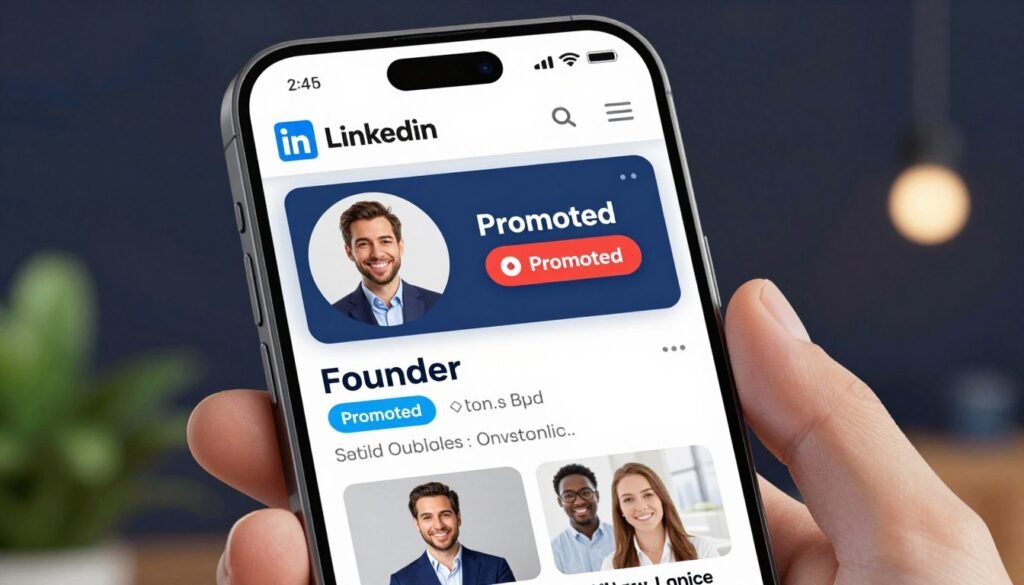
Do not guess which posts will work as ads. Instead, look at your analytics to find updates that already have high engagement. If a post performed well with your friends, it will likely work with strangers too.
These pieces of founder-led content have already proven they resonate with real people. By putting a budget behind them, you ensure your best content reaches decision-makers outside your immediate circle. This format works because buyers feel they are opting in to a conversation rather than being interrupted by a brand.
Maintaining Authenticity While Using Paid Distribution
The magic of this platform is that these ads do not feel like traditional commercials. They look like genuine thoughts from a founder. This helps you maintain the human touch even when paying for reach.
However, Holmgren learned that scaling trust is not enough if people forget the brand behind the face. You must embed brand cues directly into your content. This might include subtle visual elements or specific industry terms.
This approach ensures that as you amplify your founder-led content, you build both personal trust and company recognition. It turns your social presence into a predictable lead generation machine without losing the raw, unpolished quality that makes it effective.
Step 8: Embed Distinctive Brand Assets into All Founder Content
Scaling a founder-led strategy requires more than just a face; it needs recognizable markers that link your thoughts to your brand. This step is a vital part of breaking through the brand ceiling. You want to ensure your business grows alongside your personal influence.
Creating Visual Cues That Travel Without You
A common issue occurs when people engage with your content but forget the name of your company. They might love your ideas, but the connection to your business remains weak. This gap creates a ceiling where growth plateaus despite high engagement numbers.
To fix this, you must encode trust into visual elements that represent your brand clearly. These assets allow your message to carry weight even when you are not there to explain it. Specific styles, fonts, or colors help build instant credibility with every scroll.
Consistency serves as the foundation for these marketing strategies. When your founder content uses specific visual cues, it makes the sender obvious to the reader immediately. This ensures that the trust you build compounds over time instead of resetting every single day.
The Pink Lion Strategy: Making Brand Recognition Automatic
Adam Holmgren faced a critical problem where people recognized his voice but did not always link it to his business. He solved this by using the “pink lion strategy” to stand out. By adding a pink color palette and a lion mascot, he made his content impossible to miss.
The goal of this approach is to make brand recognition automatic for every viewer. You do not need to be promotional or overly corporate to achieve this result. Simple, repeated visual cues tell the audience exactly who is speaking without drowning out the authentic message.
Repetition builds memory much faster than constant novelty. If your audience sees the same colors or symbols, they begin to associate your value with your company. High-quality content uses these assets to bridge the gap between a person and a professional entity effectively.
Step 9: Engineer Word-of-Mouth Through Product and Content Design
True market legitimacy occurs when your audience starts doing the heavy lifting for your brand. Adam Holmgren describes this legitimacy as the specific moment the market starts doing the work for you. It does not happen through polished testimonials alone.
Instead, it thrives through everyday behaviors. This includes users sharing screenshots publicly or mentioning tools in casual conversations. You want your brand to become an organic part of how people solve real-world problems.
Making Your Product Screenshot-Worthy
For the brand Fibbler, legitimacy resulted from making the product easy to show and discuss. Word of mouth happened because the tool helped users tell their own stories about ROI and attribution. The product design was simple to capture and easy to understand at a glance.
During 2025, “point-solution stacks” became a popular way for marketers to talk about tech on social media. Fibbler appeared in these posts because it looked professional and solved a hot-button issue. When your product helps a user express their success publicly, they become your best advocates.
Using Memes and Relatable Content for Viral Distribution
Memes are a powerful way to reach new customers because they trigger instant recognition. However, generic memes often create engagement without building any long-term brand memory. Your content must twist familiar formats into situations that professionals actually experience.
Fibbler layered specific brand cues directly into their meme content. This ensures that your unique voice remains attached to the message as it spreads across the internet. By focusing on relatable work struggles, you create emotional resonance that sticks with your audience.
Effective content design ensures your brand is not just a joke, but a recognizable solution. This balance helps customers remember your name long after the initial laugh. Engineering virality requires both humor and clear brand signals to succeed.
| Strategy Component | Design Goal | Marketing Result |
|---|---|---|
| Product UI | Visual Clarity | Organic Screenshots |
| Meme Strategy | Relatable Situations | Viral Brand Recall |
| Brand Cues | Visual Consistency | Automatic Recognition |
Measuring Success: Track Conversions, Not Just Engagement
Shifting from vanity metrics to conversion data is the final hurdle for many leaders. While likes and shares feel good, they do not always grow a business. You must focus on outcomes that impact the bottom line directly.
Tracking the right numbers ensures your efforts move beyond digital applause. Authentic connection is valuable only when it leads to a tangible result. Measuring success helps you refine your voice for maximum impact.
Setting Up Attribution from Founder Content to Revenue
Setting up attribution means connecting your strategy to actual revenue. Peter Caputa suggests tracking how personal brand growth impacts customer acquisition costs. You must monitor if a specific piece of content leads a prospect to your website.
Many teams use “How did you hear about us?” fields to capture these insights. This simple step proves that your work on social platforms creates real value. If educational content outperforms promotional posts, you should double down on teaching.
Measuring these shifts helps you allocate resources to the right business channels. This process turns a vague social presence into a predictable pipeline. You stop guessing and start investing in what actually works for your specific brand.
| Metric Type | Primary Goal | Success Indicator |
|---|---|---|
| Lead Quality | Targeting Relevance | High-Value Inbound Leads |
| Deal Velocity | Closing Speed | Shorter Sales Pipeline |
| Brand Trust | Relationship Depth | Direct Message Volume |
Key Metrics: Lead Quality, Inbound Conversations, and Deal Velocity
High-value founders prioritize lead quality over raw volume. David Baum notes that he views signups as prospective customers rather than just a faceless audience. He focuses on getting to know people through direct engagement to build lasting ties.
We didn’t think of signups as an audience back then. They were prospective customers. This time around, I really care about getting to know people.
Inbound conversations often start with the phrase “I have been following your insights.” This shows that founder-led marketing is building deep trust before the first sales call. Monitoring deal velocity reveals how quickly these warm leads move through your pipeline.
When people trust the leader, they buy faster and with fewer objections. High-performing content should always drive a meaningful conversation. If your content does not trigger a message, it might be time to pivot your approach.
You measure real success by the number of sales-ready hand-raisers you attract weekly. Focus on these deep connections to ensure your marketing leads to sustainable growth. Constant feedback from your audience will guide your future topics and formats.
Conclusion
Transitioning from a simple habit to a scalable system is the ultimate secret to long-term success. Founder-led marketing works because it turns personal insights into a powerful strategy for a new company. This approach helps a founder build trust with a target audience through genuine human connection and shared stories.
As the experience of Adam Holmgren shows, this method must evolve to avoid hitting predictable ceilings. By using a Four-Engine Framework, you can scale your message and achieve sustainable growth. This structured system protects the founder’s time while ensuring the brand remains visible across all primary platforms.
It ensures your brand remains memorable long after a prospect interacts with your social media posts. Unlike basic content strategies, this method builds a lasting business asset that generates high-quality inbound leads. You should focus on creating efficient capture systems to maintain consistency without feeling overwhelmed by the process.
Every founder should define their unique pillars and choose a primary platform to begin their journey today. Turn your personal presence into a reliable founder-led marketing engine to stay ahead of the competition. This strategy is the most effective way to bridge the gap between a product and its future users.
| Growth Engine | Core Purpose | Key Outcome |
|---|---|---|
| Trust Engine | Builds Credibility | Deep Market Connection |
| Memory Engine | Automatic Recognition | Distinctive Brand Assets |
| Reach Engine | Broad Amplification | Network Expansion |
| Legitimacy Engine | Word-of-Mouth | Viral Distribution |