
Emotional intelligence in business leadership shapes how leaders read and respond to people under pressure.
John Mayer and Peter Salovey coined the term in 1990, and Daniel Goleman later brought it to managers via the Harvard Business Review.
IQ and technical skill get someone the role, but EQ is what separates effective leaders. This skill cuts friction, boosts team performance, and improves decision quality.
The rest of this guide is practical. You will get clear steps to spot low EQ, the four core components, and a plan to develop it. Expect real scenarios, tools, and common myths.
Key Takeaways
- EQ is a measurable leadership capability, not just a soft trait.
- Goleman: IQ is an entry ticket; EQ drives real impact.
- High emotional intelligence improves trust, coaching, and execution.
- The article offers step-by-step, practical actions leaders can apply now.
- Developing this skill supports hard metrics like retention and performance.
Why Emotional Intelligence Matters More Than Ever in Leadership Today
When teams change direction quickly, the ability to manage reactions matters as much as technical know-how. Emotional intelligence is an ability to notice and manage your own feelings while also recognizing and influencing others’.
At work, this shows up in meetings where a calm voice steadies a tense debate, in 1:1s where a manager listens without defensiveness, and in decisions that weigh people impact as well as data.
Why employers care: 71% now value EQ over technical skill when hiring or promoting. Technical skills are teachable; stable judgment about feelings is harder to develop.
- Performance: TalentSmart research links EQ to stronger results and fewer costly blowups.
- Engagement: Employees stay engaged when they feel heard and respected.
- Retention: Psychological safety reduces turnover and rework caused by misalignment.
Being emotionally intelligent doesn’t mean being emotional at work. It means managing emotions so they don’t manage the team. Low EQ is costly — it breeds conflict and quietly erodes trust before metrics show the damage.
How to Spot Low EQ in the Workplace Before It Hurts Your Team
Small communication slips can be early warning signs that team dynamics are fraying. Catching these signs early saves time and keeps people focused on outcomes rather than blame.
Common red flags
Watch for: blame-first reactions, a defensive tone, frequent misunderstandings, and emotional outbursts that derail a meeting.
How poor habits fuel conflict
Low awareness often shows up as interrupting, trying to “win” discussions, dismissing concerns, or avoiding touchy topics until they explode.
Unaddressed emotions compound quickly: small frustrations become stories, stories become assumptions, and assumptions become conflict that drains trust and collaboration.
Stress makes patterns louder
Under stress, weak social skills appear as snapping, stonewalling, or micromanaging. The team then starts to self-protect, which fragments work and slows progress.
- Watch post-mortems, deadline crunches, cross-functional handoffs, and feedback moments for friction.
- Leaders should check themselves: notice when people go quiet, side conversations spike, or tension lingers after decisions.
- Make the cost concrete: unresolved conflict wastes time through rework, avoidance, and ongoing tension long before HR steps in.
Good news: social skills and awareness are trainable. Treat these patterns as habits you can change, not fixed traits, and prepare to build the competencies that follow.
The Core Components of Emotional Intelligence Leaders Need
Understanding four core competencies makes people skills measurable and trainable.
emotional intelligence breaks into self-awareness, self-management, social awareness, and relationship management.
Self-awareness: the confidence gap
Most people think they know themselves. Research by Tasha Eurich shows 95% believe they are self-aware, but only 10–15% truly are.
Real awareness means owning your impact, not just your intent.
Self-management: steady under stress
Good self-management looks like pausing before reacting, checking tone, and sticking to values when pressure hits.
Social awareness and empathy
Social awareness helps you read the room, spot unspoken concerns, and notice energy shifts in hybrid meetings.
Empathy is a measurable skill. DDI finds empathetic leaders perform ~40% higher in coaching and decisions.
Relationship management
This is influence, coaching, and conflict repair. Strong relationship management turns friction into better outcomes and lasting relationships.
“High self-awareness plus steady management of emotions is how leaders earn trust.”
Quick diagnostic: which component is strongest for you today, and which one creates the most friction on your team?
Emotional intelligence in business leadership: A Practical How-To Development Plan
Start a focused development plan with simple daily habits that change how you respond under pressure. The aim is to build skill through short, consistent practices tied to real work moments.

Build self-awareness with journaling and check-ins
Each day write: trigger, emotion, story you told yourself, behavior, and outcome. This trains your ability to understand manage emotions by linking feeling to action.
Review entries weekly and note patterns to set one behavior commitment for the next week.
Use 360-degree feedback to uncover blind spots
Pick raters from boss, peers, and reports. Ask behavior-based questions and look for repeated themes.
Create 1–2 clear commitments from the feedback instead of a long to-do list.
Practice active listening to improve communication
Before your next meeting remove distractions, paraphrase what you heard, validate feelings, then ask one clarifying question.
Delay offering solutions until you fully understand. This boosts trust and communication quality.
Expand emotional vocabulary and pause before reacting
Replace vague labels like “fine” with precise words: frustrated, disappointed, anxious, or overwhelmed. Naming emotions helps you manage emotions and helps others respond.
For in-the-moment resets use a quick routine: breathe, name the feeling, choose the outcome you want. This short pause prevents an amygdala hijack and keeps decision-making clear.
30-Day development plan (simple, repeatable)
| Week | Daily Habit | Focus | Measure |
|---|---|---|---|
| Week 1 | 5-min journaling + 1 check-in | Self-awareness | Journal entries logged (5/day) |
| Week 2 | Active listening in 3 meetings | Communication skills | Number of paraphrases used |
| Week 3 | Run a short 360 feedback | Uncover blind spots | 1–2 behavior commitments |
| Week 4 | Practice pause routine under stress | Manage emotions | Fewer reactive responses observed |
Sustain progress: pick one new skill at a time and pair it with real work (feedback session, deadline, or cross-team meeting). Track observable changes—fewer interruptions, calmer tone, faster conflict resolution—rather than vague goals.
Using EQ in Real Leadership Moments That Make or Break Trust
How you handle sensitive moments shapes whether teams stick together after a setback. Small actions during feedback, conflict, and change create lasting impressions.
Delivering feedback with empathy and clarity
Use a short script: shared goal → observed behavior → impact → ask for perspective → agree next step. This keeps feedback direct while protecting dignity.
Managing conflict early to avoid costly time drains
Don’t wait. Research suggests each unaddressed conflict can waste about eight hours of company time in gossip and drift.
Start neutral: name the issue, separate intent from impact, and agree a two-week working pact to test change.
Leading through change with calm, transparency, and psychological safety
Explain what changes, what stays the same, which decisions are made, and where input remains open.
Satya Nadella’s shift at Microsoft shows how listening and collaboration boost innovation and cross-team performance.
- Why it matters: respectful treatment drives retention — 72% of employees rank it top for job satisfaction (SHRM).
- Outcome: consistent, emotionally intelligent responses build trust in the situations people remember most.
Tools, Training, and Coaching to Strengthen Emotional Intelligence Skills
Practical tools and guided coaching turn awareness into habits that change how you lead day-to-day.
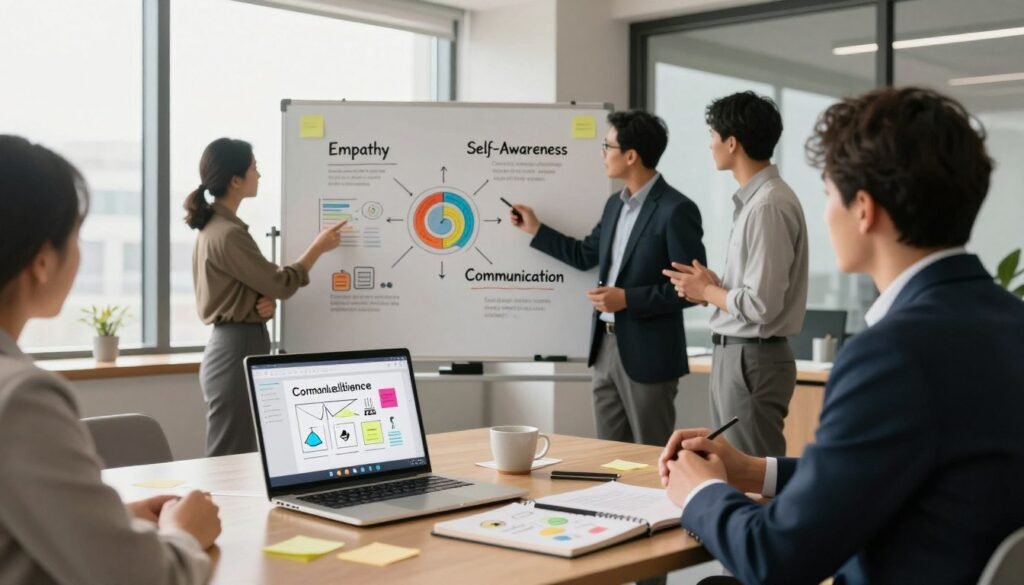
Assessments: Use self-report tools like EQ-i 2.0 to build language and awareness about how you see your social functioning. Use ability-based tests such as the MSCEIT when you need a measure of actual skill at identifying and managing feelings.
Combine both with a 360-degree review for a fuller view. Manager, peer, and direct report input helps reveal gaps between perception and observed behavior.
Training and coaching for lasting change
Research shows that training works best when it pairs with coaching and repeated feedback. Choose programs that require practice in real meetings and follow-up coaching to convert insight into habit.
Mentors, role models, and practice
Watch trusted mentors handle pressure, disagreement, and hard feedback. Emulate specific moves and test them during stressful moments.
Set clear goals and measure progress
Pick one leadership goal (for example, “reduce escalations”) and one behavior metric (for example, “address conflict within 48 hours”). Use regular check-ins to keep motivation high and track change.
“Tools don’t make you more skilled; what matters is what you do differently in the next conversation.”
Common Misconceptions and Pitfalls That Hold Leaders Back
Misreading the role of empathy can turn a strength into a liability for teams.
In reality, empathy without clear boundaries leads to avoidance. Boundaries without empathy become harsh. Leaders high in skill balance both: they give honest feedback while protecting relationships.
How reactive patterns hurt performance
Reactive moves—snapping, public criticism, vague feedback, or shifting blame—drive disengagement. These actions raise burnout and push an employee to leave even when targets are met.
Reacting often comes from an amygdala hijack. A short routine helps: pause → label → choose. Pause, name the feeling, then pick the response that fits the outcome you want.
Accountability that preserves trust
Leaders should name expectations early, address gaps fast, and avoid humiliation. That blend of clarity and care reduces turnover and keeps teams focused.
“Small daily changes in how you understand and manage feelings compound into big shifts in trust.”
Conclusion
Actionable, great leaders shape outcomes not just with decisions but with how they show up for the people who carry them.
Research ties emotional intelligence to stronger performance and lasting success. The core components—self-awareness, self-management, social awareness, and relationship management—directly affect team trust, speed, and relationships across the organization.
Practice matters: journaling, 360 feedback, active listening, clearer emotional vocabulary, and a pause-before-reacting routine build skill within real work moments. As your skill grows, the positive impact compounds—better collaboration, fewer conflicts, and measurable gains in performance.
Next step: pick one component to develop this month and apply it to one high-stakes situation. Success is not only what you decide; it is how you lead people through the decision and the feelings that come with it.